



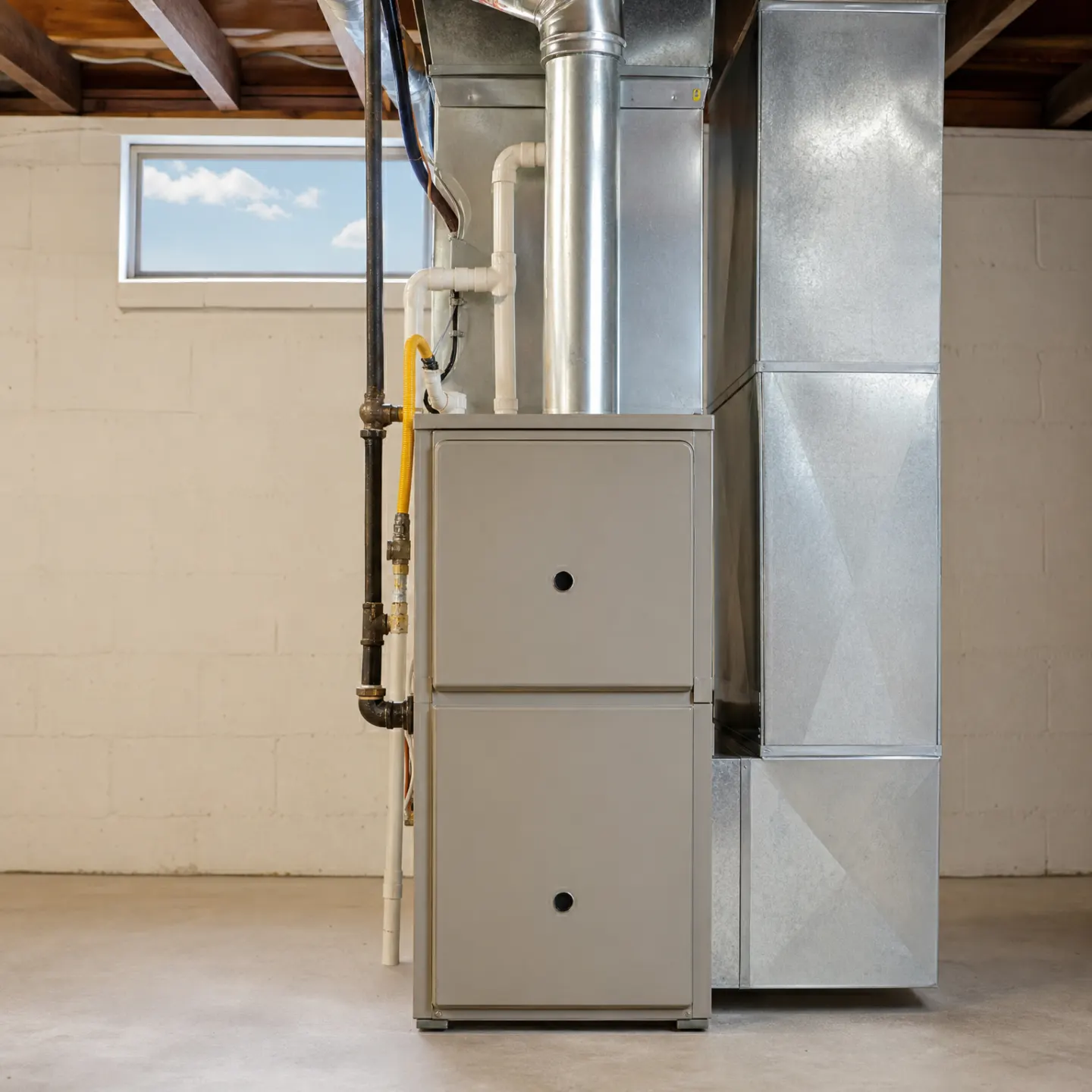
A gray forced-air furnace with metal ductwork stands in an unfinished basement with exposed wooden joists, concrete walls, and a single hanging light bulb.

Furnace Repair in East Stroudsburg, PA

Tell us about the job

Takes about a minute. No obligation.

Step 1 of 3: Equipment

Furnaces in Monroe County run eight months a year, October through May. That is most of the calendar spent in the one appliance homeowners here lean on hardest. Add the winter storms this area gets, 27 of them between 2015 and 2024, and the furnace isn't just running long, it's running flat out through ice and heavy snow when the house needs it most. A system worked that way wears on a different schedule than one in a milder climate. The igniter, the blower motor, the heat exchanger, all of it is putting in more hours and more strain year after year. When something acts up, it's usually not bad luck. It's the normal cost of carrying a Monroe County winter.

8 months
October through May, your furnace is on duty
19°F
the average winter night it heats against
27 winter storms
in ten years, the nights a failure hurts most
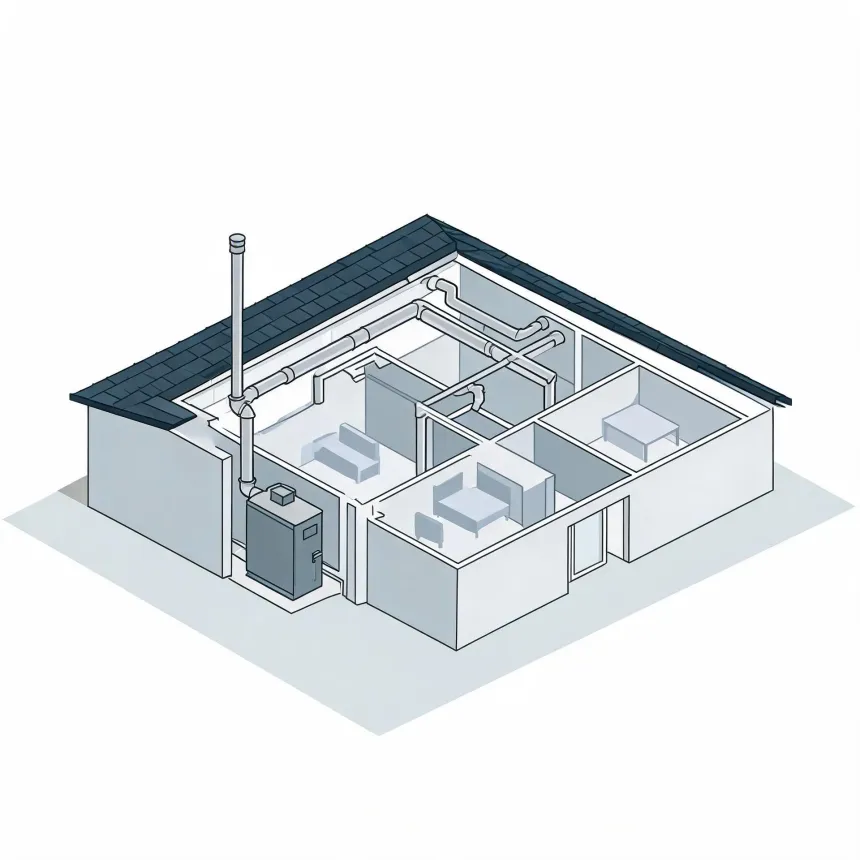
Isometric line illustration of a cutaway single-story house showing interior rooms with furniture, ceiling ductwork, and an exterior furnace unit with a tall flue pipe.
Your furnace works hardest from November through March.

NOAA nClimDiv, 1991–2020 normals

Half the homes in Monroe County were built in 1984 or later.

A furnace that came with a newer house still has years built into it, even on a Monroe County schedule, and that's usually reason enough to repair rather than replace.

Electricity here runs $52.07 per million Btu, and a struggling furnace burns it from October through May

Heat runs October through May
Winter nights average 19°F
27 winter storms from 2015 to 2024
The First Cold Snap Finds the Weak PartHeat starts going on in October here, and that's when a part that barely made it through last winter gives out.

If your furnace came with the house and the house was built in 1984 or later, that's a point toward fixing it rather than replacing it. A furnace in a house that age still has working life ahead of it even after a hard winter here. When a part fails on a system like that, it's usually one worn component, not the whole unit giving out. Get the broken part diagnosed before anyone talks you into a new system. If you know roughly when your house was built, mention it when you call. It helps the contractor judge what they're walking into before they open the cabinet.

Get the Real Problem Found, Not Just Patched

A furnace carrying a Monroe County winter wears parts faster than one in an easier climate, and whatever's acting up right now is likely tied to that. A proper diagnosis finds the part that actually failed, instead of guessing. That's what makes a repair hold through the rest of the winter.

Find a contractor
A gas furnace with attached ductwork, gas piping, and condensate lines installed in a concrete-block basement.

What to Check Before You Call

Before anyone comes out, there are a few things worth checking yourself. Start at the thermostat. Make sure it's set to heat, not just fan, and that the set temperature is actually above room temperature. A dead or low battery in the thermostat will blank the display or make it stop calling for heat altogether. Next, check your breaker panel. A furnace that won't start at all is often tripped at the breaker, not broken inside. Flip it fully off then back on, not just a nudge. Look at the furnace itself for a service switch, usually a light switch on the wall nearby or on the unit's side, and make sure nobody bumped it off. If you have a gas furnace, check that the gas valve is open and that the pilot light, if it has one, is actually lit. Pull the filter and hold it up to a window. If you can't see light through it, that's restricting airflow badly enough to shut the system down on its own as a safety measure, and swapping it for a clean one sometimes solves the problem outright. Check every supply vent and return in the house to make sure none are closed or blocked by furniture or rugs. If the furnace runs but the air coming out feels cool, let it run a few minutes longer before judging, since it takes time to heat up. Listen for repeated clicking or a hum that doesn't turn into a flame or a running blower. That points to an ignition problem, and it's not something to keep resetting on your own. If you smell gas at any point, stop checking and get out of the house before calling anyone.

Short Cycling Wears the Parts Faster

A furnace that kicks on, runs for a minute or two, and shuts off again is short cycling. It usually means the heat exchanger is overheating and tripping a limit switch, often because the filter is dirty or a blower part is failing. Every start and stop stresses the igniter and the blower motor more than a normal run cycle would. Left alone, short cycling turns a cheap part into a bigger repair.
Uneven Heat Means Something's Already Failing

Rooms that run cold while others feel fine usually point to a blower that can't push air the way it used to, or a duct problem feeding unevenly. A furnace in good shape heats the house evenly, so when one part of it lags, that's the system telling you a part is already struggling, not a quirk of the house.

A furnace that's cycling oddly or blowing cool air is still drawing power the whole time it runs. At $52.07 per million Btu, that adds up fast over a Monroe County winter. A dirty filter forcing longer run times, a blower working harder than it should, a cracked heat exchanger, all of it pulls more power to put out less heat. That gap between what you're paying and what you're getting tends to grow the longer it sits unrepaired. Getting it looked at now stops the bleed before the rest of the season runs up the bill.

There's a point where a furnace stops being worth patching, and it has nothing to do with how old the paperwork says it is. What matters more is what's actually failing. A cracked heat exchanger means replacement, full stop, since that part isn't something anyone can safely repair and it's usually not sold on its own. A failed igniter, a bad flame sensor, a blower motor that's seized up: those get swapped out and the furnace runs like it did before. The pattern worth watching is whether the repairs are piling up. One part failing after years of steady service is normal wear. A furnace that's had two or three different parts go in the same year or two is usually telling you the whole system is reaching the end together, even if nothing major has quit yet. A tech who's inside the cabinet can tell you which situation you're actually in.