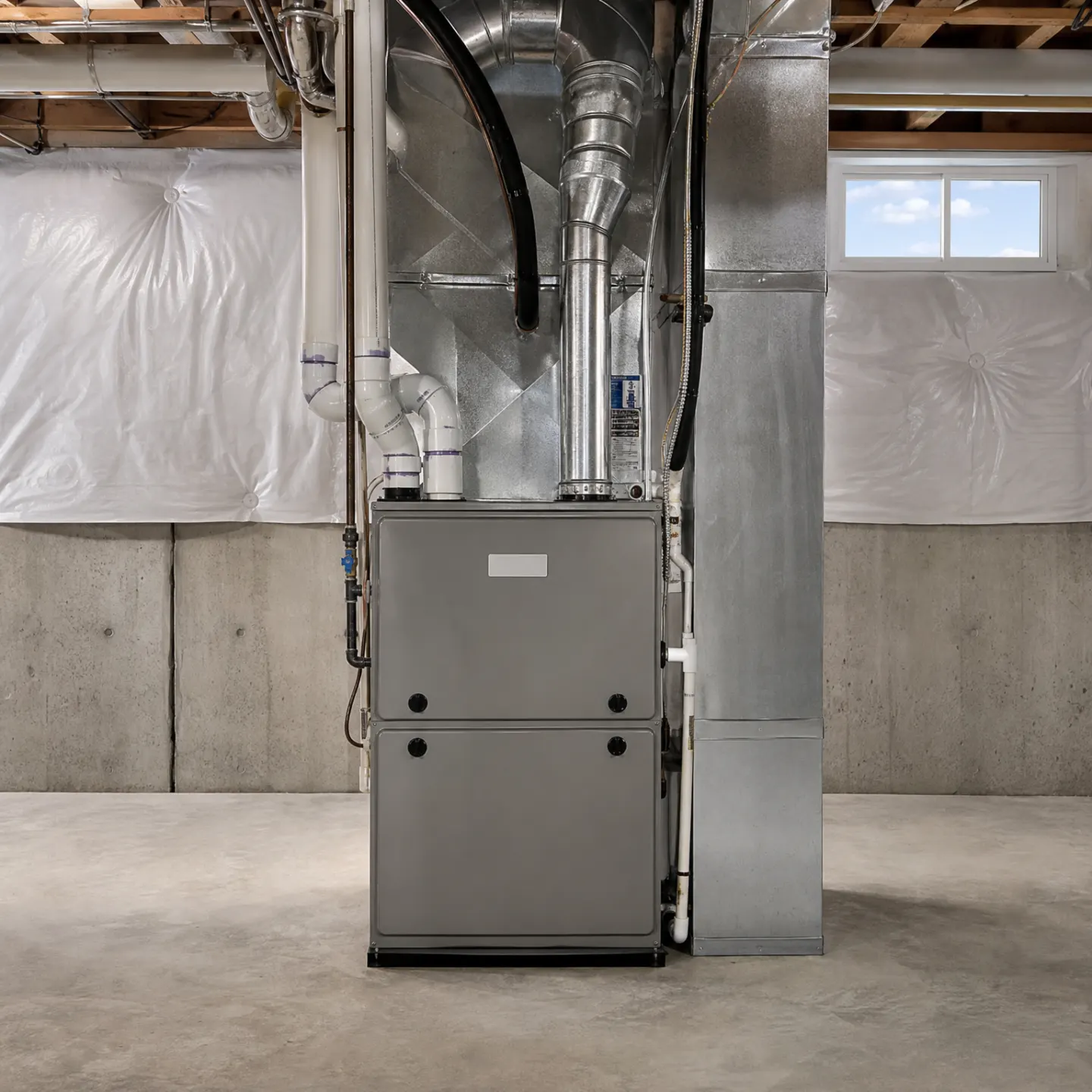
A bare concrete basement containing a gray gas furnace with metal ductwork and a vertical flue pipe, lit by a single hanging bulb.

Furnace Installation in East Stroudsburg, PA

Tell us about the job

Takes about a minute. No obligation.

Step 1 of 3: Equipment

Electricity here runs $52.07 per million Btu

Pennsylvania's electricity cost averaged $52.07 per million Btu in 2024. A furnace that wastes heat through a cracked heat exchanger or an oversized burner turns that rate into a bigger bill every month it runs.

Efficiency is the number to compare

When you're pricing furnaces for this house, the AFUE rating tells you how much of that electricity or gas actually becomes heat instead of going up the flue. A higher rating costs more up front but keeps paying you back as long as the furnace runs.

8 months
October through May, your furnace is on duty
19°F
the average winter night it heats against
80% AFUE
the federal minimum any new unit must meet
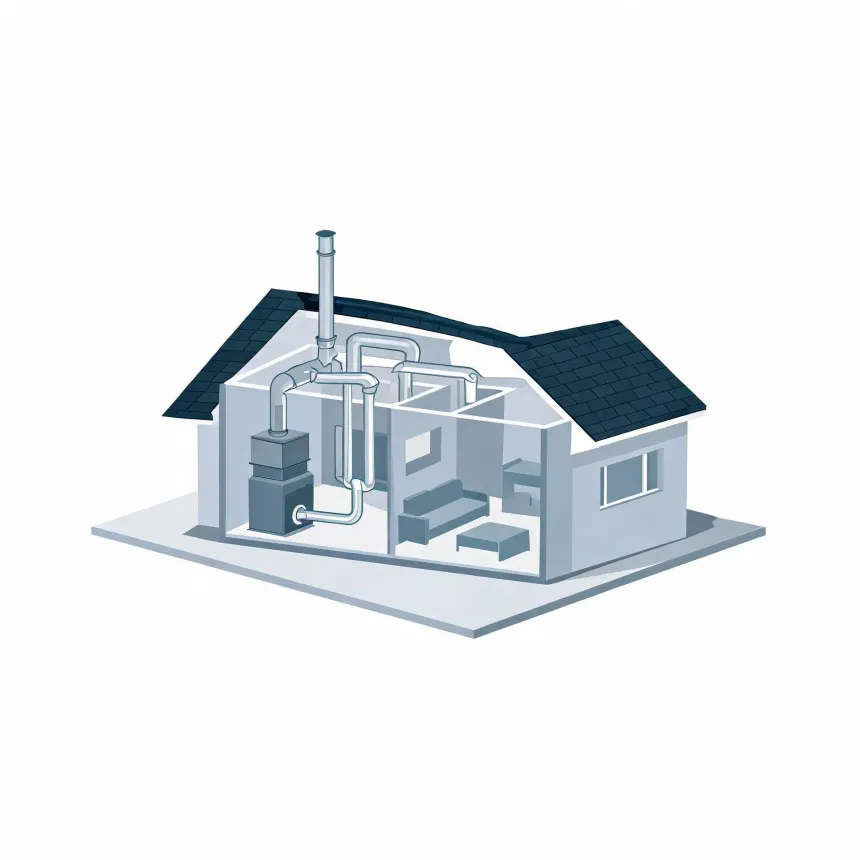
Isometric illustration of a cutaway single-story house showing a gray furnace unit, connected ductwork, and a vertical flue extending above the dark shingled roof.
Your furnace works hardest from November through March.

NOAA nClimDiv, 1991–2020 normals

Electric heat is the most common setup in Monroe County, used in 46.4% of homes.

A furnace replacement here usually means matching what's already installed, not switching fuels.

September is the month to get ahead of heat season, not behind it

Heat runs October through May
Winter nights average 19°F
27 winter storms from 2015 to 2024

A furnace that's undersized runs flat out trying to beat a 19°F night, and one of those storm systems can keep it there for days straight. That's a lot more strain than a mild December afternoon puts on it. Sizing has to account for the house, not just the square footage on a listing. Too big a furnace cycles on and off instead of running steady, which wears out the parts that start it up each time. Too small, and it can't keep up when the cold snap actually hits. A contractor who sizes this right will ask about the walls, the windows and the ductwork before quoting a number, not after.

Efficiency pays here

Power costs more here, so an efficient system pays you back on every bill.

Find a contractor
A gray residential gas furnace installed in an unfinished basement, connected to sheet-metal ductwork and PVC pipes.

Eight months of heat, and the cold snaps in between

Furnace here runs about eight months a year, October through May. Overnight lows average 19°F in December, January and February, and that's an average, not the floor. Winter storms, heavy snow, ice, blizzards, have hit Monroe County 27 times in the last decade. A furnace sized for this house has to hold through those, not just the mild stretches on either end of the season. Size it for the cold snap, not the average day.

The rating is fixed before it reaches you

AFUE comes from a lab test run before the furnace is installed anywhere. It tells you how much of the fuel burned becomes heat in the house and how much goes up the flue. A dirty filter or a bad thermostat setting will not change that number. Only the furnace itself does.

It describes a new furnace, not an old one

A furnace loses ground as it ages. A cracked heat exchanger, a burner that has drifted out of tune, a blower that has lost some of its draw, each one pulls real performance below the number on the label. The AFUE rating tells you what the furnace was built to do, not what one running for years in a basement is doing right now.

Whoever installs the new furnace will disconnect the old one, cap or redirect the gas and vent lines, and haul the unit out. The heat exchanger and burner assembly inside an old furnace have been doing their job for years, and scrap is really all that's left in them. A furnace that size and weight isn't something to move alone, and it shouldn't sit around in a garage either, since older units can have refrigerant or residue inside that needs proper handling. Most contractors fold removal and disposal into the installation itself, so the old furnace leaves the same day the new one goes in.

The old furnace comes out first. Before the new one goes in, the installer checks the vent pipe, the gas line and the duct connections, since those have to match the new unit, not just the old one. A vent sized for the last furnace or ductwork too small for the new blower will cause problems no matter how good the furnace itself is. Once it's set in place and connected, the installer fires it up and checks the flame, the airflow at the registers and the temperature rise across the furnace. That startup check is what tells you the furnace is actually doing what its rating says it should.