


A white picket fence runs along a mowed grass lawn in front of a row of gray clapboard houses with dark shingled roofs, framed by overhanging tree branches under an overcast sky.

Furnace Installation in Honesdale, PA

Tell us about the job

Takes about a minute. No obligation.

Step 1 of 3: Equipment

Fuel oil ran $25.15 per million Btu across Pennsylvania in 2024. If your furnace runs on oil, that number matters more than almost anything else about the install. An old furnace wastes a good share of that fuel out the flue before it ever heats your house. A new one burns less to do the same job, and at that price per gallon equivalent, the difference shows up on every delivery. Ask what AFUE rating comes with the unit you're considering, and ask what fuel it runs on at all. Some homeowners switch systems at installation time for exactly this reason.

9 months
September through May, your furnace is on duty
17°F
the average winter night it heats against
80% AFUE
the federal minimum any new unit must meet
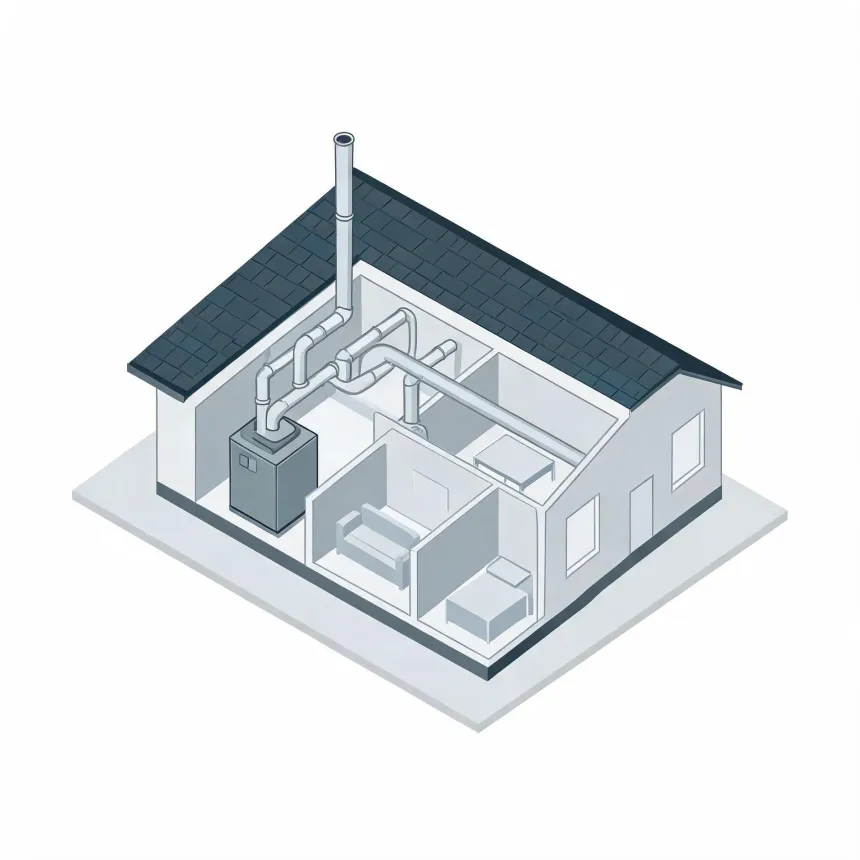
Isometric cutaway illustration of a single-story house showing a gray furnace connected to white ductwork and a flue pipe extending through the shingled roof, with simplified furniture in the interior rooms.
Your furnace works hardest from November through March.

NOAA nClimDiv, 1991–2020 normals

Furnaces in Wayne County run September through May, nine months of the year.

Get the new furnace in by August, before the first cold night puts you in a hurry.

Almost a third of Wayne County heats with oil, more than any other fuel here

31.6% of homes heat with fuel oil
Heat runs September through May
Winter nights average 17°F

If oil is what's running through your furnace now, installation is the time to decide whether to stay with it. A contractor can walk you through what a high-AFUE oil furnace costs to run against a switch to gas or a heat pump, using your own usage and the $25.15 per million Btu figure as the baseline. That comparison only means something before the unit goes in. Once it's installed you're committed to that fuel line for the life of the system.

Efficiency pays here

Power costs more here, so an efficient system pays you back on every bill.

Find a contractor
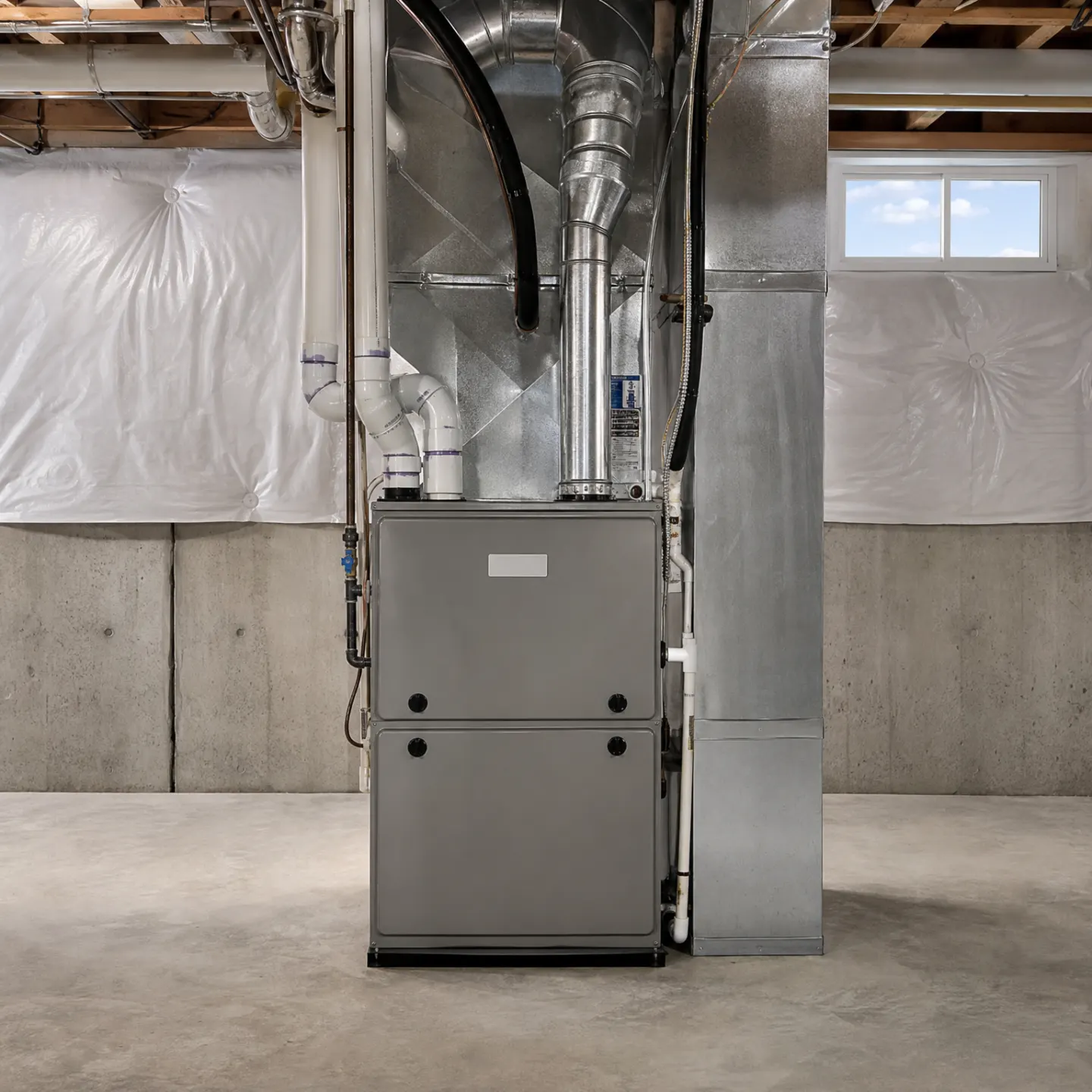
A gray residential gas furnace installed in an unfinished basement, connected to sheet-metal ductwork and PVC pipes.

The furnace is the easy part to price

What sets the price isn't just the furnace sitting in the showroom. It's what has to happen to get it running in your house. A straight swap, same fuel, same spot, same ductwork, same vent, is the cheapest kind of job because the contractor isn't fighting your house to make it work. Change any one of those and the price moves. Switch fuels and you're looking at a new gas line or new electrical circuit, maybe a new vent through the roof or wall, sometimes a chimney liner if the old furnace was sharing one with a water heater. Oversize the unit and you pay more up front and still get worse comfort, because a furnace that's too big cycles on and off instead of running steady. The right size comes from a load calculation on your house, not a guess based on the old unit. Ductwork matters too. If the trunk lines and returns were sized for the furnace you're replacing, a different style or a bigger blower can mean modifying duct to keep airflow where it belongs. None of that shows up until someone's actually looked at what's there.

AFUE tells you what's wasted

The AFUE number on the label says how much fuel turns into heat for your house and how much goes out the flue. A furnace with a low rating loses a real share of every load it burns before that heat ever reaches a room. A high-efficiency furnace keeps most of that fuel working for you instead. It's the one spec on the label that tells you something a sticker price can't.
The rating only holds if the install is right

A high-efficiency furnace still needs the right duct airflow, the right vent for its exhaust, and the right size for your house to actually perform at the number on the label. Put a condensing furnace on ductwork or venting built for a different kind of unit and it won't deliver what the rating promises. The number on the label is a ceiling, not a guarantee.

Sizing a furnace comes down to a load calculation, room by room, using the walls, windows, and ceiling height of the house it's going into. That's different from matching the old unit or going by square footage alone, and it's the only way to land on the right number. Too small and the furnace runs flat out on the coldest nights and still can't keep up. Too big and it short cycles, blasting heat fast, shutting off, then starting again a few minutes later, which wears the heat exchanger and never lets the house feel evenly warm. A furnace sized right runs longer stretches at a steady output, which is also when it's most efficient. None of this shows up on a showroom floor. It shows up after the install, in how the house actually feels.

Installation day starts with the old furnace coming out. That can take longer than expected if it shares a vent or chimney with the water heater. Once it's out, the contractor sets the new unit in place, makes the fuel connection, and ties into the existing duct and vent. Every joint gets checked for leaks before anything is allowed to run. Then comes startup. The contractor fires the furnace, watches the flame, and measures the air coming out of the registers to see the system is actually moving what it should. A combustion analyzer reads the exhaust to confirm the furnace is burning clean and venting properly, not just that it turns on. By the end the whole house should be warming evenly, not just the room nearest the furnace. Expect some noise and some dust from the work, and a walkthrough at the end covering the thermostat and anything the furnace will need going forward.