A long white picket fence runs along a mowed grass lawn in front of a row of single-story houses with gray siding and dark shingled roofs, backed by tall leafy trees.

Boiler Installation in Honesdale, PA

Tell us about the job

Takes about a minute. No obligation.

Step 1 of 3: Equipment

The size has to match the house

A boiler sized too big for the heat loss short cycles, turning on and off instead of running a long steady burn, and that wears the burner and the heat exchanger faster than it should. One sized too small runs constantly and never quite keeps up on the coldest days. Getting the size right takes a heat loss calculation on the actual house, not just a swap for whatever is there now.


What's already in the house changes the job

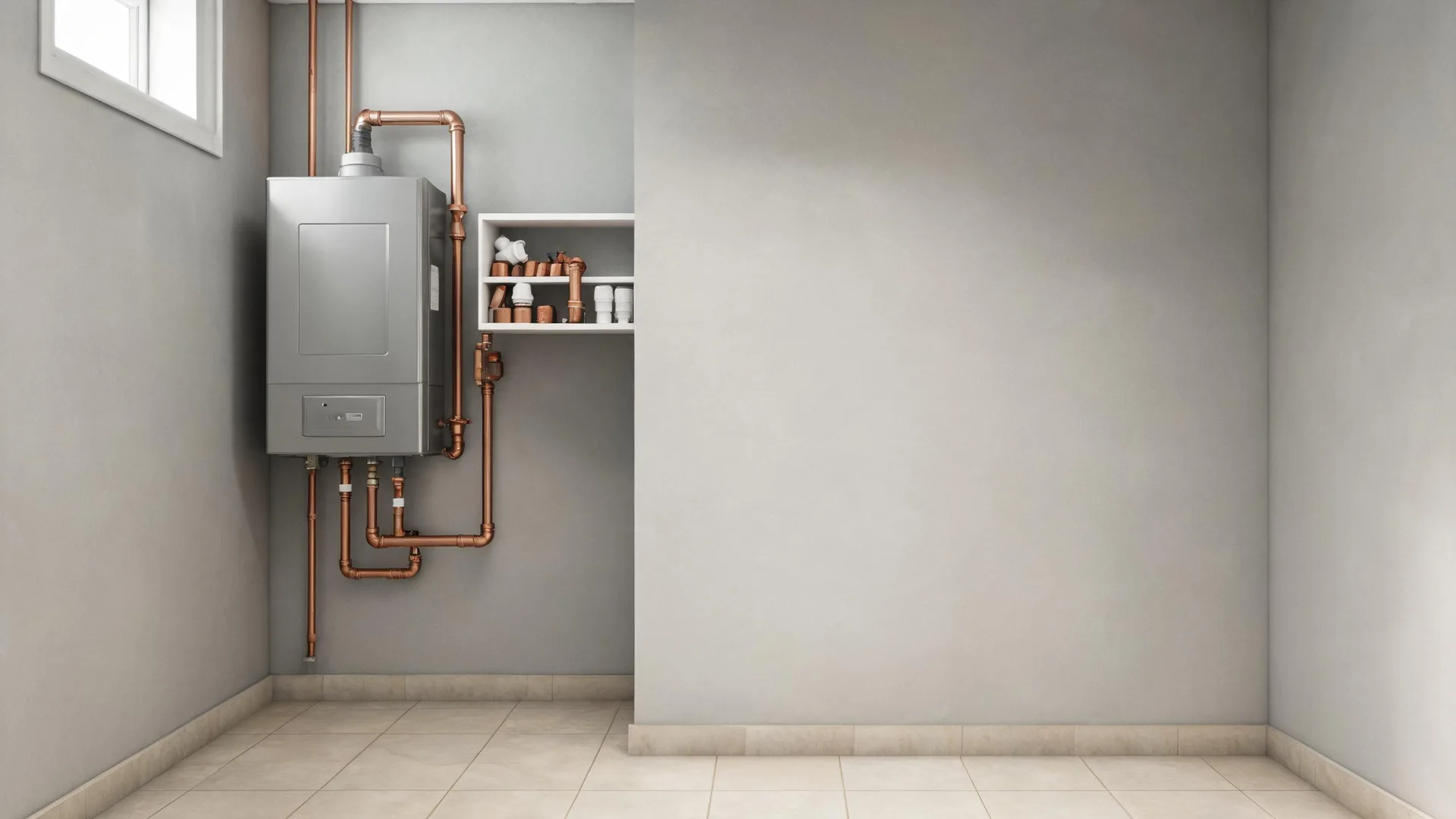
If the old piping, the venting or the gas line can carry the new unit as is, the install is straightforward. If the chimney liner needs replacing for a new venting style, or the near-boiler piping needs reworking to match the new unit, or the gas line needs upsizing, each of those is its own job added to the installation itself.

Fuel oil or kerosene heats 31.6 percent of homes in Wayne County, more than any other fuel.

A boiler built for oil or set up to burn it stays the easiest match for a house already piped that way.

Nine months of heat and 17°F nights wear a boiler fast here

Heat runs September through May
Winter nights average 17°F
41 winter storms from 2015 to 2024
Replace it in August, before the heat goes onHomes here run heat September through May, close to nine months straight.

Wayne County sits in climate zone 5A, a cool zone where heating carries most of the load. Any new gas-fired hot water boiler installed here has to meet 84 percent AFUE if it was manufactured on or after January 15, 2021, which by now covers what's on the market. That floor exists because of the zone this county sits in. A federal tax credit is available for qualifying high-efficiency equipment, worth checking against whatever unit ends up on the proposal.

The efficiency rating you pick now is what you'll pay for every winter after

Oil ran $25.15 per million Btu in Pennsylvania last year. A boiler burning oil here runs on that cost for most of the year, so the efficiency rating on the new unit decides how much of that fuel turns into heat and how much goes up the flue.

Find a contractor

The old boiler gets drained and cut loose

A contractor drains the water out, disconnects the supply and return piping, the flue connection and the gas or oil line, and takes the unit out. If it ran on oil, the old tank sometimes comes out at the same time, or gets abandoned in place according to local rule. None of that old iron goes into the new install. The new unit gets its own piping run to match its own fittings.

What's left behind has to be dealt with too

An old chimney liner sized for the previous boiler may not suit the new venting, especially if the new unit draws differently. Old zone valves, circulators or an old expansion tank often get replaced along with the boiler rather than left in place, since they were matched to the system that's coming out. Whatever stays gets checked against the new unit before anything gets fired up.

A heat loss calculation looks at the walls, the windows, the ceiling height, how many sides of the house face outside, and works out how many Btu that house loses on the coldest day of the year. That number is what the new boiler has to match, not the size of the boiler being replaced. Boilers get oversized more often than undersized, usually because the old one was oversized to begin with and nobody ran the numbers again. The near-boiler piping matters as much as the boiler itself. Piping sized for a different unit can choke off flow or let water move too fast through the heat exchanger, and either one shortens the life of the new boiler no matter how well it was sized on paper.

Installation day starts with no heat in the house. The old boiler is already drained and disconnected, so the new unit goes in cold and gets fired up only once everything is connected. A contractor sets the new boiler, runs piping to match its fittings, connects the venting, and ties in the gas or oil line. Every joint gets pressure tested before anything is insulated or closed up. Once the system holds pressure, the boiler gets fired and the controls get set, the aquastat, the zone valves, the circulator, so each zone calls for heat and gets it. The last step is balancing the zones, so the rooms farthest from the boiler get as much heat as the ones closest to it. A boiler that fires fine on day one but was never balanced right can still leave a room cold all winter.