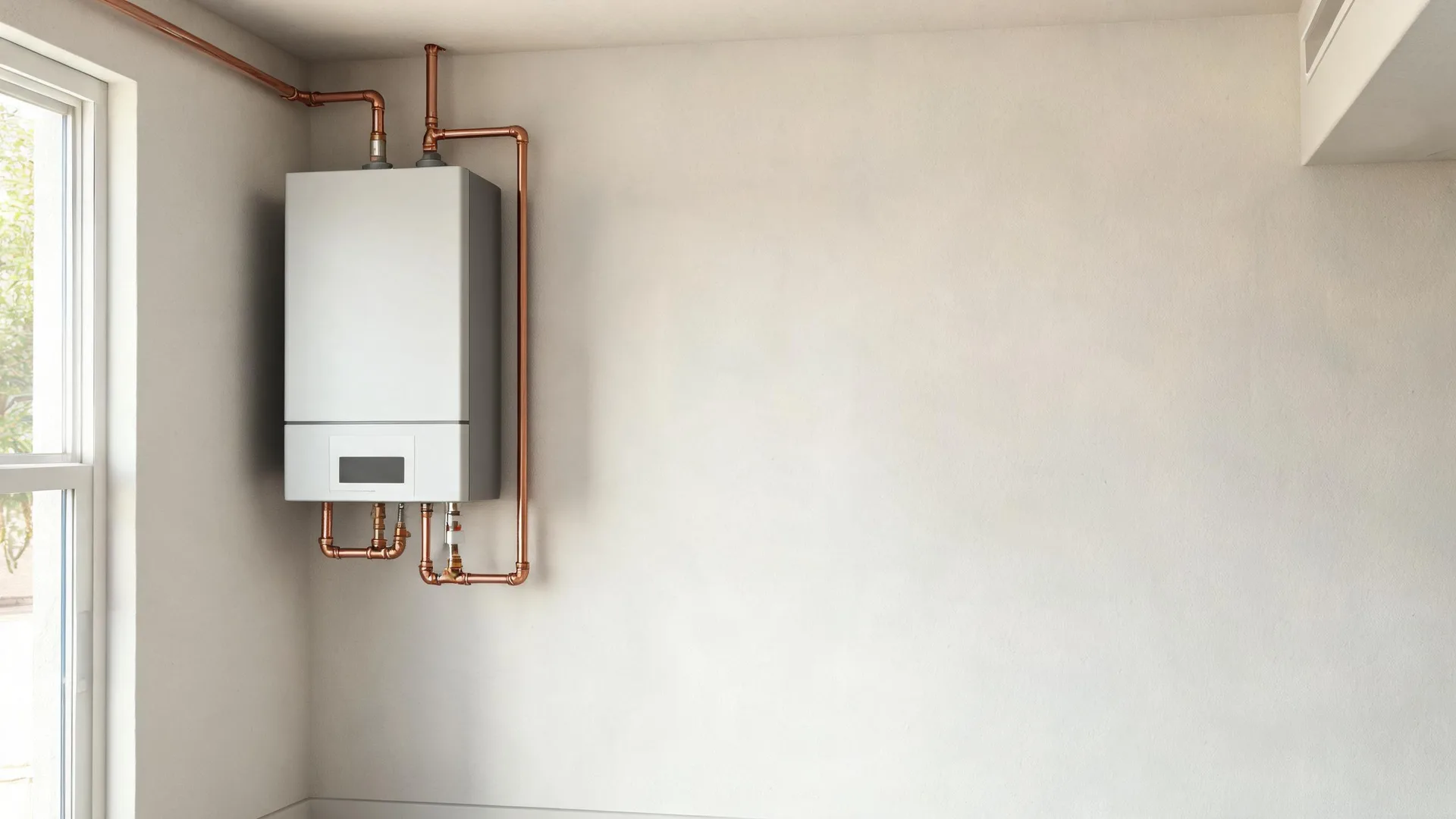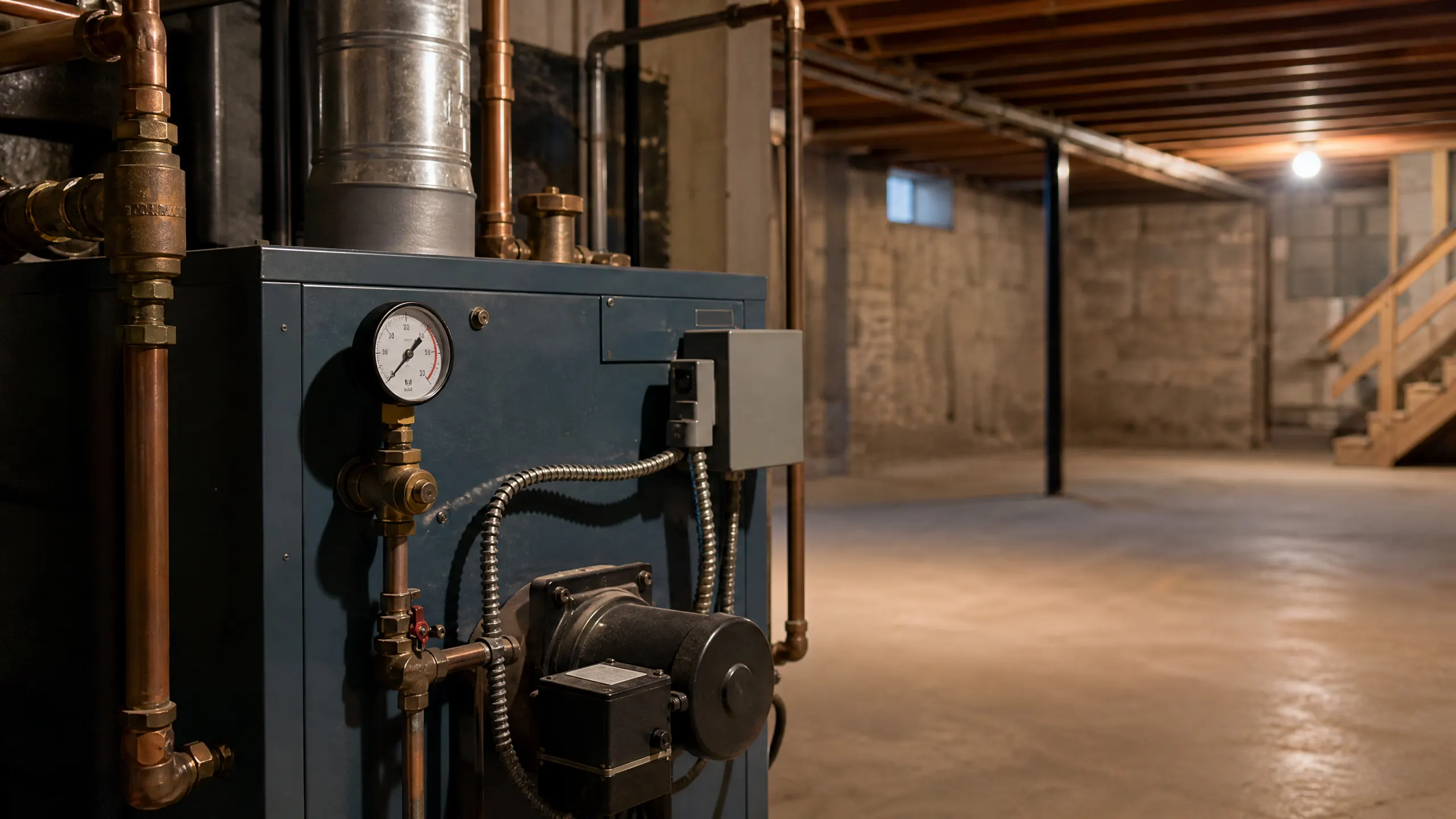
A blue steel boiler with copper pipes and a pressure gauge mounted in an unfinished basement with stone walls and wooden stairs.

Boiler Installation in Scranton, PA

Tell us about the job

Takes about a minute. No obligation.

Step 1 of 3: Equipment

Half these homes were built in 1955 or earlier

Scranton sits in Lackawanna County, where half the homes date to 1955 or earlier. A house that age was likely built with radiators or baseboard heat already in place, and that piping is already sized for a certain kind of boiler.


The new boiler has to match what's already there

Whoever installs it needs to size the unit to the radiators and pipes in the house, not just the square footage. In an older home that's a bigger job than swapping one box for another, and it's worth asking how the installer plans to handle it.

Boilers in Scranton run from September through May, nine months of the year.

A new boiler here needs to be sized for nine months of real work, not a mild season.

Nine months of heat means August is the month to get this done

Heat runs September through May
Winter nights average 19°F
Climate zone 5A
Most of Lackawanna County heats with gas64.2% of homes here run on utility gas, more than every other fuel combined

With nine months of heat a year, a boiler that's sized wrong won't hide it long. Too small, and it runs flat out all winter without catching up, especially on a night near 19 degrees. Too big, and it short cycles, kicking on and off instead of running steady, which wears on a boiler faster than steady work does. The right size comes from the heat loss of the house and the radiators or baseboard already there, not the square footage alone. Ask whoever quotes the job to show that calculation rather than a flat number.

Any new boiler here has to hit 84 percent AFUE

Lackawanna County falls in climate zone 5A, a cool zone where heating carries the bigger load. Gas-fired boilers built from January 15, 2021 on have to reach 84 percent AFUE to be sold here, so that floor is already built into what an installer can offer. A federal tax credit is available on qualifying equipment, worth asking about when you compare quotes.

Find a contractor

The boiler itself is one line on the quote

The unit is only part of what gets priced. Venting has to be run to the outside, gas piping may need to change size, and the near-boiler piping, the pumps, the expansion tank and the controls all get built around the specific model going in. None of that shows up until someone is standing in the mechanical room looking at what's already there.

What's already in the house decides how much changes

A boiler going in where one already sat, feeding the same radiators or baseboard, is a different job than one feeding a system that was converted from another fuel or added onto over the years. Mismatched zones, old piping that doesn't match the new boiler's connections, or a chimney that no longer suits a modern vented boiler all add work before the new unit ever fires.

The old boiler doesn't just get unhooked and hauled off. Someone has to drain the system, disconnect the gas and venting, and break the near-boiler piping free before anything new goes in. If it's a gas boiler, the gas line gets capped until the new connection is made. Old boiler water sitting in cast iron or steel piping for years can carry rust and sediment, and some of that may need to be flushed before the new unit runs through the same lines. An old chimney liner sized for the last boiler often isn't right for the new one, so that gets addressed during the swap rather than after. None of this shows up until the new boiler is actually running.

The old unit comes out before the new one goes in, so the house runs without heat for part of the day. Once it's out, the piping gets reworked to match the new boiler's connections, the vent gets run, and the gas line gets hooked back up. Controls and safety devices get wired in and tested, not just the thermostat but the limit switches and the pressure relief valve. Before anyone leaves, the system gets filled, purged of air, and run through a full heating cycle to check that it reaches temperature and shuts off the way it should. A boiler that's never fired under load can hide a problem that only shows up once it's actually heating the house, so that test run matters as much as anything else done that day.