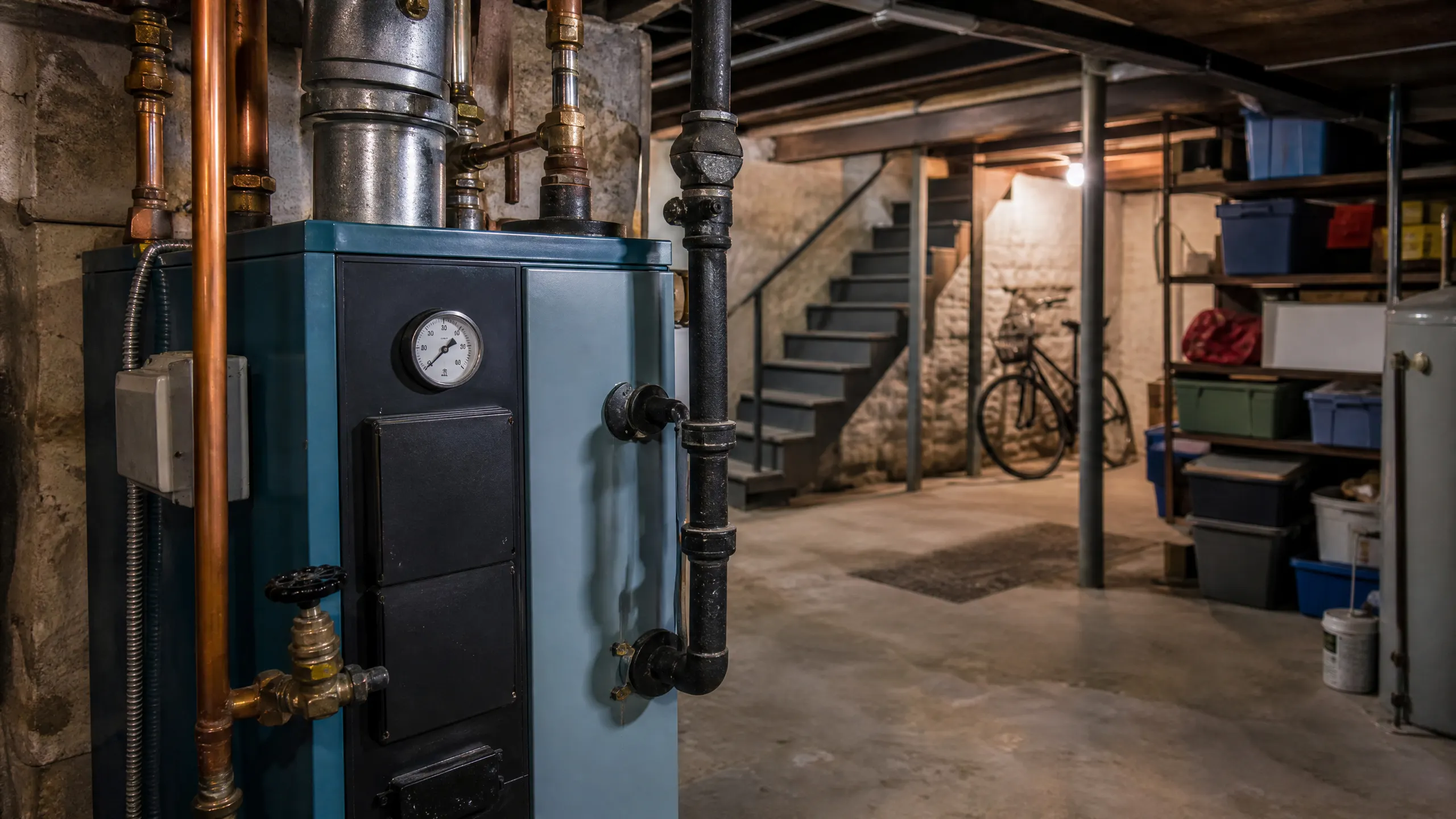




A residential basement showing a blue boiler with copper and iron pipework in the foreground, with storage shelves, a bicycle, and a staircase in the background.

Boiler Installation in East Stroudsburg, PA

Tell us about the job

Takes about a minute. No obligation.

Step 1 of 3: Equipment

Electricity in Pennsylvania ran $52.07 per million Btu in 2024, and that number matters if you're weighing a boiler against other ways to heat. A boiler that holds its efficiency rating keeps that cost down year after year. One that loses efficiency, or was sized wrong for the house, means paying that rate on more fuel than the place actually needs. This is worth asking about now, while you're choosing, since it's harder to fix once the boiler is in and running.

Heat runs about eight months a year in Monroe County, with overnight lows averaging 19°F through December, January and February.

A new boiler here needs to hold its output through a long, cold winter, not just carry a mild one.

Put a new boiler in before October, not during the first cold snap

Heat runs October through May
Winter nights average 19°F
27 winter storms from 2015 to 2024

Monroe County falls under zone 5A in the 2021 energy code, a cool zone where heating carries most of the load. Any new gas-fired boiler installed here has to meet the federal minimum of 84 percent AFUE if it was manufactured on or after January 15, 2021. That floor rules out the old low-efficiency models still running in some basements here. It does not mean every boiler on the market today is built the same way past that number, so it is still worth asking what rating a specific unit carries. A federal tax credit is available for qualifying high-efficiency systems, which is worth weighing against the purchase price before you decide.

Efficiency pays here

Power costs more here, so an efficient system pays you back on every bill.

Find a contractor
A man in a gray T-shirt and tan work pants, seen from behind, carries a worn canvas tool bag up concrete steps toward a blue front door of a house with gray siding and a potted shrub.

AFUE measures fuel, not comfort

The AFUE number on the label tells you how much of the fuel burned turns into heat for the house, versus what escapes up the flue. It says nothing about how evenly that heat reaches the rooms, how quiet the boiler runs, or how long it lasts. Boilers with the same rating can still feel different to live with, so the label is a starting point for comparing running cost, not the whole decision.
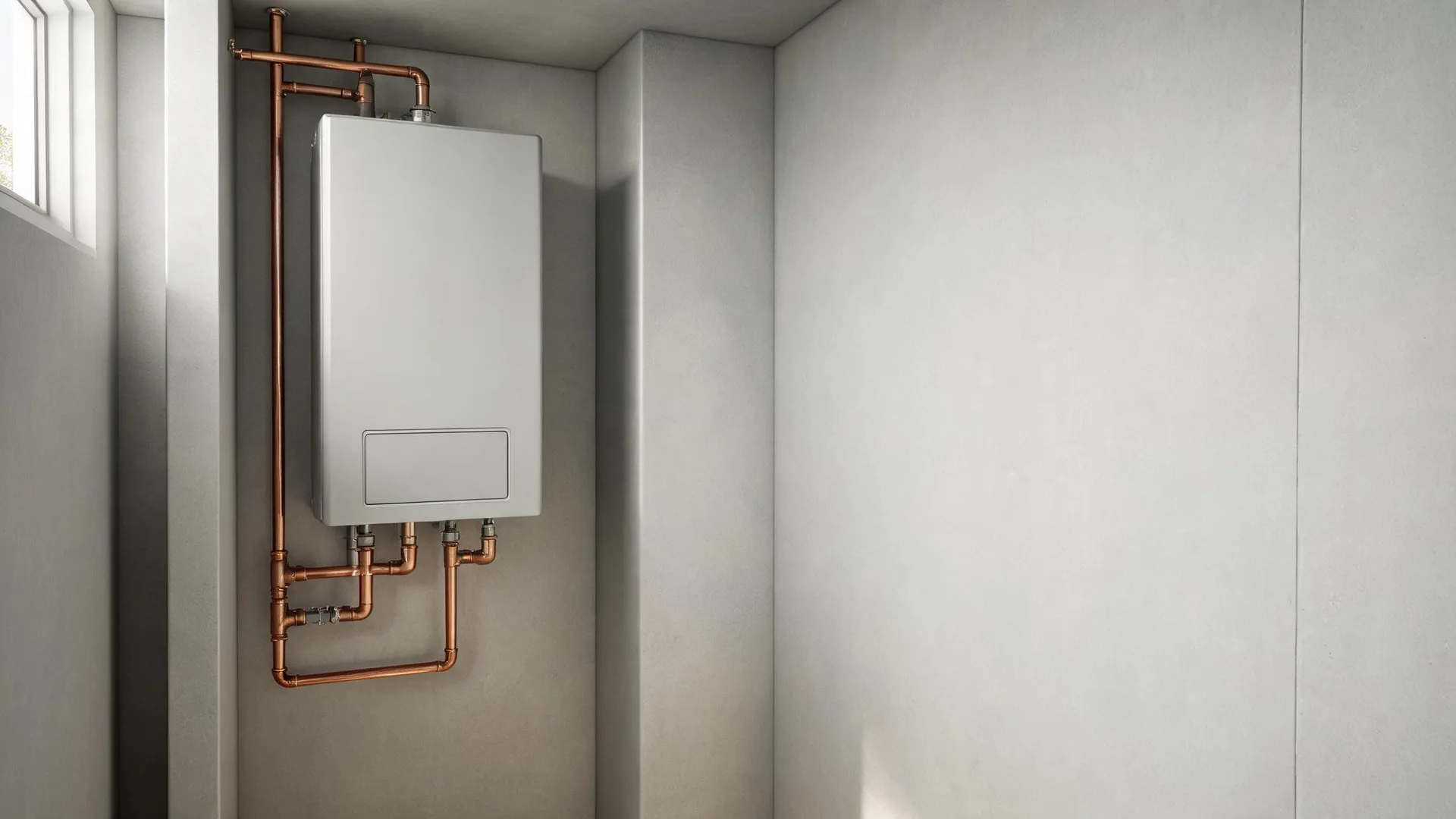
The rating holds only if the boiler is kept up

A boiler earns its AFUE rating when it is clean, properly vented, and set up the way the manufacturer specified. Scale on the heat exchanger, a dirty burner, or a flue that was never sized right for the unit will pull the real efficiency below what the label promised. Ask who will service the boiler after it goes in, since that upkeep is what keeps the rating true over the life of the system.

A boiler sized right matches its output to how much heat the house actually loses on the coldest day, no more. That used to mean a rule of thumb based on square footage, but square footage alone doesn't say much. Houses the same size can lose heat at very different rates depending on the windows, the insulation, and how much wall faces outside air. A contractor works this out room by room, a load calculation, accounting for all of that. Go too big and the boiler short cycles, firing, satisfying the thermostat fast, shutting off again before it's run long enough to reach a steady burn. That wears on the ignition system and leaves rooms feeling uneven. Go too small and it runs constantly through the coldest stretches, struggling to keep up, never quite getting there.

Installation day starts with the old boiler coming out, along with whatever venting and piping won't carry over to the new setup. The contractor sets the new boiler, levels it, and ties in the water lines, the gas line, and the flue. Electrical gets connected, the system gets filled and purged of air, and then come the controls, the aquastat, the circulator pump, any zone valves the house calls for. Nothing gets fired up until all of that is in place and checked. Once it is, the boiler runs through a full heating cycle while the contractor checks the pressure, looks for leaks at every joint, and confirms the flue is drafting the way it should. A combustion analyzer reads the exhaust to make sure the burn is clean and the boiler is actually hitting the efficiency it's rated for, not just running. Expect the house to be without heat for some of that day, so plan around it if the weather is cold.