



A two-story red brick house with black shutters and a covered porch sits behind a wide green lawn, framed by large leafy trees, with a dry-stacked stone retaining wall in the foreground.

Mini Split Installation in East Stroudsburg, PA

Tell us about the job

Takes about a minute. No obligation.

Step 1 of 3: Equipment

Electricity heats close to half the homes in Monroe County, more than any other fuel. Fuel oil comes next at almost a quarter, with propane and gas well behind. A mini split runs on electricity, so it fits right into a home already wired for electric heat, no new fuel line or tank to deal with. For a home currently on oil or propane, it's still an electric system going in, but worth asking what's already in the walls before the contractor shows up.

8 months
October through May, your system heats
2 months
July through August, it cools
19°F
the average winter night it heats against
79°F
the average summer afternoon it cools against
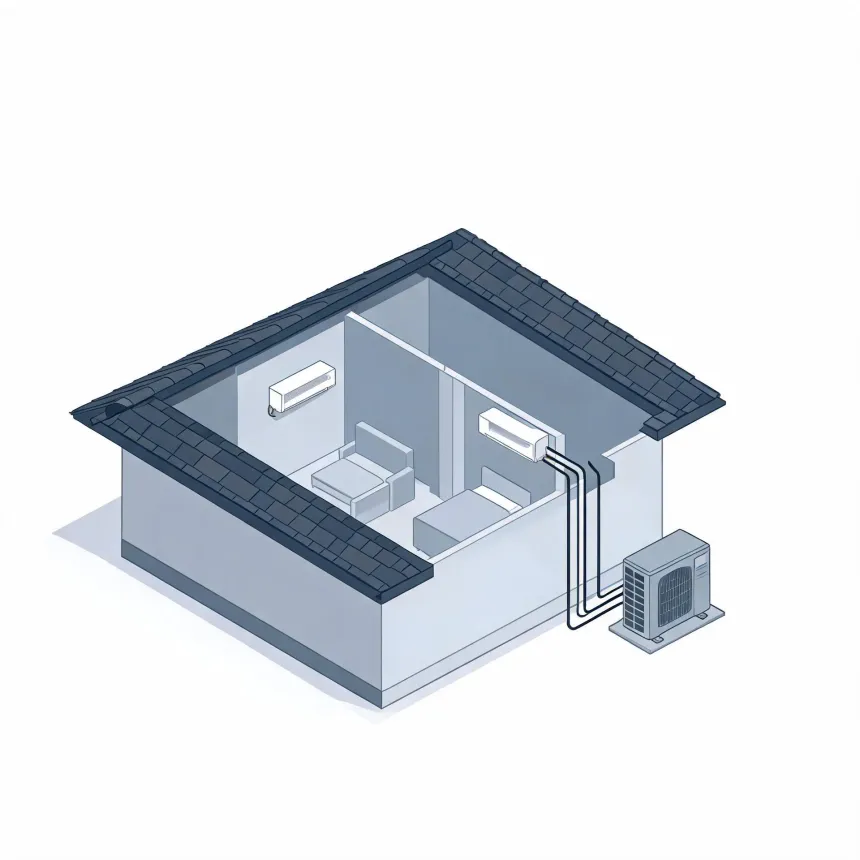
Isometric illustration of a cutaway house with tiled roof showing two wall-mounted indoor mini-split units connected by line sets to an outdoor condenser beside the building.
Your system heats October through May and cools July through August.

NOAA nClimDiv, 1991–2020 normals

East Stroudsburg winters and summers don't call for oversized equipment or special cold-climate gear.

A standard size, standard efficiency mini split handles the heating and cooling load here.

June is the month to get a mini split in, not July

Cooling runs July through August
Summer afternoons average 79°F
174 damaging wind events from 2015 to 2024

Monroe County falls in climate zone 5A, where heating carries more of the load than cooling. A mini split going in here still has to meet the federal minimum for a split-system heat pump, 14.3 SEER2 for cooling and 7.5 HSPF2 for heating. That standard doesn't carve out a separate rule for ductless systems, so a mini split has to clear the same bar as any other heat pump. A unit meeting that minimum is already built to handle a winter like this one. There's also a federal tax credit for a qualifying heat pump, worth asking a contractor about when comparing models.

Go with the standard fit

A standard size and efficiency fit fine here. There's no local reason to go bigger or pricier.

Find a contractor
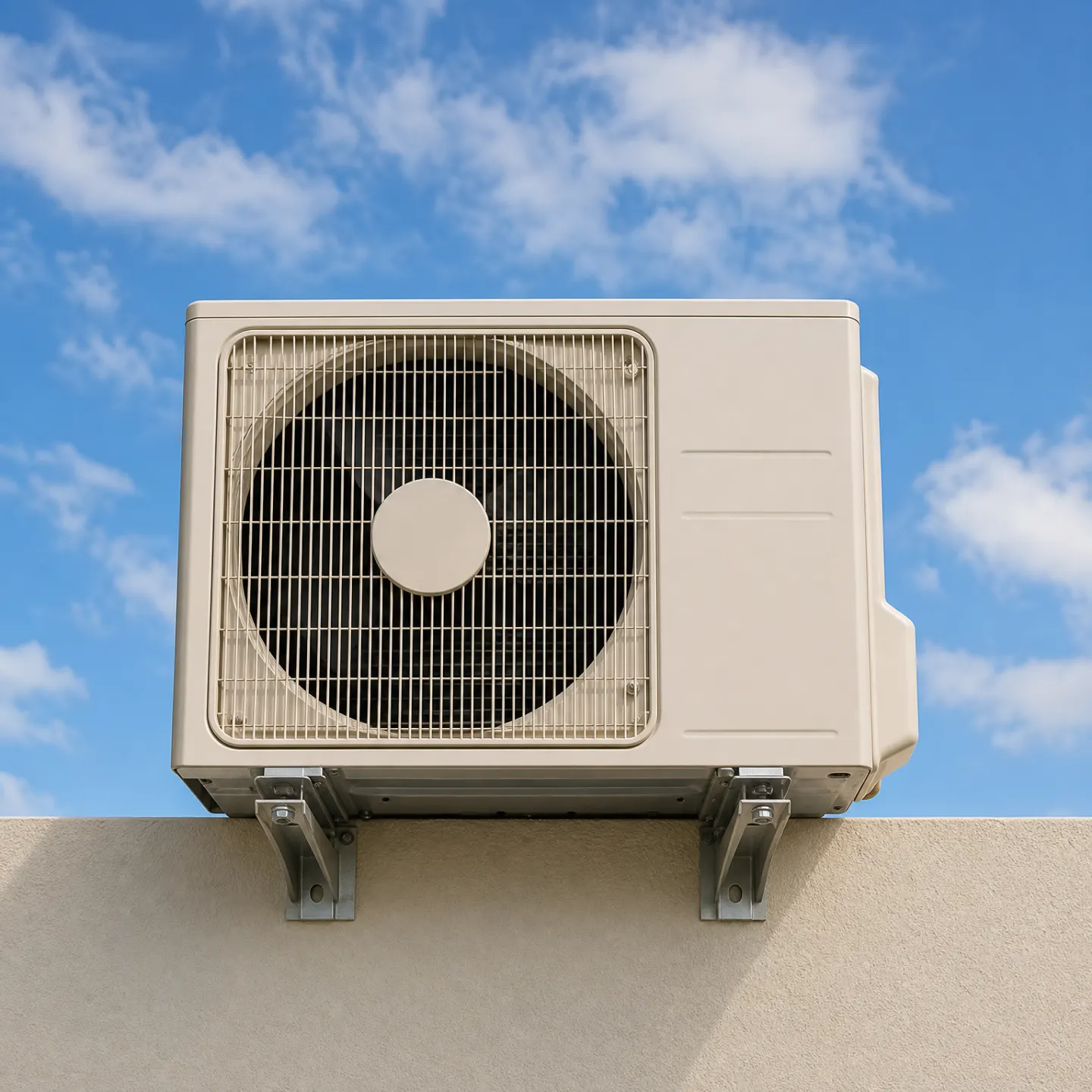
A beige split-system air conditioner outdoor condenser unit mounted on metal wall brackets atop a stucco wall.

The old system stays until the new one is proven

Whatever is getting pulled out, whether it's a window unit, electric baseboard or an older heating system, it doesn't come down until the mini split is in and running. A contractor usually leaves the old equipment in place through the swap so the home has heat or cooling the whole time, then disconnects and hauls it out once the new system is tested. Baseboard heaters need their circuit checked before they're pulled, since that wiring sometimes gets reused for something else. A window unit just comes out of the frame. If the old system ran on oil or propane, that tank and line don't go away on their own, they need their own shutoff and removal, separate from the mini split install itself.

Ask how many zones it's rated for, not just the load

A mini split system is sized by adding up the heads it has to run, not just the square footage of the home. A contractor comparing systems should walk through how many indoor heads each outdoor unit supports and whether that unit can still hit its rated output with all of them calling for heat or cooling at once. An outdoor unit stretched across more zones than it handles well will run longer and satisfy each room less.
Ask what happens at low load, not just peak load

Most of the time a mini split isn't working against the coldest or hottest hour of the year, it's holding a room steady on a mild afternoon. That's where the compressor's turndown matters, its ability to slow down and run at a fraction of full output instead of cycling on and off. A system that only quotes its peak capacity isn't telling you how it behaves the rest of the time, which is most of the time.

Sizing a mini split isn't about matching the biggest number on the spec sheet to the room. Too much capacity and the compressor short cycles, hitting the setpoint fast and shutting off before it's pulled any humidity out of the air or settled into a steady run. Too little and it never catches up on the hardest days, running flat out without getting there. The right size comes from a room-by-room heat loss and heat gain calculation, not a guess based on square footage. That calculation accounts for insulation, window area, ceiling height and how the rooms are laid out relative to each other. A contractor who skips it and sizes off square footage alone is guessing, and the unit ends up working against the room instead of with it.

The SEER2 and HSPF2 numbers on the label come from a lab test, run under set conditions so one model can be compared against another. They're a ratio of heat moved to electricity used, not a bill estimate, and nothing on that label knows what shape a particular room is in or how well it holds heat. A higher HSPF2 means the heat pump moves more heat for the same power going in, which matters most on the coldest days of the year. SEER2 works the same way on the cooling side. Neither number says anything about sizing or installation, and a correctly sized unit with an ordinary rating will often beat an oversized one with a high rating, because the lab number assumes the system is running the way it was designed to run. The rating is a starting point for comparing models, not the whole answer to how the system will perform in a given room.