Gas heats half of Luzerne County
Utility gas heats 50.3% of occupied homes in Luzerne County, with fuel oil and electric heat making up most of the rest. A mini split is rarely the only system in a home like that.

Takes about a minute. No obligation.
Utility gas heats 50.3% of occupied homes in Luzerne County, with fuel oil and electric heat making up most of the rest. A mini split is rarely the only system in a home like that.
Where a furnace or boiler already handles the coldest months, a mini split is usually sized to cover cooling and the shoulder seasons, not to replace the main heat source.
NOAA nClimDiv, 1991–2020 normals
Half the homes in Luzerne County were built in 1960 or earlier.
An install has to work with the walls and layout you have, not a standard new build.




Luzerne County sits in zone 5A, a cool climate where heating carries more of the year than cooling. Any mini split installed here still has to clear one bar. A ductless heat pump counts as a split system under the federal standard, so it has to hit at least 14.3 SEER2 for cooling and 7.5 HSPF2 for heating. There's no separate, lower bar for ductless systems. That rules out weaker units rated for warmer places, and it's worth checking the paperwork on anything you're quoted.
Cooling in Luzerne County runs July through August. June is the month to have a new mini split in and running, not the month you find out the old one quit. Installing before the season means it happens on your schedule, with time to get it done right instead of done fast.
Find a contractor
Cooling here runs about two months, July and August, with afternoon highs around 79. That is a short, mild season for a compressor to work through. Heating carries the rest of the year, and a mini split used for cooling in a home like that only has to show up for those two months and run. A system that fits the job holds up fine over the years without needing the top-tier efficiency model.
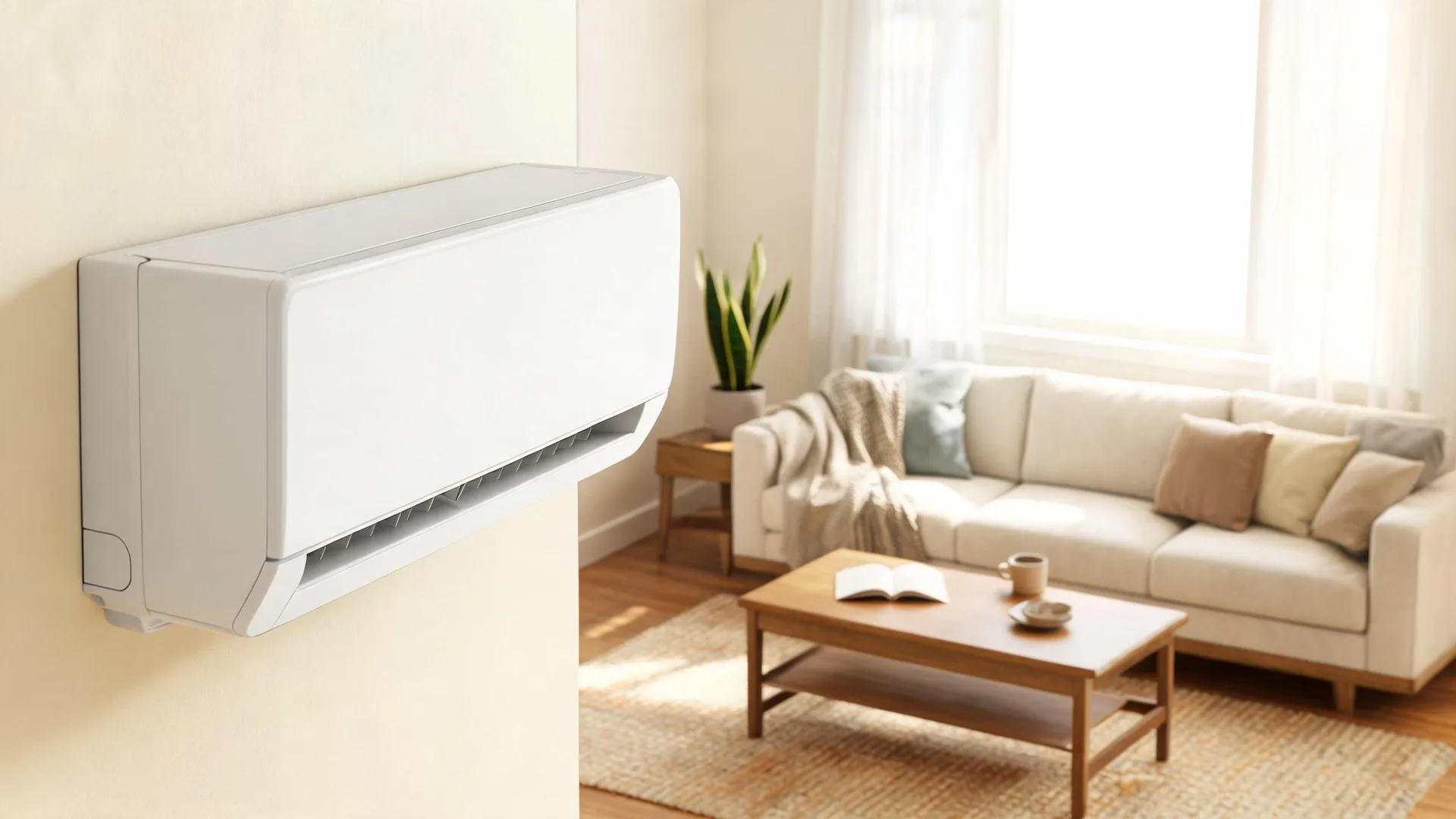
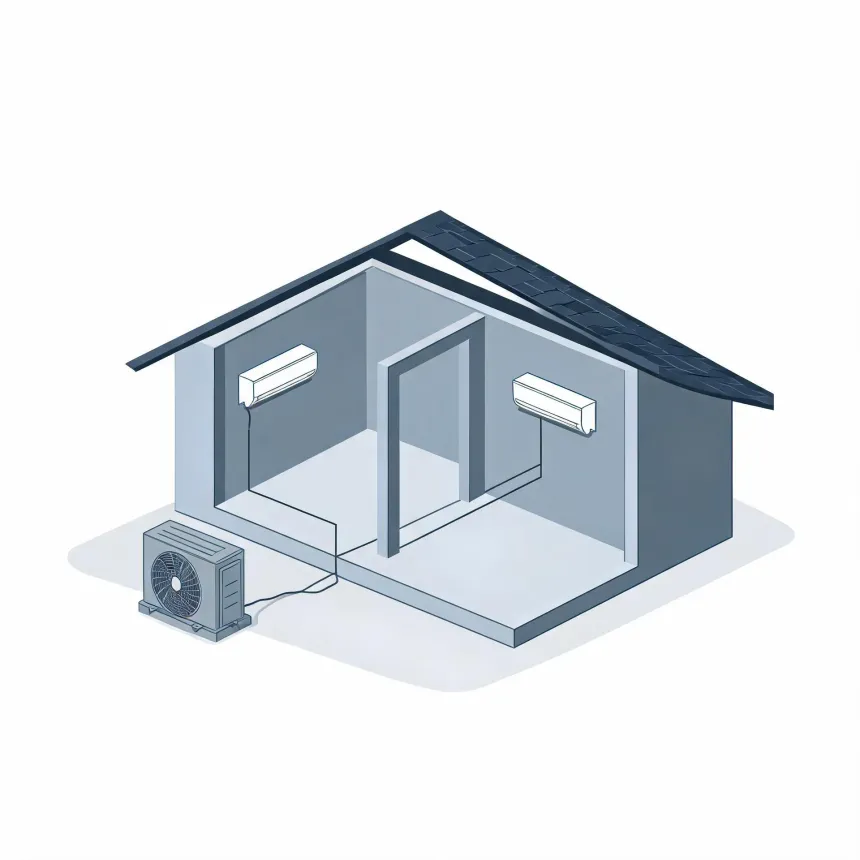
A mini split system is really one outdoor unit paired with one or more indoor heads, and each head has its own capacity. A contractor sizing the job should walk each room, not just quote a total number for the house. A head that's too big for its room cycles on and off and never controls humidity well. One that's too small runs constantly and still can't keep up on the coldest or hottest days.
The indoor head connects to the outdoor unit through a line set carrying refrigerant, plus a drain line for condensate. Where these run matters as much as where the equipment sits. A drain line needs a real slope to clear water, and a line set that has to cross framing or finished walls changes what the install involves. Ask to see the planned path before the work starts, not after.
Sizing a mini split means matching the head to the room, not guessing at a number that sounds about right. A contractor works it out from the room's square footage, its ceiling height, how many walls face outside, and how many windows it has. A room over a garage loses heat differently than one over a heated basement. A sunny room with west-facing glass picks up heat a shaded room never sees. Get the size wrong in either direction and the comfort suffers. Too big and the unit blasts the room to temperature and shuts off before it can pull the moisture out of the air, so the room feels cool and damp rather than comfortable. Too small and it runs flat out and still can't keep up when the temperature swings hard. The right size is the one that runs long, steady cycles and barely gets noticed.
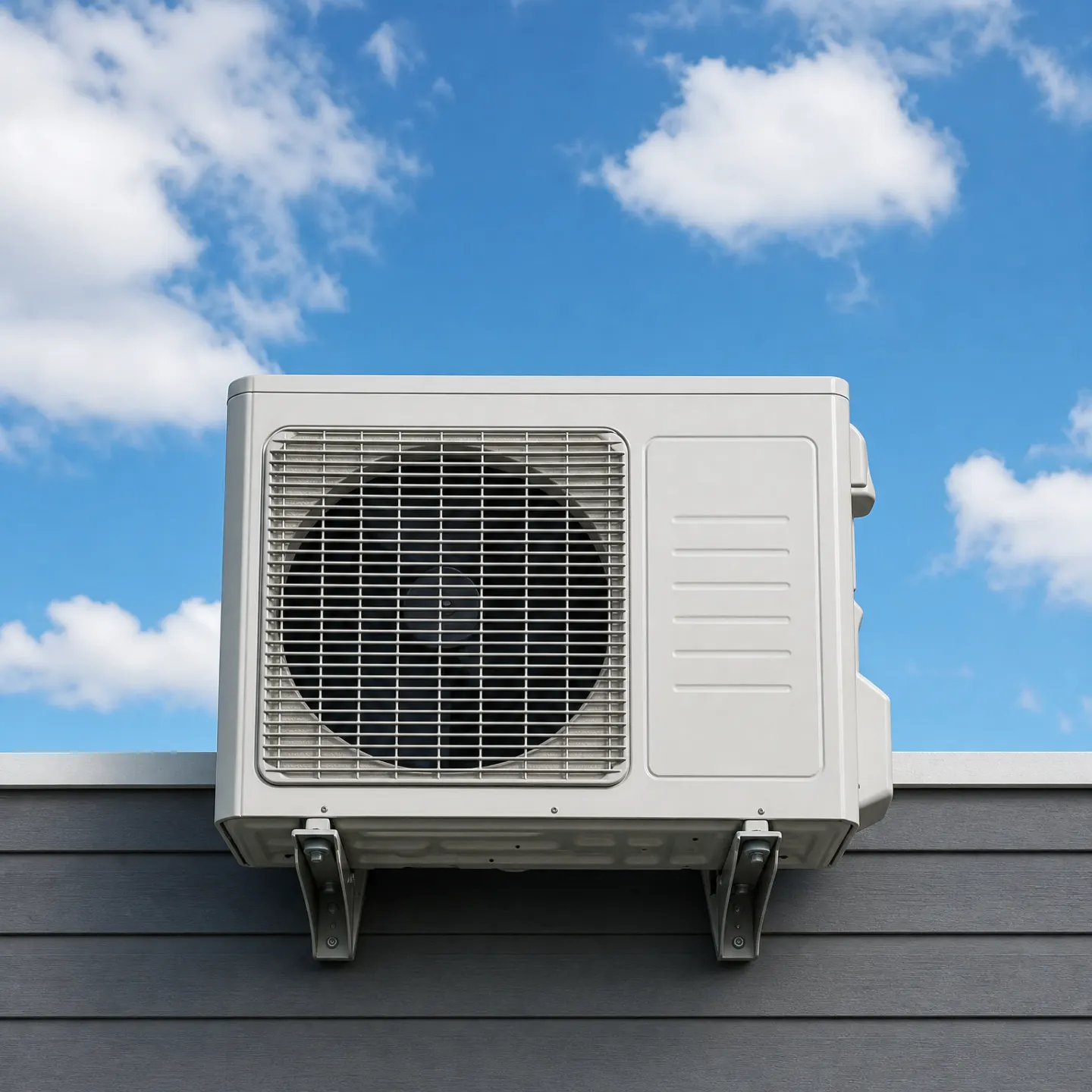
Installation day starts with the outdoor unit. It needs a pad or wall bracket, clearance to pull air through the coil, and a spot where runoff and noise won't bother anyone. Inside, each head gets mounted to a wall or ceiling bracket, usually high up, over a stud or framing that can hold its weight. The crew drills a single hole through the wall for the line set, the wiring, and the drain line to pass through together, then runs the line set to the outdoor unit and connects it. That connection gets checked for leaks before the system is sealed up and charged with refrigerant. Once it's charged, the system gets tested on both heating and cooling before anyone calls the job finished, since a leak or a bad connection shows up under load, not sitting idle.