A dark modern bedroom with grey bedding, a wall-mounted air conditioning unit, and a cat resting on the bed.

Mini Split Installation in Bloomsburg, PA

Tell us about the job

Takes about a minute. No obligation.

Step 1 of 3: Equipment

Bigger isn't better

An oversized mini split cools the room fast. Then it shuts off before it pulls the moisture out of the air, and the room ends up cool and damp. The compressor spends its life switching on and off instead of running steady, which wears it out faster. Undersized does the opposite. It runs nonstop and still can't keep up on the hottest or coldest days.

It's worked out room by room

A contractor sizing the job does a room by room load calculation. Square footage matters, but so does how many windows face which direction, the ceiling height, and how well the room holds its temperature. That load gets matched to a specific indoor unit and outdoor condenser built to handle it. On a multi-zone system the math changes again. The outdoor unit has to cover the combined load of every room running at once, not just each room added up on its own.

8 months
October through May, your system heats
2 months
July through August, it cools
20°F
the average winter night it heats against
80°F
the average summer afternoon it cools against
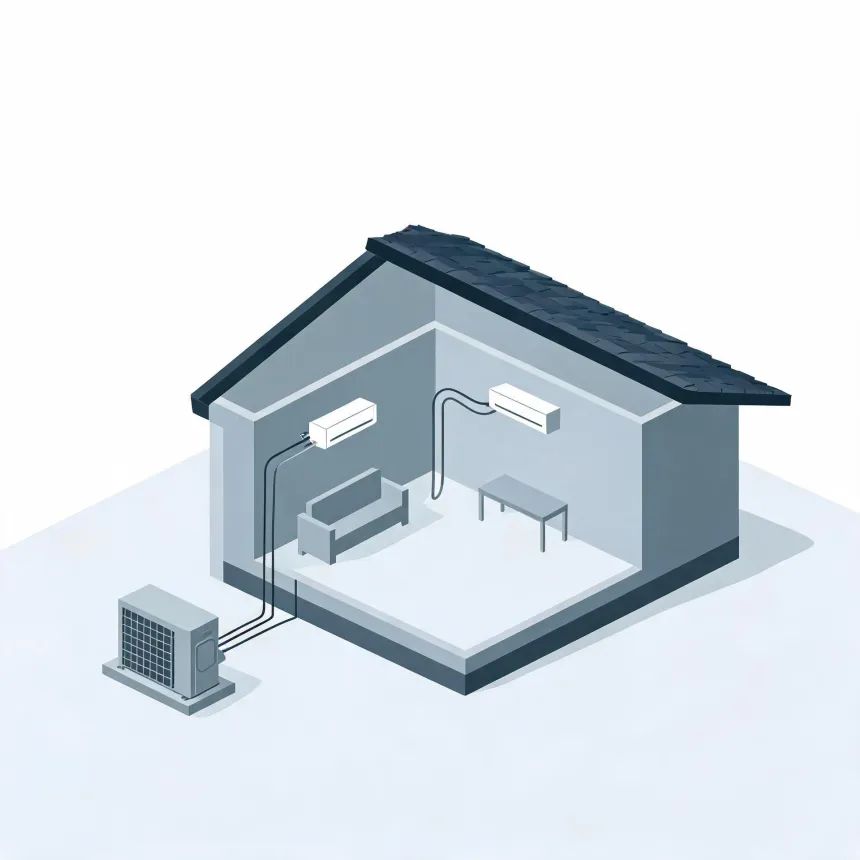
Isometric illustration of a cutaway house showing two wall-mounted indoor air conditioning units connected by line sets to an outdoor condenser unit, with a sofa and table inside the room.
Your system heats October through May and cools July through August.

NOAA nClimDiv, 1991–2020 normals

Cooling in Bloomsburg runs July through August.

June is the month to get a mini split in, before the first hot day puts it to work.

Two months of cooling, mild even then

Cooling runs July through August
Summer afternoons average 80°F
79 damaging wind events from 2015 to 2024

Half the homes in Columbia County were built in 1970 or earlier. A house that age wasn't built with a mini split in mind. Whoever installs it has to work with the walls, windows and room layout already there, not a layout chosen to suit the equipment. Where the outdoor unit can sit, how the line set gets from outside to the indoor head, where there's a wall that backs up to the right spot, all of that gets figured out around a house that's already standing. None of it decides whether the system works. It decides how much thought goes into fitting it in before the work starts.

Zone 5A sets the minimum a mini split has to meet

Columbia County sits in zone 5A, a cool climate where heating does most of the work. Any mini split installed here has to meet the federal minimum for split-system heat pumps, 14.3 SEER2 for cooling and 7.5 HSPF2 for heating. That rules out the lower-efficiency models still sold in warmer parts of the country. A federal tax credit is available on equipment that qualifies.

Find a contractor
A man in a cap, work jacket and tan trousers carries a canvas tool bag up wooden porch steps toward a blue front door of a house with lap siding.
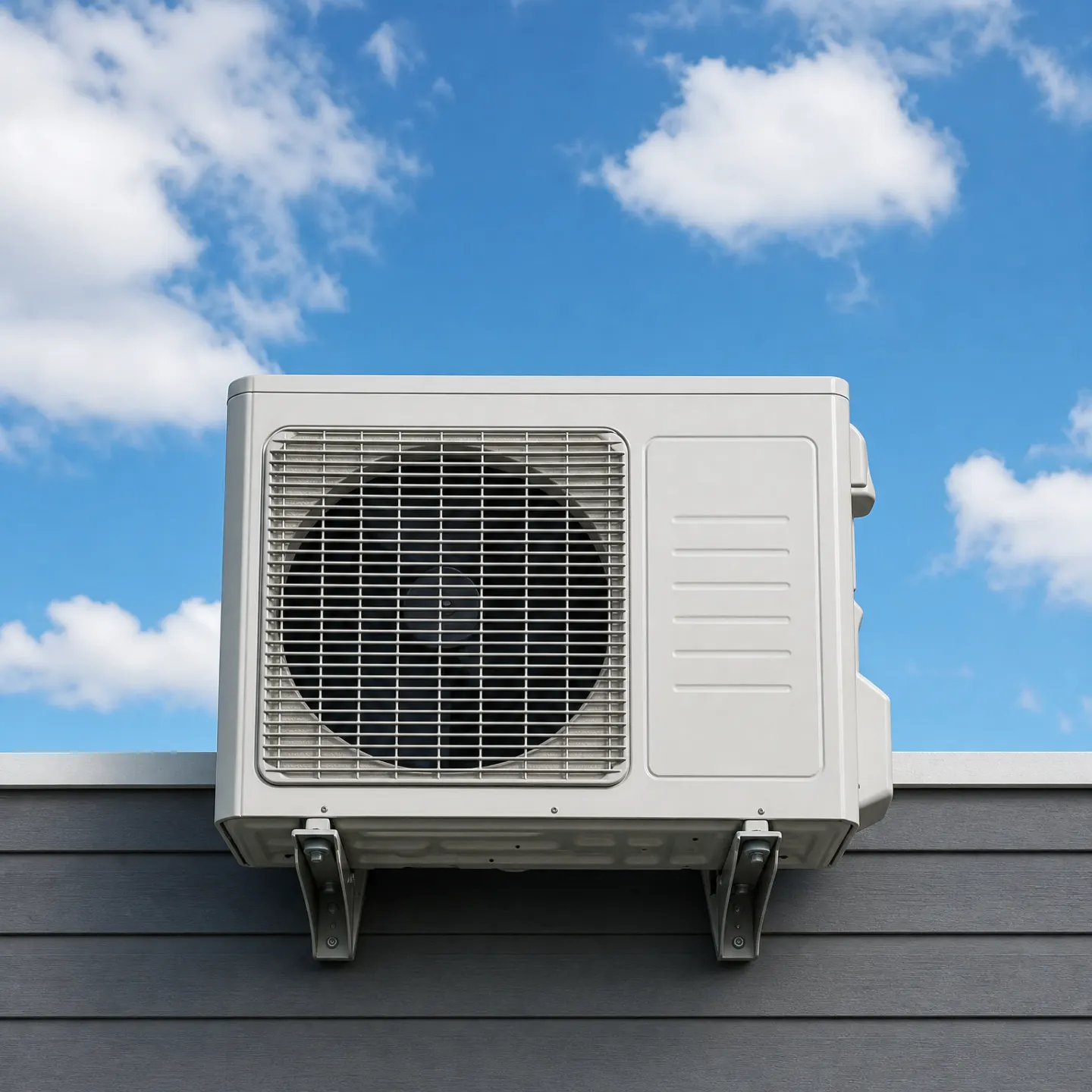
A white outdoor air conditioner condenser unit mounted on metal wall brackets against gray horizontal siding, with a blue sky and white clouds behind it.

Ask how it fits your house before you book the work

A mini split installed now is going into a house that's already standing, with its walls and rooms where they are. Ask what that means for your place before the crew shows up. Where's the outdoor unit going. Which wall backs up to where the indoor head needs to be. That conversation happens before the work starts, not during it.

The old system usually stays put

A mini split going in doesn't mean the old furnace or central air has to come out. Ductwork can stay where it is, unused, or still carrying air if the new system only covers part of the house. What actually gets removed is whatever's being replaced directly, like an old window unit, a baseboard heater, or an outdoor condenser that's failed.

A disconnected system still needs attention

An old furnace or boiler that's shut down but left in place should have its gas line capped and sealed, not just turned off at the valve. A central air condenser that's no longer hooked up still holds refrigerant. That refrigerant has to be recovered properly. Left alone, it leaks out on its own over time.

When you're comparing quotes, ask what SEER2 and HSPF2 numbers each system carries, not just the brand or the price. Ask whether the quote is for a single zone or multiple zones, and if it's multiple, whether the outdoor unit was sized for all of them running together. Ask what happens if one indoor head needs service years from now, whether that unit still gets supported on its own or whether the whole system has to come apart. Ask about the line set too, how far it has to run and whether that length changes the system's efficiency or its price. A contractor who answers these without hesitation has done the math already. One who waves them off hasn't.

Installation day starts outside, with the condenser going up on its mounting brackets or pad and the line set routed through a hole drilled in the wall. That hole gets sealed around the line set when the work is done, not left gapped. Inside, the indoor head gets mounted to a plate on the wall, then the refrigerant lines, power, and condensate drain all run to it before anything gets connected. Once the lines are joined, the system gets evacuated with a vacuum pump to pull out air and moisture, because either one left in the lines will keep the system from running right later. Only after that does the refrigerant get released to charge the system. The last step is running it, checking the temperature split between the air going in and the air coming out, and making sure the condensate actually drains where it's supposed to instead of backing up.