A row of illuminated white colonial houses with black shutters and a stone wall along a road at dusk.

Boiler Installation in Bloomsburg, PA

Tell us about the job

Takes about a minute. No obligation.

Step 1 of 3: Equipment

Electricity here runs $52.07 per million Btu

Pennsylvania's electricity cost $52.07 per million Btu in 2024, among the higher rates nationally. A boiler that runs on electric power, or one with electric components doing extra work, carries that rate every time it fires.


Efficiency is what you're buying

Two boilers can heat the same house and cost very different amounts to run. At Pennsylvania's rates, the difference between a boiler that converts fuel well and one that doesn't shows up on every bill for as long as you own it.

Boilers in Columbia County run from October through May.

Install before September ends and the first cold night isn't a deadline.

Most homes in Columbia County heat with electricity, and a boiler here can run on it too

31.1% of homes heat with electricity
Heat runs October through May
Winter nights average 20°F

A boiler installed here is going to run eight months out of the year, October through May. That's most of the calendar. Overnight lows average 20°F across December, January and February, so it's not running light during those months either, it's recovering heat as fast as the house loses it. A boiler sized too small for the house will run longer than it should trying to keep up on those cold nights. One sized too big will cycle on and off more than it needs to, and that wears parts sooner. Get the sizing right for this house, not a guess based on the last one.

Half the homes here were built in 1970 or earlier. Size the boiler to this one.

Half the homes in Columbia County were built in 1970 or earlier. An older house doesn't heat like a new one, and a boiler sized for the wrong house will show it, either running longer than it should or cycling more than it needs to. Get sizing done for the house you actually have.

Find a contractor
A man in a cap, dark long-sleeved shirt and brown work pants carries a canvas tool bag up porch steps toward a blue front door, with a shrub in a blue planter beside it.

The boiler is the smaller part of the bill

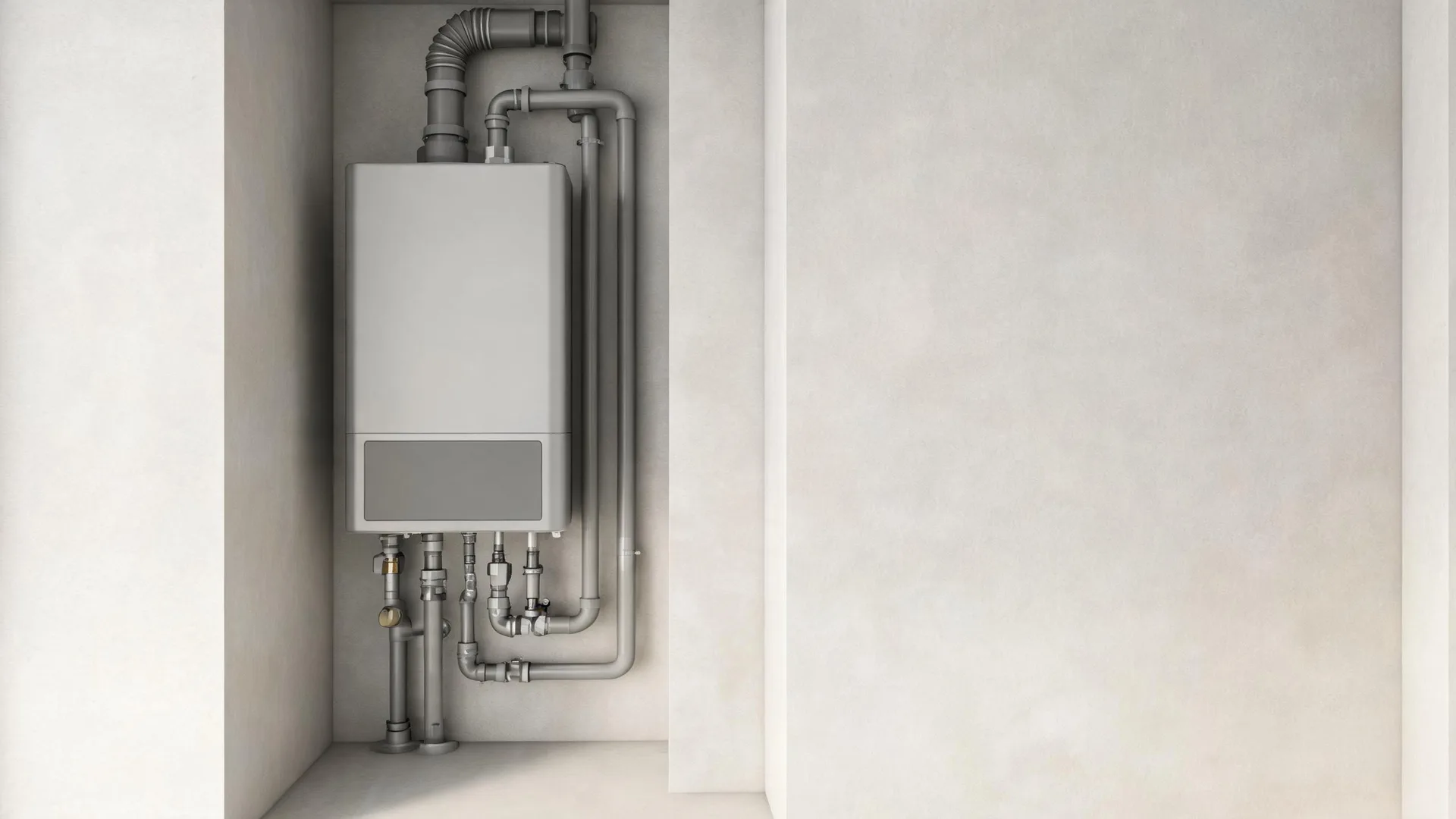
Venting, piping and the near-boiler setup decide how the job goes. Running new venting costs more than reusing a line that already fits the new unit. Rerouting pipe or replacing old radiators or baseboard adds work the boiler itself doesn't account for. Houses with similar heat loss can still need very different work underneath the unit.

Matching the old system can cost more than changing it

A boiler that heats through radiators works differently than one feeding baseboard or radiant floor loops, and swapping the heat distribution system is its own project on top of the boiler. Keeping the distribution the house already has is usually the simpler path. Changing it means pricing both jobs, not one.

Sizing a boiler comes down to a heat loss calculation, room by room, not a match to the old unit or a guess based on square footage. The contractor looks at wall and ceiling construction, window area, and how much of the house is exposed, then works out how much heat escapes on the coldest nights. That number tells them the output the boiler needs to produce, no more and no less. A boiler that's too big for the heat loss will short cycle, turning on, satisfying the thermostat fast, then shutting off again before it's run long enough to warm the water evenly. That on-off pattern wears the ignition system and the pump harder than steady running does. A boiler that's too small never shuts off on the coldest days, because it can't produce heat as fast as the house loses it. The house stays cold at the edges even with the boiler running constant. Pipe length, radiator or baseboard output, and insulation all factor into the same calculation, which is why the same boiler can be right for one house and wrong for the one next door.

Installation day starts with the old boiler coming out, and if it's a different fuel type or a different venting style, that part takes longer than the swap itself. The near-boiler piping gets built to fit the new unit, not patched to match what was there. Gas or oil lines get connected and tested for leaks before anything fires. Electrical gets run for the controls and circulator pumps. Once it's hooked up, the system gets filled and purged to clear air out of the lines, because trapped air in the piping causes noise and uneven heat later. Then it's fired up, checked for correct pressure, and the combustion gets tested and tuned so it's burning the way it should, not just running.