




A white picket fence runs along a mown grass lawn in front of a row of gray clapboard houses with gabled shingle roofs, with large leafy tree branches overhead.

Boiler Repair in Bloomsburg, PA

Tell us about the job

Takes about a minute. No obligation.

Step 1 of 3: Equipment

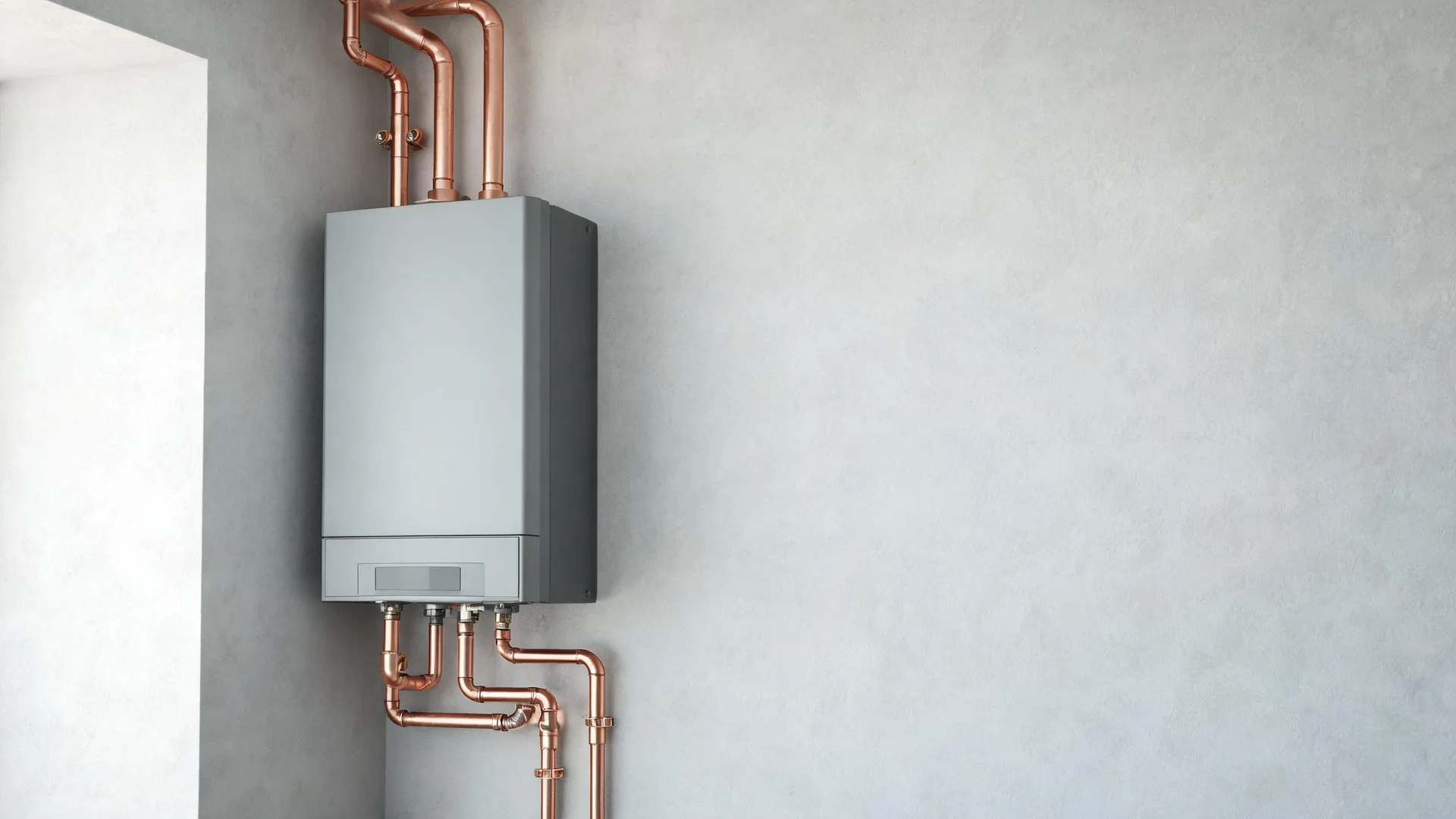
Your boiler runs about eight months out of the year in Bloomsburg, October through May. That overnight cold doesn't help either. Winter nights here average 20°F, and a boiler sized for that has to stay busy to keep up. All those hours add up. Seals dry out, the igniter wears down, mineral deposits build up where you can't see them. If yours is acting up now, that's likely why. Worth having someone look at what's actually going on before it gets worse.

Electricity in Pennsylvania runs $52.07 per million Btu.

A boiler that's struggling burns more of it every single day it's not fixed.

Half the homes in Bloomsburg were built by 1970, and a boiler that old is worth a second look

Half the homes here were built by 1970
Climate zone 5A
Heat runs October through May
October starts eight months of workBoilers in Bloomsburg start running in October. Weak parts fail in the first cold weeks.

A boiler acting up rarely fixes itself. Whatever's causing it, a dry seal, a worn igniter, scale built up in the heat exchanger, gets worse under the kind of daily use a Bloomsburg winter asks for. Short cycling, strange noises, uneven heat, or a pilot that won't stay lit are all worth a look now rather than after another cold snap. A licensed contractor can tell you whether it's a quick fix or something bigger, and catching it early usually means fewer parts have to be replaced.

Every day this waits is another day it costs you more

A boiler that's not running right doesn't idle, it just burns more to put out the same heat. At $52.07 per million Btu, that's not a small difference by the time spring comes. Get it looked at now and it stops costing you every day between now and then.

Find a contractor

A small leak doesn't stay small

A seal or fitting that's weeping water keeps weeping every time the boiler fires. The moisture reaches metal it shouldn't touch, and rust starts in on the burner or the heat exchanger. What started as a drip can end up as a part that has to be replaced instead of resealed.
Scale only builds in one direction

Mineral deposits inside the heat exchanger don't wear away on their own. Every cycle adds a little more, and the boiler has to work harder to push heat through it. Left alone, the burner runs longer to do the same job, and the extra heat it's holding onto can crack the exchanger itself.

Before you call anyone, check what you can see and hear. Look at the pressure gauge. If the needle has dropped low or sits near zero, that alone can cause weak heat or shutdowns. Check that the pilot light or ignition window shows a steady flame, not one that gutters or won't catch. Listen for banging or kettling sounds when the boiler fires, that's usually scale or trapped air inside, not something to ignore. Look under the unit and at the fittings for any water, even a small amount. And check that the thermostat is calling for heat and has power, since sometimes the boiler isn't the problem at all. None of this tells you how to fix it, but it tells a contractor exactly where to start.

A diagnostic visit starts before any panel comes off. A tech will ask what you've noticed, when it happens, and whether it's gotten worse, because that narrows things down fast. Then they'll check system pressure, look at the flame, and run the boiler through a cycle to see it fail or hesitate in real time rather than going on your description alone. Combustion gets checked too, since a flame that's burning wrong points straight at an air or gas problem. Wiring and the control board get a look if the boiler is short cycling or not responding to the thermostat at all. By the end you should have a straight answer on what's wrong and what it takes to fix it, not just a guess.