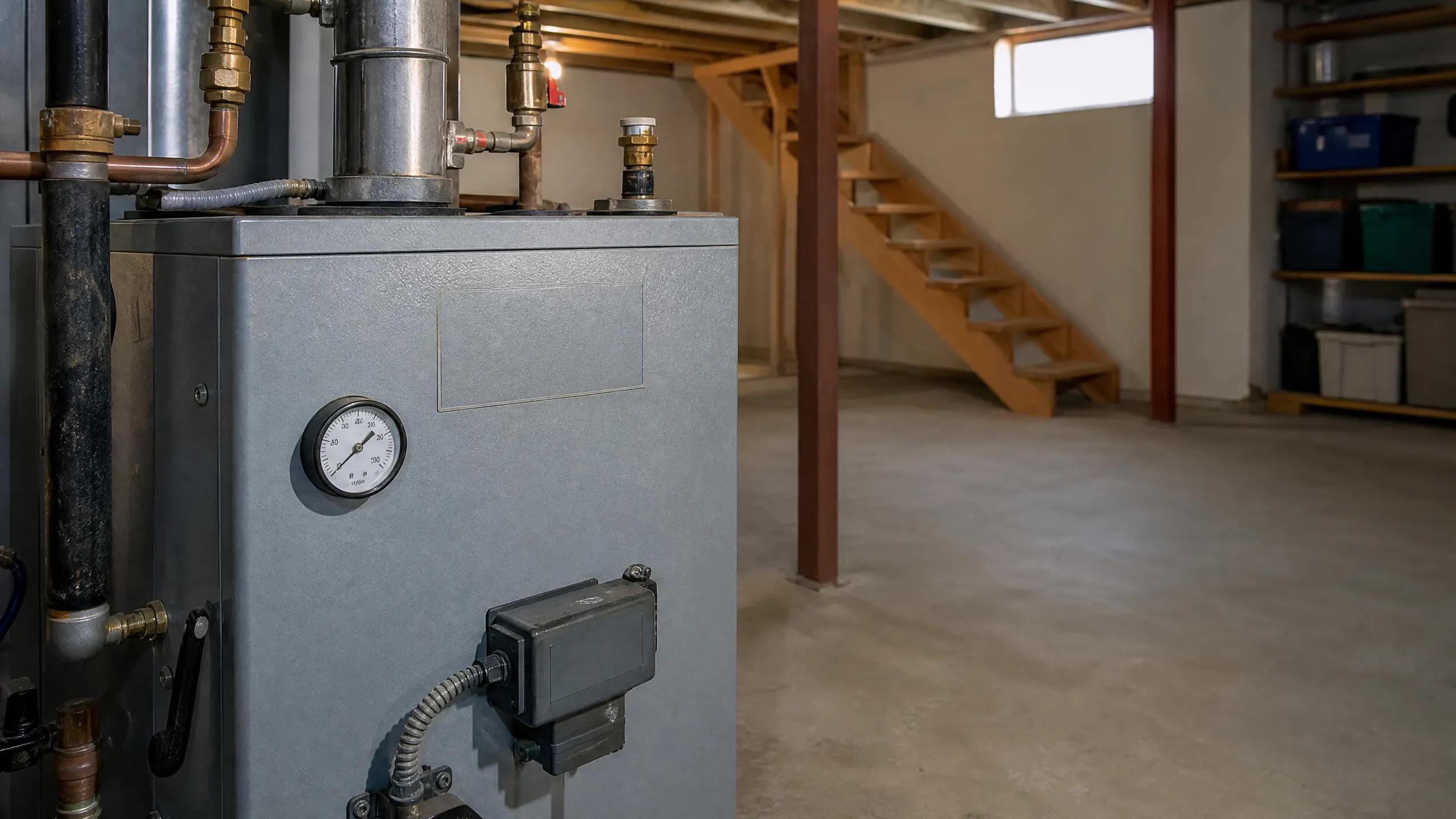



A gray boiler with copper pipes and a pressure gauge stands in an unfinished basement with wooden stairs and concrete floors.

Boiler Repair in Pottsville, PA

Tell us about the job

Takes about a minute. No obligation.

Step 1 of 3: Equipment

Half the homes in Schuylkill County were built in 1946 or earlier. If your boiler came with a house that old, it has likely been running a long time already, longer than a boiler is generally built to last. That matters when something goes wrong. Before you repair a cracked heat exchanger or a failed circulator pump, ask the contractor how much life is left in the boiler itself. A repair fixes what failed today, but it does not tell you what else in that same unit is close behind.

A boiler that won't fire can mean no power to the unit, not a dead boiler.

Check the switch, the breaker and the thermostat before you call anyone out.

Oil here runs $25.15 a barrel, and a bad boiler burns through it all winter

Heat runs October through May
Winter nights average 21°F
20 winter storms from 2015 to 2024

Boilers here start the season in October, and that first firing after months idle is when a weak part usually gives out. A circulator pump that was struggling in the spring will show it the day the boiler has to run for hours straight. September is the better time to find that out, while the boiler can still sit idle a little longer without anyone feeling it. A contractor can fire the system up and watch it work before the house actually needs the heat. Once the season starts, it runs through May, so whatever is wrong in October tends to stay wrong, or get worse, for the months after.

Ask what you're really paying for before you fix it

Ask the contractor how much life is left in the boiler before you approve the repair. A cracked heat exchanger or a dead circulator pump gets fixed either way. What that answer tells you is whether you're about to pay for one more repair or the first of several.

Find a contractor

A small leak doesn't stay small

A boiler that keeps running on a hairline crack in the heat exchanger pushes water past that crack every cycle. The metal around it keeps flexing with the heat and the gap keeps opening wider. What starts as a repair can turn into a replacement if it runs long enough on a crack instead of getting shut down for it.
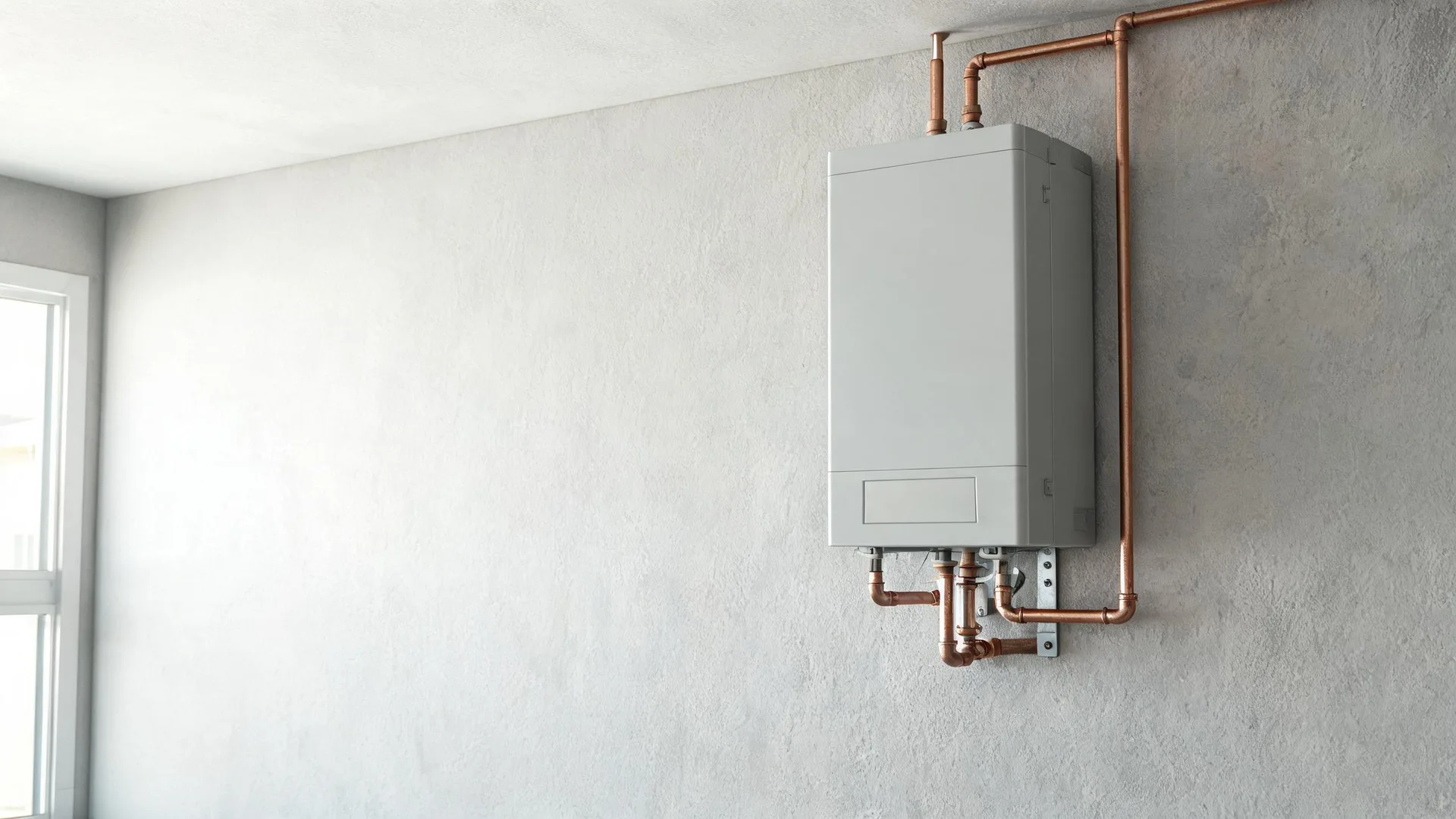
A struggling circulator pump wears out the rest of the system

When a circulator pump is failing, water moves through the boiler slower than it should. The boiler keeps firing to meet the thermostat, but the heat has nowhere to go, so it builds up inside the heat exchanger. Running a boiler this way stresses a part that was never the problem to begin with.

Most boiler failures start with something small that keeps running anyway. A thermocouple or igniter wears out and the pilot won't hold, so the boiler short cycles or won't fire at all. A circulator pump loses its bearings slowly, so the water moves slower before it stops moving at all. Sediment settles at the bottom of the tank and sits between the flame and the water, which makes the boiler work harder to do the same job. None of these start as emergencies. They start as a pilot that's harder to light than it used to be, or a room that's a little cooler than it should be, and they stay that way right up until they don't.

A contractor starts by asking what you've noticed. A pilot that won't hold, a room that stays cold, a noise that wasn't there before. Then they watch the boiler run through a full cycle, because some problems only show up once the burner fires or the pump kicks on. They check the pressure, look at the flame itself, and trace the water lines for anything damp or stained that shouldn't be there. Most of this comes down to watching rather than testing. A boiler usually shows you where it hurts if you catch it mid-cycle. By the end, you should know what's failing, why it's failing, and what happens if it's left alone.