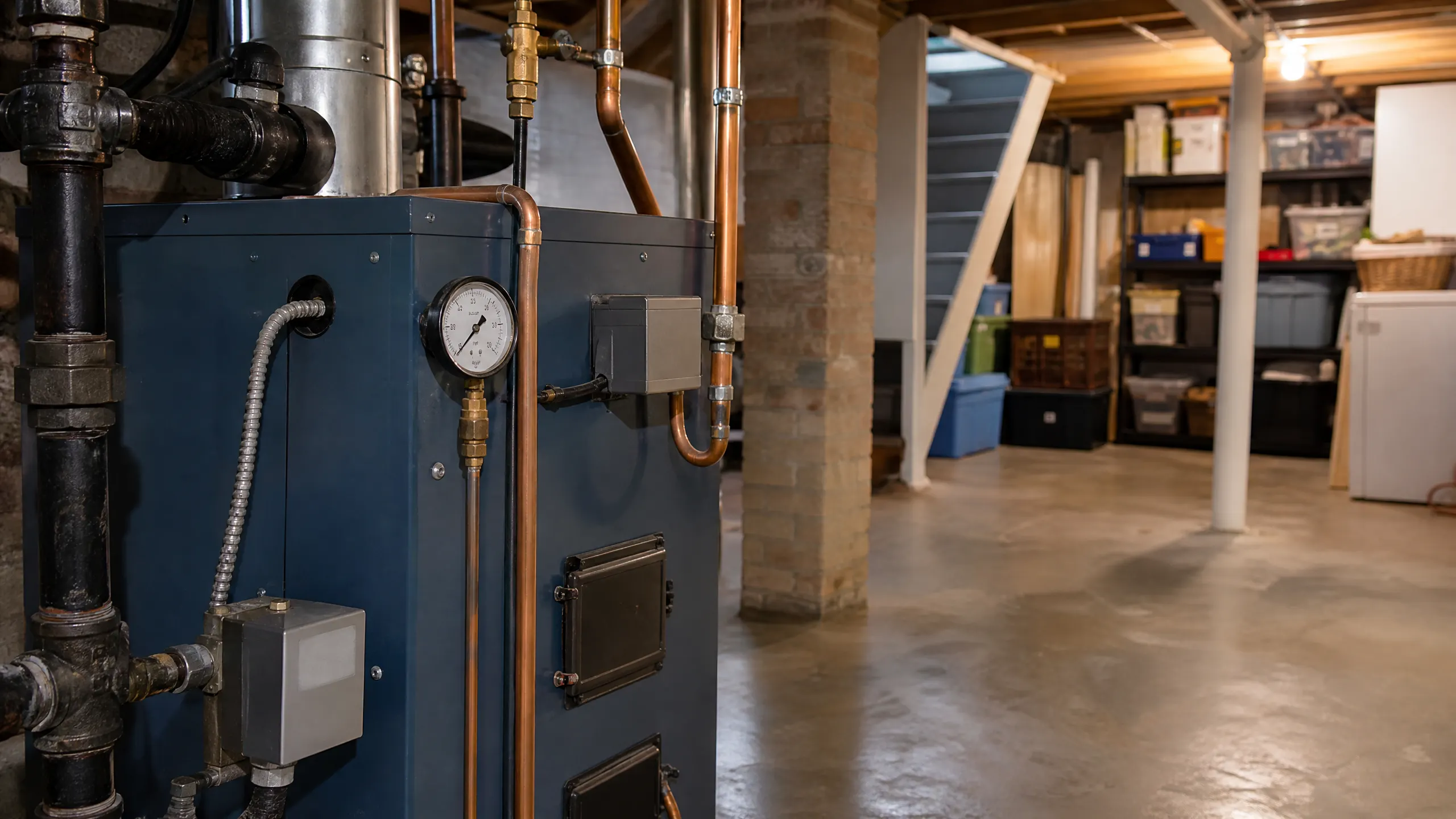
A blue boiler with copper pipes and a pressure gauge mounted on its front panel, installed in an unfinished basement used for storage.

Boiler Repair in Allentown, PA

Tell us about the job

Takes about a minute. No obligation.

Step 1 of 3: Equipment

Boilers here run from October through May, about eight months of the year. Overnight lows average 22°F in January. That's a long stretch of cold weather, but it's normal for this area, not extreme. A boiler built to handle a Lehigh County winter doesn't fail just because the temperature dropped. Winter storms come through most years without causing trouble on their own. When a boiler stops working or starts acting up, the cause is usually something ordinary. A failed igniter. A stuck valve. Low water pressure. Air trapped in the lines. Finding which one it is matters more than guessing at the weather.

Low water pressure on the gauge is something you can see yourself before calling anyone.

If the needle sits below where it should, the boiler may be shutting itself off to protect the system, not failing outright.

Half the homes in Lehigh County were built in 1968 or earlier. If your boiler came with a house that age, it may be the original unit, or close to it. Check if you know when it was installed. A boiler that old can still heat the house fine and still be near the end of its life. The sign to watch for is repeated trouble, the same unit needing a fix every year or two. If this is the first problem you've had, a straightforward repair is probably the right call. If it keeps happening, ask whoever comes out how much life the boiler has left before you pay for another one.

A boiler running wrong costs you every day it's left that way

Electricity in Pennsylvania ran $52.07 per million Btu in 2024, and your boiler draws on that every day it misfires. A boiler that short-cycles or runs longer to make up for a stuck valve or trapped air is burning that rate the whole time it struggles. Getting the actual cause fixed stops the waste, not just the symptom.

Find a contractor

Most failures start with water, not fire

A boiler is a closed loop, and almost everything that goes wrong traces back to the water in it. Pressure drifts low and the system shuts itself off rather than run dry. Air works its way into the lines and collects in a radiator or baseboard, and that spot stays cold no matter how long the boiler runs. Sediment settles at the bottom of the tank over years and insulates the water from the heat, so the burner works harder to do the same job. None of this is dramatic. It just needs someone to bleed the lines, check the pressure, or flush the tank.
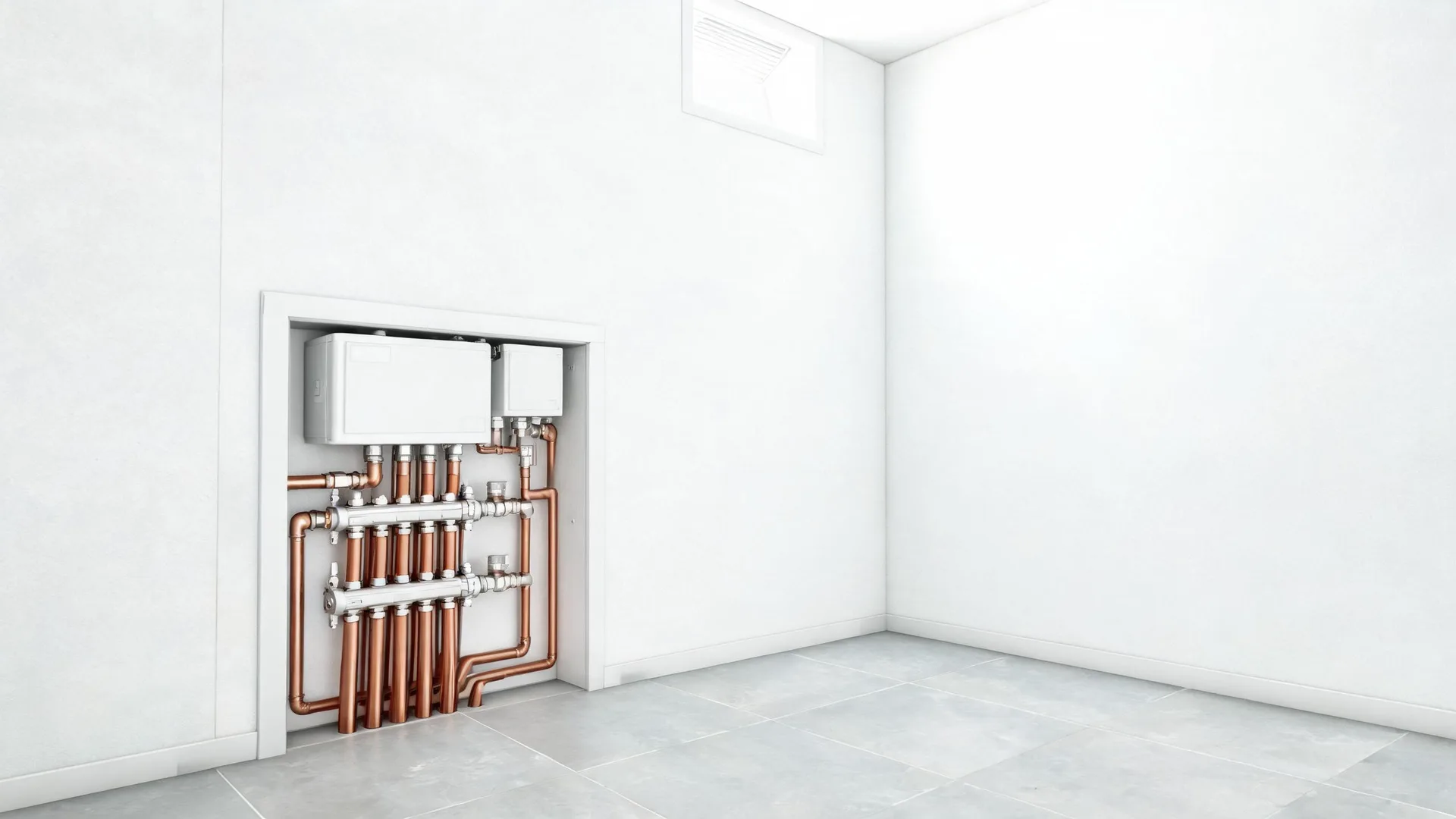
The parts that wear are the ones that move or spark

An igniter has a limited number of times it can fire before it cracks. A circulator pump has a motor and a bearing, and either one can seize. A zone valve can stick open or shut after enough cycles. These are wear parts, not defects, and finding which one quit is most of the job. A boiler that won't light at all usually points to the igniter or the gas valve. One that lights but won't heat the whole house usually points to a stuck valve or a pump that's not moving water where it needs to go.

A boiler usually tells you something is wrong before it quits outright. Listen for banging or gurgling in the pipes, that's air or sediment, not a sign to ignore. A kettling or rumbling sound from the boiler itself means the heat exchanger is scaled up and working harder than it should. Cold radiators or baseboards in one room while the rest of the house heats fine points to a valve or trapped air in that line, not a thermostat problem. If the boiler short-cycles, turning on and off every few minutes, that's often pressure or a failing sensor, and it wears out the parts faster the longer it runs that way. A pilot or igniter that won't catch, or catches and then drops out, is worth calling in before it strands you with no heat at all.

A diagnostic visit starts with questions, not tools. What's it doing, when did it start, is it every room or just one. That narrows things before a panel ever comes off. From there it's a pressure check, a look at the sight glass, and running the boiler through a cycle to watch what it actually does, not just what you described. If it won't ignite, the tech checks for spark or flame at the igniter and tests the gas valve for power. If it ignites but won't heat properly, they're bleeding radiators, checking the circulator pump is actually moving water, and tracing which zone valve might be stuck. A combustion check tells them whether the burner is firing clean. By the end you should know exactly which part failed and why, not just that the boiler is working again.