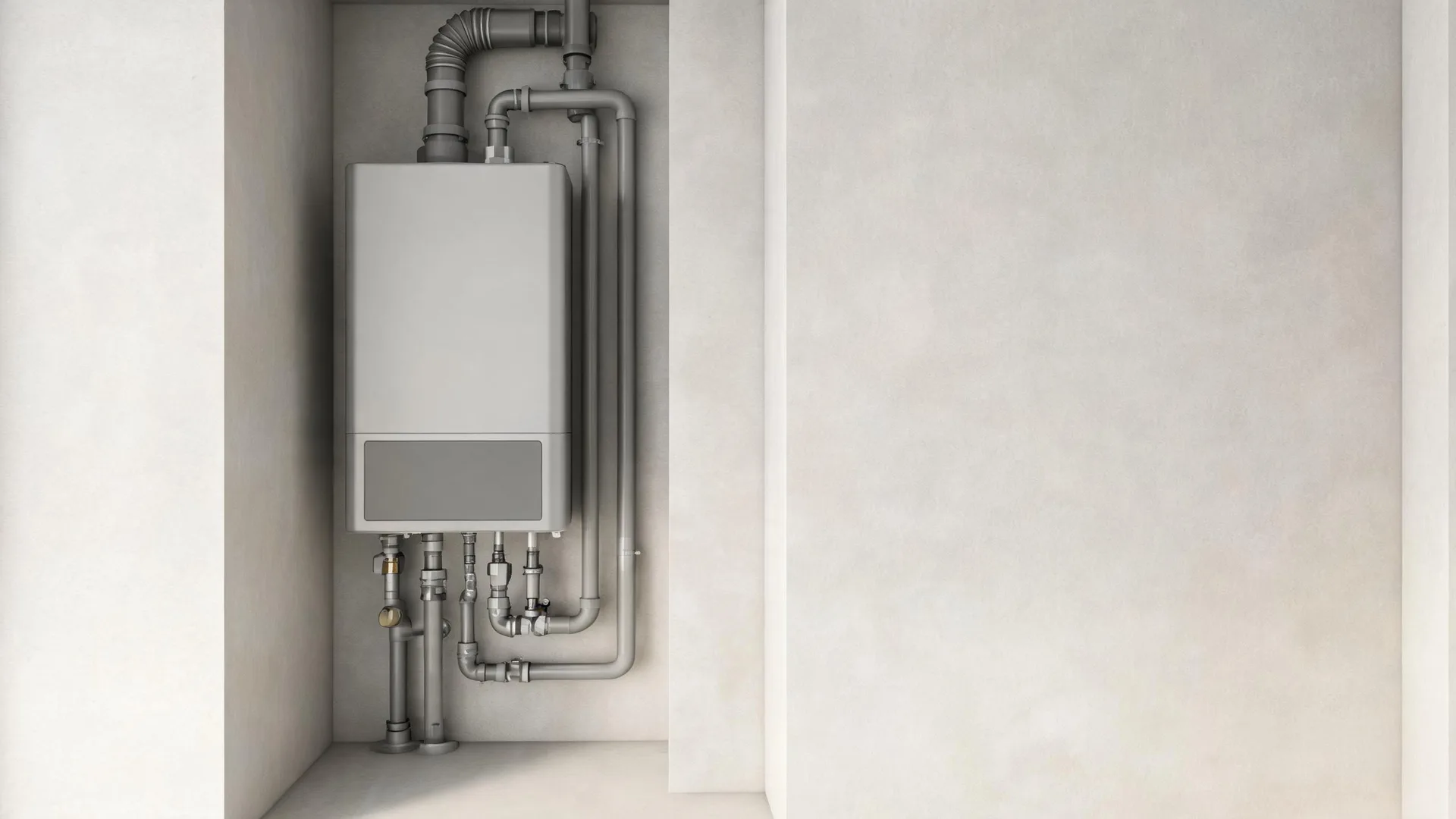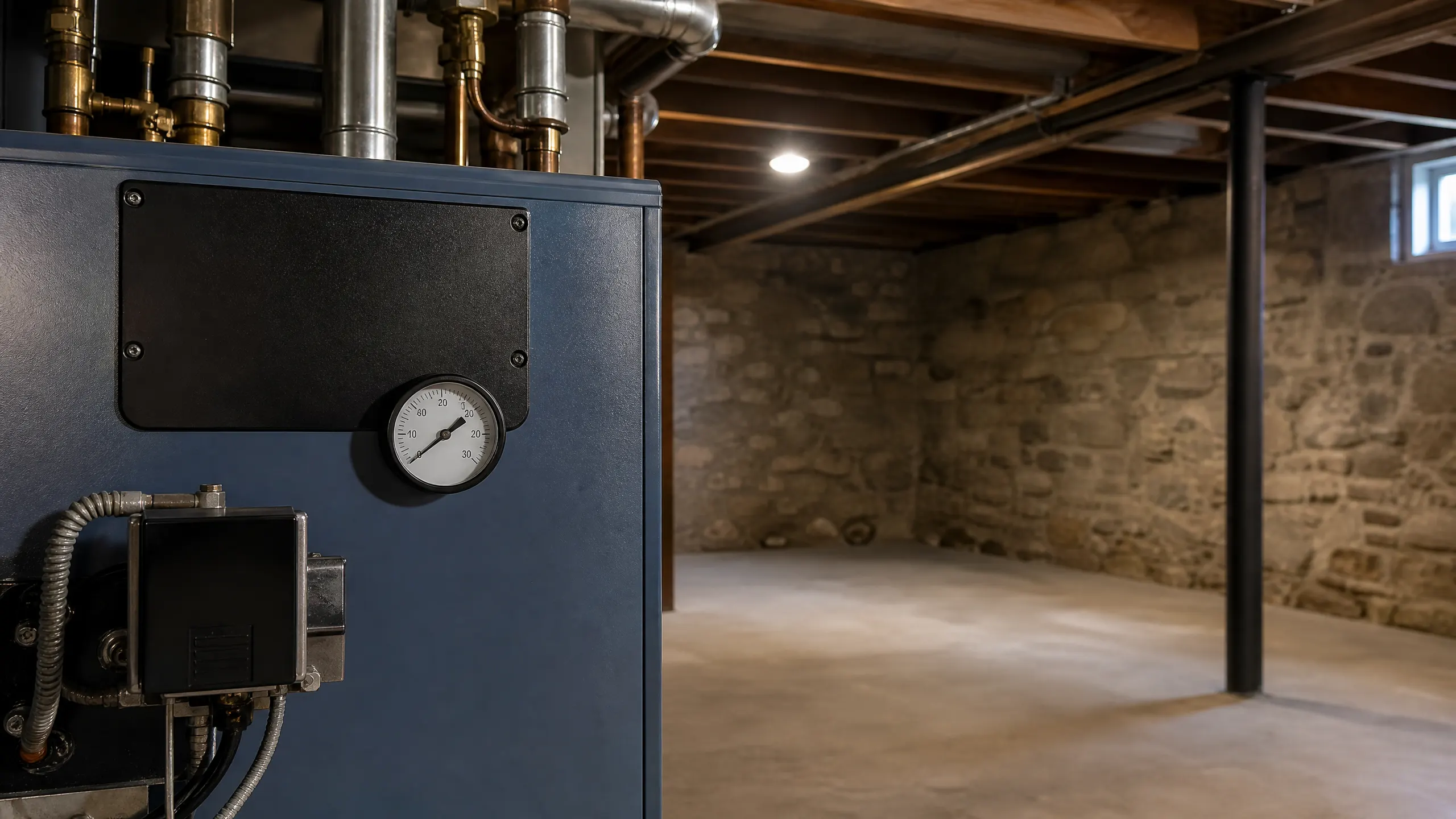
A blue boiler with copper pipework and a pressure gauge mounted in an unfinished basement with stone foundation walls.

Boiler Repair in Palmerton, PA

Tell us about the job

Takes about a minute. No obligation.

Step 1 of 3: Equipment

Eight months of runtime

Boilers in Palmerton stay on from October through May. Overnight lows average 19°F through December, January and February, so the boiler is holding a high output for most of the winter, not just cycling on during a few cold snaps.


Long seasons wear parts down early

A boiler running eight months a year puts far more hours on its pump, valves and igniter than one that only fires up occasionally. When something starts acting up, it's usually wear that has been building for a while, not a sudden break.

Boilers in Carbon County sit unused all summer, then start running again in October.

The first cold weeks of October are when a boiler's weak spot tends to show up.

Oil costs $25.15 per million Btu here, and a boiler that's struggling eats more of it every month it runs

Heat runs October through May
Winter nights average 19°F
22 winter storms from 2015 to 2024
An older home means an older boilerHalf the homes in Carbon County were built in 1972 or earlier.

A boiler that's been losing ground all winter doesn't usually announce it. It shows up as a cold radiator, a pilot that won't hold, or a kettling noise that gets louder each week. Pinning down which part is actually failing after eight months of hard running takes someone who checks the pump, the valves and the igniter against each other, not just replaces whatever looks worn. A repair that skips that step tends to leave the real problem in place, and with winter storms hitting Carbon County 22 times in the last ten years, a boiler that's only partly fixed doesn't get an easy stretch to prove it.

A boiler burning oil at $25.15 per million Btu shouldn't be fighting itself too

A boiler that's struggling, short cycling, running long, not holding heat, uses more oil doing it. That cost shows up on every fill-up while the problem sits there unfixed.

Find a contractor

The noise usually comes first

A boiler that's starting to fail makes itself heard before it quits. Banging or kettling from the heat exchanger means mineral buildup is making it work harder to move heat into the water. A low hum or buzz from the pump can mean the bearings are wearing out. Clanging in the pipes often means trapped air or a failing valve. None of these fix themselves, and all of them get louder over time.

Cold spots mean something specific is wrong

A radiator that's cold at the top but warm at the bottom usually needs bleeding, trapped air blocking the water. One that's cold all over while others work fine points to a stuck valve or a blockage in that line. If the whole system runs but the house still won't come up to temperature, the problem is further back, often the pump or the aquastat not reading the water temperature right. Where the cold spot shows up tells you where to look.

A few things are worth checking before anyone comes out. If a radiator is cold at the top, open its bleed valve until the hiss of air stops and steady water comes through, then close it again. Check the thermostat is actually calling for heat, and swap the batteries if it runs on them. Look at the pressure gauge on the boiler itself. Low pressure often means the system needs topping up, and most boilers have a simple valve or key for that. If it's an oil boiler, check the tank before anything else. An empty tank looks exactly like a broken boiler from the thermostat's side of things. Past that, a pilot that won't stay lit, pressure that keeps dropping no matter how often it's topped up, or any smell of oil near the unit means it's past the point of checking it yourself.

A boiler is worth repairing when the problem is one part acting up inside a system that's otherwise sound, a failed igniter, a stuck valve, a worn pump. Those get replaced on their own without touching the rest of the unit. It's a different question when the heat exchanger itself is cracked or badly corroded, because that's the core of the boiler and not something anyone patches. An older boiler that has been kept up, with its water chemistry in check and its parts serviced along the way, can still be a reasonable repair. One that has been run hard with no upkeep tends to fail in more than one place at once, and that's when a tech starts asking whether the next repair is worth it or just delays the one after it.