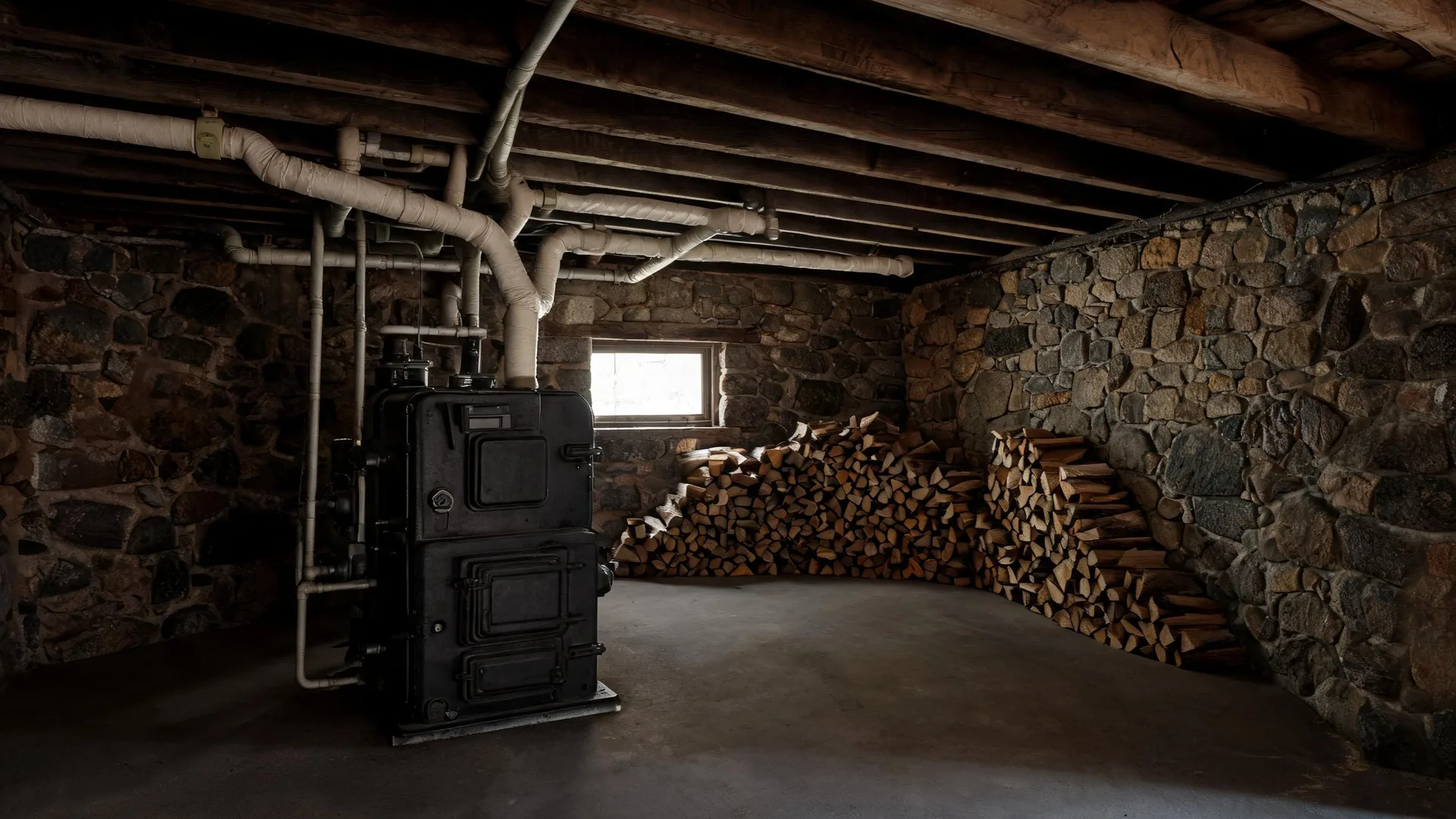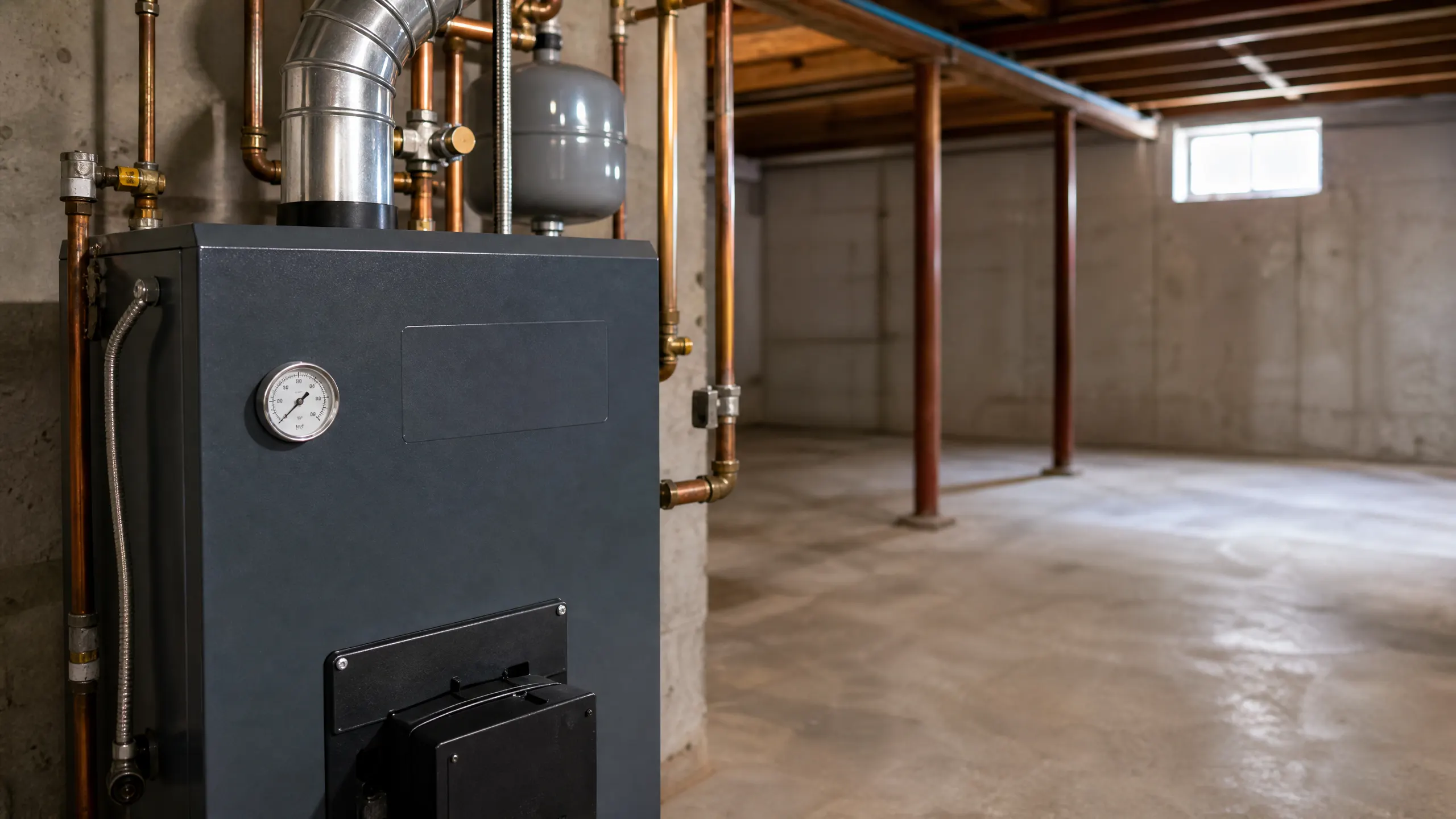
A hydronic boiler with copper pipes, an expansion tank, and a pressure gauge mounted in an unfinished concrete basement.

Boiler Repair in East Stroudsburg, PA

Tell us about the job

Takes about a minute. No obligation.

Step 1 of 3: Equipment

Eight months of runtime

Boilers in East Stroudsburg start up in October and don't shut down until May. Overnight lows average 19°F through December, January and February, so the burner is cycling on through most nights of the coldest months. That kind of runtime adds up on a boiler that's never really off duty.


What that means for a repair call

A boiler running eight months a year wears out its weak points sooner, the igniter, the pump, the pressure relief valve, whatever gives first. Winter storms have hit the county 27 times in the past decade, usually right when the system is working hardest. Whatever's acting up needs a real diagnosis, not a guess, so the fix holds through the rest of the season.

A diagnostic starts with the pressure gauge, the thermostat and the exchanger, not a guess at the loudest symptom.

Whatever's actually wrong gets named before anything gets replaced, so the fix matches the failure.

October is when a weak part finally gives

Heat runs October through May
Winter nights average 19°F
27 winter storms from 2015 to 2024
East Stroudsburg's homes are youngHalf the houses in Monroe County were built in 1984 or later.

Electricity in Pennsylvania ran $52.07 per million Btu in 2024, among the higher rates homeowners deal with. That's the rate a boiler running most of the year is burning through, whether it's working right or not. A pump working harder than it should, or a burner short cycling, doesn't announce itself. It just costs more every week it goes unfixed. Getting someone out to look at it sooner keeps a small problem from running up the bill all winter.

Get the boiler looked at before it has to work any harder

Whatever's acting up on your boiler now has months of hard running still ahead of it. Have someone diagnose it properly so the fix holds through the rest of the winter.

Find a contractor
A man in a dark T-shirt, backwards cap and brown work pants, seen from behind, climbs porch steps toward a blue paneled front door while carrying a canvas tool bag, with a potted shrub in a blue planter to the right.

Sounds you shouldn't ignore

A boiler that bangs, gurgles or kettles has air trapped in the system or scale building up on the heat exchanger. Banging from the pipes often means a part is loose or water is hammering through them. A low hum that turns into a whine can mean the pump bearing is going. None of these get quieter on their own.

What a cold radiator is telling you

One radiator cold while the rest heat fine usually means trapped air or a stuck valve, not a dead boiler. If every radiator stays cold, or the boiler won't fire at all, look at the pressure gauge and the pilot or ignition first. Water leaking anywhere around the unit, or a pressure relief valve that keeps dripping, means the system is working against itself and needs a look before it's run any longer.

Before you call anyone, check the pressure gauge. It should sit somewhere in the range marked on the dial, usually around the midpoint, and if the needle has dropped near zero the boiler won't fire right, if it fires at all. Check that the thermostat is set above room temperature and actually calling for heat, since a setting bumped by accident looks just like a dead system. Look at the radiators themselves, top and bottom, with your hand. Cold at the top and warm at the bottom means trapped air, and that's something bleeding the radiator can fix on the spot. If the boiler has a reset button, you can try it once, but if it trips again right after, stop there and leave it alone. Don't keep resetting it hoping it sticks.

A boiler that's acting up isn't automatically done for. Most of what fails in one, the igniter, the circulator pump, a zone valve, a low water cutoff, is a single part doing a single job, and parts like that get replaced on their own without touching the rest of the system. The boiler itself, the heat exchanger inside it, is built to outlast several rounds of those repairs. What changes the math is the heat exchanger itself cracking or corroding, because that's the part that isn't practical to replace on its own, and a tech will tell you plainly if that's what they're looking at. Age matters less than what's actually failed. A boiler that's given years of service with only minor repairs along the way is usually worth one more fix. One that's needed the same part replaced more than once, or is starting to leak from the exchanger itself, is telling you where this is headed. Ask whatever's diagnosing it to show you what's actually wrong before you decide anything.