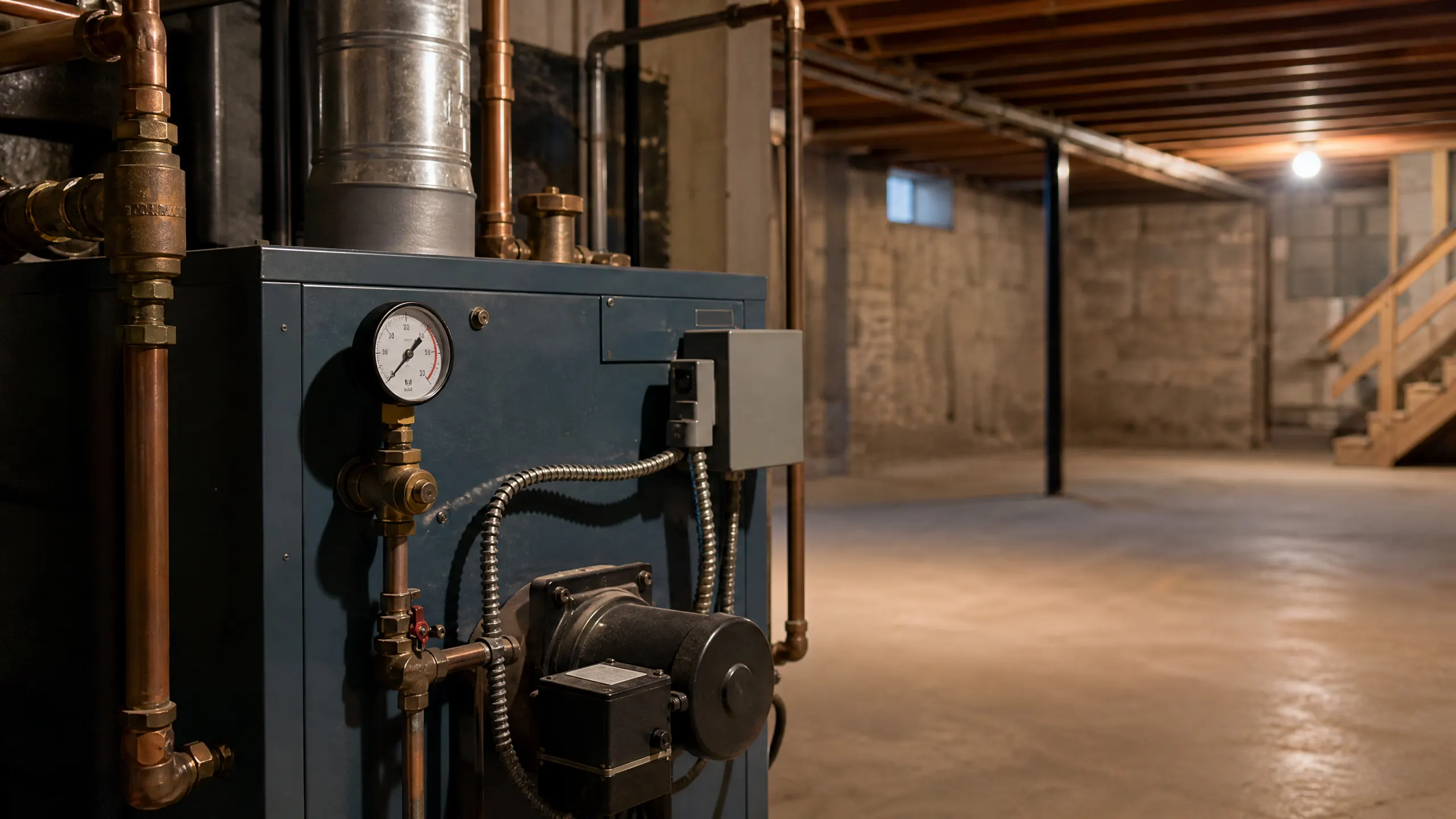




A blue steel boiler with copper pipes and a pressure gauge mounted in an unfinished basement with stone walls and wooden stairs.

Boiler Repair in Scranton, PA

Tell us about the job

Takes about a minute. No obligation.

Step 1 of 3: Equipment

Nine months of heat a year is a long stretch for any boiler. September through May, the burner is cycling on and off, the pump is pushing water through the system, and none of it gets much of a break. That kind of run time wears on parts faster than it would somewhere with a short winter. A boiler that's struggling now, with a leak, a strange noise, or heat that isn't reaching every room, is usually just showing the wear from carrying that load. Getting it looked at properly matters more here, because a fix that doesn't hold won't make it through the season.

Half the homes in Lackawanna County were built in 1955 or earlier.

A boiler that old is closer to the end of its life than the middle.

Gas costs $13.12 per million Btu here, and a boiler that's struggling burns through it every month you wait

Heat runs September through May
Winter nights average 19°F
Climate zone 5A

Heat starts going on in September here. That first cold snap after a quiet summer is when a boiler finds out what didn't get fixed right, or what finally gave out over the months it sat idle. A pump that's been seizing up slowly, a pilot that's been lighting unevenly, an igniter on its way out, all of that tends to surface in those first few weeks under load. If your boiler is acting up now, it's worth having looked at before the overnight lows settle into the teens. Waiting until January to deal with a problem that showed up in September just means living with it through the coldest stretch of the year.

Get the diagnosis before you decide what to do next

A boiler that's worked this hard for this many months a year doesn't get more reliable on its own. Once it's acting up, the honest fix is to find out whether it's worth repairing again or worth replacing. Get it looked at and make that call with real information.

Find a contractor
A man in a cap, dark long-sleeve shirt and tan work pants climbs porch steps toward a blue front door, carrying a waxed canvas tool bag with tools visible inside.

Most failures start with water, not fire

A boiler is a closed system, and that seal is what keeps it efficient. Low water pressure, a slow leak at a valve or fitting, or sludge building up in the bottom of the tank all show up as the same thing: heat that doesn't reach the radiators, or a burner that short cycles trying to keep up. Mineral buildup on the heat exchanger forces it to work harder to transfer the same heat, and that extra strain is what eventually cracks it.
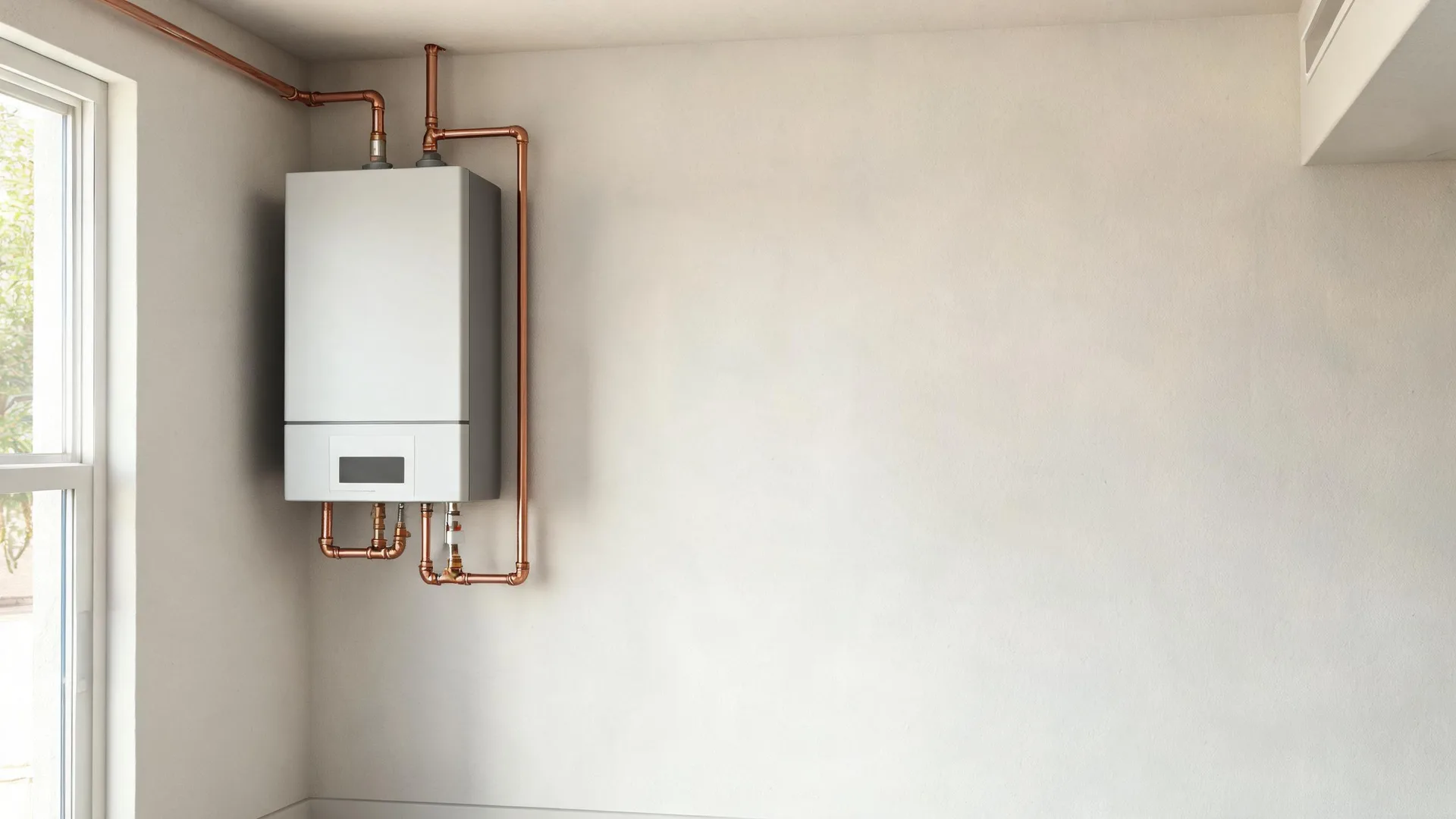
The parts that fail are usually small

A circulator pump wears out at the bearings or the seal long before the motor itself quits, and when it does, you get a boiler that fires but rooms that stay cold because the water isn't moving. Ignition problems, a pilot that won't stay lit or an igniter that fires weak, are often just a dirty sensor or a clogged orifice, not the burner itself. Most of what takes a boiler down is a part like this giving out, not the whole machine failing at once.

A boiler that's leaking or short cycling will keep heating the house while it does it, and that's the problem. It runs anyway, so there's no obvious signal telling you to stop and deal with it. A small leak at a valve keeps dropping system pressure, and the boiler keeps firing to compensate, which only pushes more water past the same worn seal. A heat exchanger coated in scale keeps transferring heat, just less of it per cycle, so the burner runs longer and hotter to make up the difference, and that's what eventually cracks it. A pump with a failing bearing keeps turning until it doesn't, and it usually goes out while the system is relying on it most. None of these fail cleanly. They wear a little further every time the boiler cycles, and a boiler that's already acting up is cycling more than it should.

If a boiler came with the house here, there's a decent chance it's older than it looks, since half the houses in the county go back to 1955 or before. A boiler doesn't usually announce that it's near the end. It just gets worse at the same job: more cycling, more noise, a pilot that's harder to keep lit. Before paying for another repair, it's worth asking the contractor straight out how much life is likely left in the unit. That answer should drive the decision, not just whatever broke this time.