




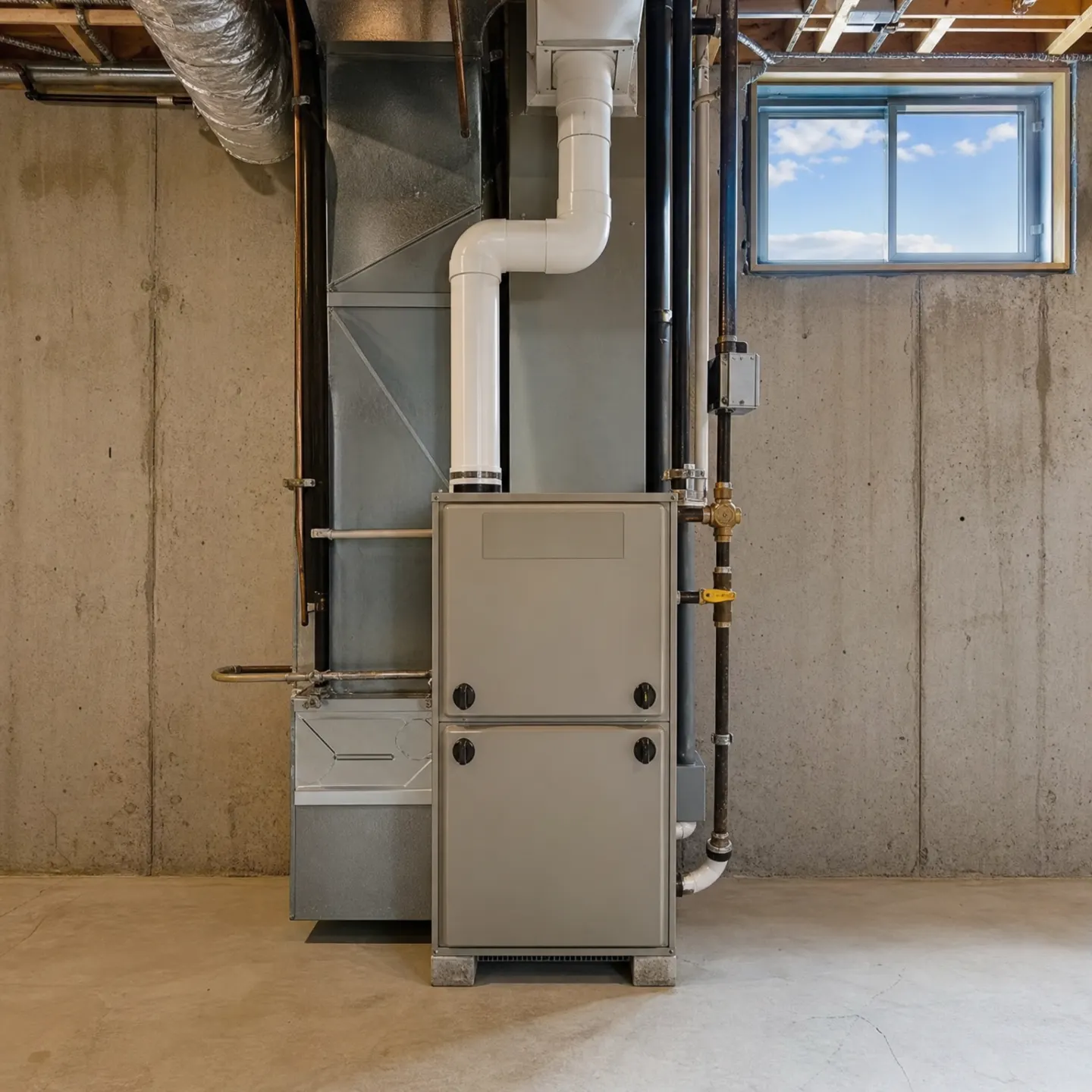
A gray forced-air furnace with ductwork stands in an unfinished concrete basement surrounded by storage items and clutter.

Furnace Repair in Scranton, PA

Tell us about the job

Takes about a minute. No obligation.

Step 1 of 3: Equipment

Nine months of the year, a furnace here is running. September through May, it cycles on and off to keep up, and that is most of the calendar. A system built for occasional use somewhere else would struggle with that schedule, let alone one that has already been through several winters here. That kind of run time wears on an igniter, a blower motor, a heat exchanger, the parts that actually do the work. Whatever is going wrong with yours, a long season is usually part of the reason. Getting it looked at properly, rather than patched at the symptom, is what makes a repair actually hold.

9 months
September through May, your furnace is on duty
19°F
the average winter night it heats against
64%
of homes here heat with gas, so most furnaces here burn gas
16 winter storms
in ten years, the nights a failure hurts most
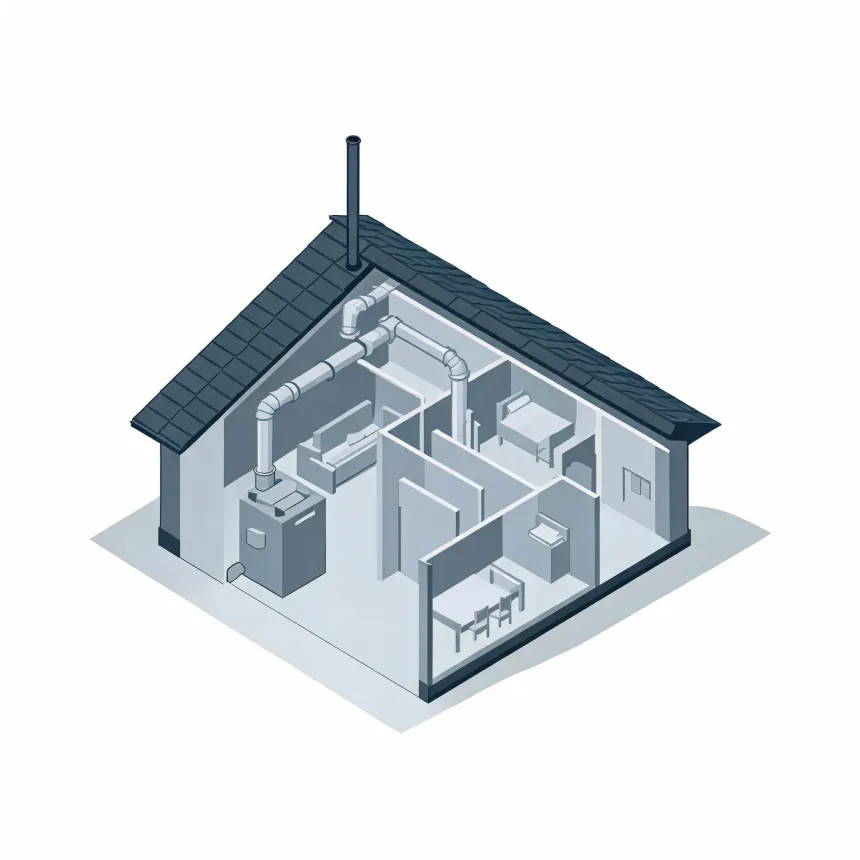
Isometric cutaway illustration of a small single-story house showing interior rooms with furniture, a furnace unit with attached ductwork running to a roof flue, and a dark shingled roof.
Your furnace works hardest from November through March.

NOAA nClimDiv, 1991–2020 normals

Half the homes in Lackawanna County were built in 1955 or earlier.

A furnace in a house that old has likely been replaced before, maybe more than once, which means yours could already be closer to the end than the start.

A furnace that's struggling costs you every month here

Heat runs September through May
Winter nights average 19°F
Climate zone 5A

Heat goes on in September here. If your furnace sat quiet all summer, the first cold stretch is when a weak part finally gets tested. An igniter or blower motor that was marginal in August often won't make it through that first real cycle in September. That's also when a lot of repair calls come in, not because anything sudden happened, but because the part was already failing and the season just found it. If yours is acting up now, early in the run, it's worth taking seriously rather than hoping it works itself out over nine months of use.

Have it diagnosed right, not just quieted down

Get a proper diagnosis before you decide on a patch job. Nine months of run time means a technician needs to find what's actually worn, not just quiet down the symptom you noticed. A repair aimed at the real cause is the one that holds through the rest of the season.

Find a contractor
A man seen from behind in a gray shirt and tan work pants climbs porch steps toward a blue front door, carrying a worn leather tool bag in his right hand, with a potted shrub in a blue planter beside the door.
A gray gas furnace with attached ductwork and piping installed in an unfinished concrete basement.

What you can rule out yourself

Before anyone comes out, check the thermostat is set to heat and the setting is actually above room temperature. A battery that's about to die can let the display look normal while it fails to call for heat. Next, check the furnace switch, the one that looks like a light switch on or near the unit, and make sure it hasn't been bumped off. At the breaker panel, look for one that's tripped or sits slightly different from the rest. Furnaces also have a filter that needs to be clean enough for air to move through it. Pull it out and hold it up to a light. If you can't see light through it, it's choking off airflow, and that alone can cause a shutdown that has nothing to do with any other part. Last, check that the vent hood or exterior pipe outside isn't blocked by anything, since some furnaces will shut themselves down rather than run with a blocked exhaust. If all of that checks out and it still won't run, stop there. Anything past the filter and the switch means opening the cabinet, and that's where it stops being a homeowner job.

What actually wears out first

The igniter is usually the first thing to go. It's a thin strip that heats up to light the gas, and that heating and cooling cycle, over and over, eventually cracks it. The flame sensor fouls with a film after enough cycles and stops telling the control board a flame is lit, so the system shuts itself down as a safety measure. Blower motor bearings wear from sheer hours of spinning. None of these fail because something went wrong. They fail because they were used.
What a repair call is really sorting out

A furnace that won't start, won't stay lit, or blows cold air could be any of a handful of parts, and the symptom alone doesn't say which one. A tech checks the igniter's resistance, looks at the flame sensor, tests the pressure switch, and watches a full cycle before naming the cause. Swapping a part without that check sometimes fixes nothing, because the part that failed wasn't the one that looked broken.

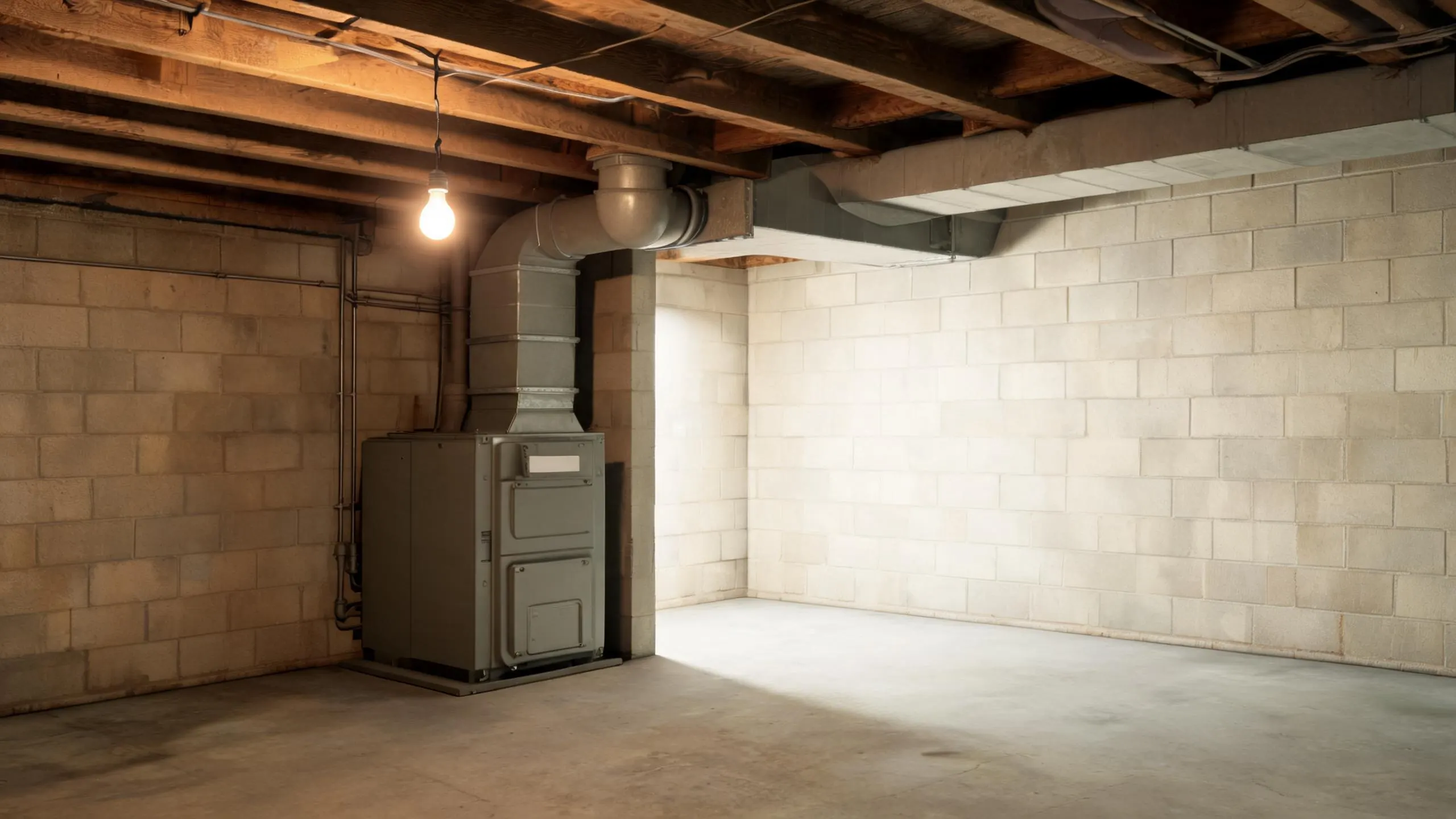
An empty unfinished basement containing a forced-air furnace with overhead ductwork, exposed ceiling joists, and a single hanging light bulb.

A new furnace would cut about $180 a year off heating for a typical Lackawanna County home.

  • A new high-efficiency furnace$740 a year
  • An older furnace$920 a year

Estimates for a typical Lackawanna County home, compared with an older unit built to the previous federal minimum, from EIA household energy data, Pennsylvania fuel prices and NOAA climate normals. Your home will differ.

Repair makes sense when one part has failed and the heat exchanger is sound.

Replacement makes sense when the heat exchanger is cracked or the furnace keeps needing parts.

A diagnostic visit starts before any panel comes off. A tech asks what the furnace was doing right before it quit, since a system that won't start at all points somewhere different than one that starts and then shuts off a few minutes in. From there it's a sequence, not a guess. Power and gas supply get checked first, because those rule things out fast. Then the ignition sequence gets watched end to end, from the call for heat through the igniter glowing, the gas valve opening, and a flame actually holding. A multimeter on the igniter or flame sensor gives a reading, not an impression, which is what separates a part that's actually bad from one that just looks suspect. The furnace usually gets run through a full cycle before anything gets replaced, because a problem that shows up at minute six doesn't always show up at minute one.