




Two white colonial houses with lit windows and black shutters photographed at dusk along a tree-lined residential street.

Mini Split Installation in Matamoras, PA

Tell us about the job

Takes about a minute. No obligation.

Step 1 of 3: Equipment

Electricity heats more homes in Pike County than any other fuel, at 37.9%. Oil and propane together still heat a good share of homes here, and a mini split works alongside either one rather than replacing it. A home on oil or propane can add a mini split to cover the mild months and let the furnace rest. A home already on electric heat can use one to warm or cool a single room without touching the rest of the system. Either way, it fits into what's already there.

8 months
October through May, your system heats
2 months
July through August, it cools
18°F
the average winter night it heats against
79°F
the average summer afternoon it cools against
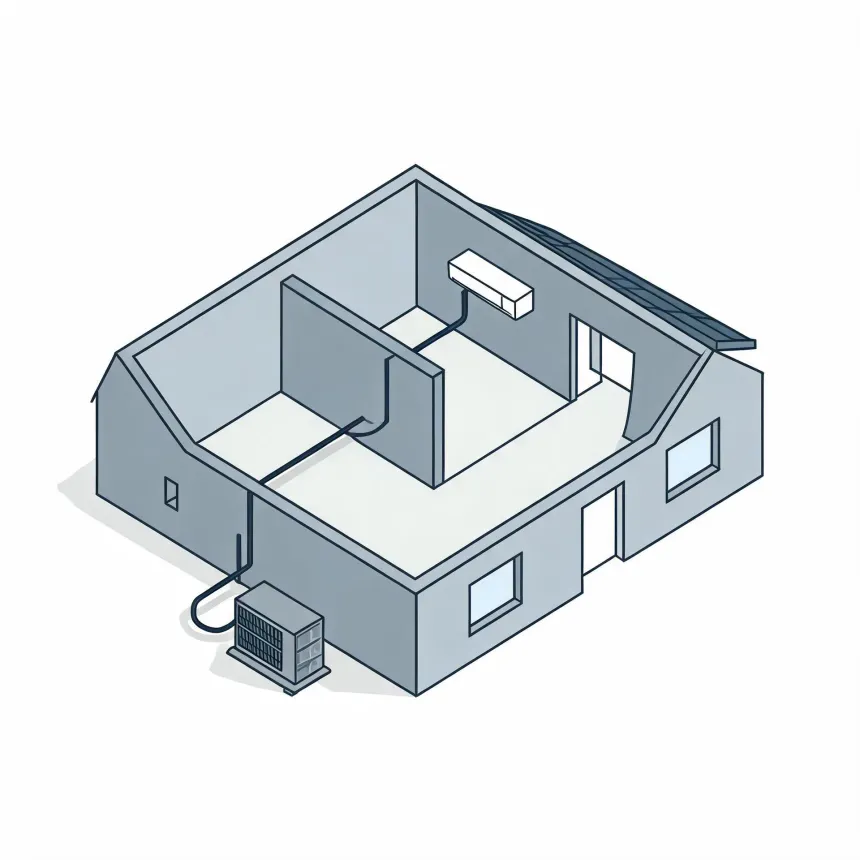
Isometric line illustration of a cutaway house showing an interior wall-mounted air conditioning unit connected by a line to an outdoor condenser beside the exterior wall.
Your system heats October through May and cools July through August.

NOAA nClimDiv, 1991–2020 normals

Cooling in Pike County runs July through August.

June is the month to get a mini split installed, before the first warm week sends everyone to the phones.

Two months of real cooling load is not much to ask of a mini split

Cooling runs July through August
Summer afternoons average 79°F
51 damaging wind events from 2015 to 2024
A standard mini split is sized for thisElectricity in Pennsylvania ran 17.77 cents per kilowatthour in 2024

Pike County sits in climate zone 5A, a cool zone where heating counts for more than cooling. Any mini split installed here has to meet the federal minimum for that zone, 14.3 SEER2 for cooling and 7.5 HSPF2 for heating. That rule applies the same way to a ductless system as it does to a central heat pump. The federal tax credit for heat pumps is available on top of that, for a unit that qualifies. Both of these narrow the field before you ever compare brands or features.

Size it for two months, not for a harder climate

Two months of real heat is not much to ask of a compressor. A mid-tier mini split will keep up with a Pike County summer without trouble, so there's no reason to pay for the top of the lineup. Pick one that fits the load and let it do its job.

Find a contractor
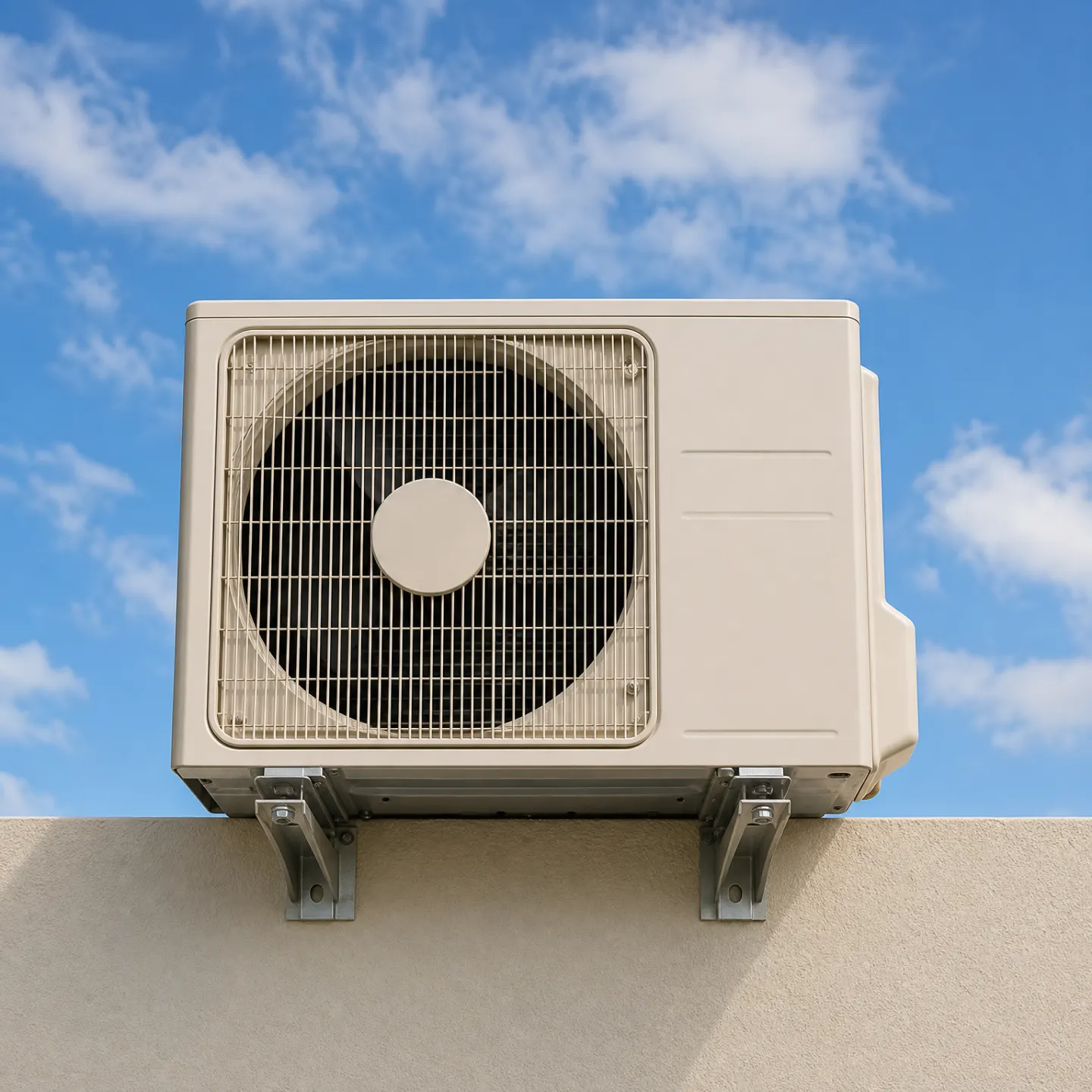
A beige split-system air conditioner outdoor condenser unit mounted on metal wall brackets atop a stucco wall.

The old system doesn't retire, it gets a break

If the old system is a furnace or a boiler, nothing about it has to change. A mini split doesn't tie into the ductwork or the gas line, so the old equipment stays in place, doing what it already does on the coldest days. A window unit can come out, or stay as backup for a room the mini split doesn't reach. The compressor outside only runs when there's a cooling or heating call for the zone it serves, so it sits idle the rest of the time without any harm coming to it. Nothing about leaving the old system in place shortens its life or the new one's.

How many zones it covers sets the price

A single indoor head cooling one room costs less than a multi-zone system feeding several rooms off one outdoor compressor. Each added zone means another line set run, another indoor head mounted, and another spot for the installer to tie into the electrical circuit. The compressor sized to run several zones costs more than the one sized for a single room, before any labor is counted.

Where the line set has to travel changes the job

The indoor head and outdoor compressor connect through a refrigerant line set, a condensate drain and a power wire, usually run through a wall sleeve near where the indoor unit hangs. A short, straight run through an exterior wall is quick work. A run that has to go up through an attic, across a long wall, or down past several floors to reach the outdoor unit takes more line set, more mounting, and more time on the ladder.

Comparing mini splits comes down to a handful of questions, and the brand on the housing isn't one of them. Ask for the SEER2 and HSPF2 ratings, since those tell you how it performs in both directions, cooling and heating, not just one. Ask whether the compressor is variable-speed or inverter-driven, since that's what lets it hold steady output instead of cycling on and off all day. Ask what the warranty covers on the compressor versus the rest of the parts, since those terms are often different and the gap matters later. Ask who pulls the vacuum and checks the charge on the line set, since a poor seal there costs more down the road than any difference between models. The unit matters less than the install.

Installation starts outside, with the spot for the compressor. It needs clearance on all sides for airflow and a solid, level pad to sit on, away from the dryer vent or anywhere it would pull in lint or debris. Inside, the indoor head goes high on an exterior wall, over a stud the installer finds and marks before drilling the sleeve hole. That hole is the only real opening made in the wall, and the line set, drain and power wire all pass through it together. Once the lines are run and connected, the system gets pulled down to a vacuum to clear out air and moisture before any refrigerant moves through it. Skipping that step is the most common reason a mini split underperforms or fails early, so a tech checking gauges before powering on is doing the job right, not taking longer than needed.