





A row of white Colonial-style houses with glowing windows photographed at dusk along a road bordered by a stone wall.

Furnace Repair in Matamoras, PA

Tell us about the job

Takes about a minute. No obligation.

Step 1 of 3: Equipment

Furnaces in Matamoras run about eight months a year, October through May. That's most of the calendar, not just the cold snaps. Overnight lows in Pike County average 18°F through December, January and February, so the furnace isn't cycling on and off gently, it's holding that line against real cold for hours at a stretch. An igniter or blower motor doing that night after night wears down faster than the same part would somewhere milder. When something starts acting up, it's usually not bad luck. It's a part that's been working harder than it was built for, and it's worth having someone look at the actual cause rather than just resetting it.

8 months
October through May, your furnace is on duty
18°F
the average winter night it heats against
17 winter storms
in ten years, the nights a failure hurts most
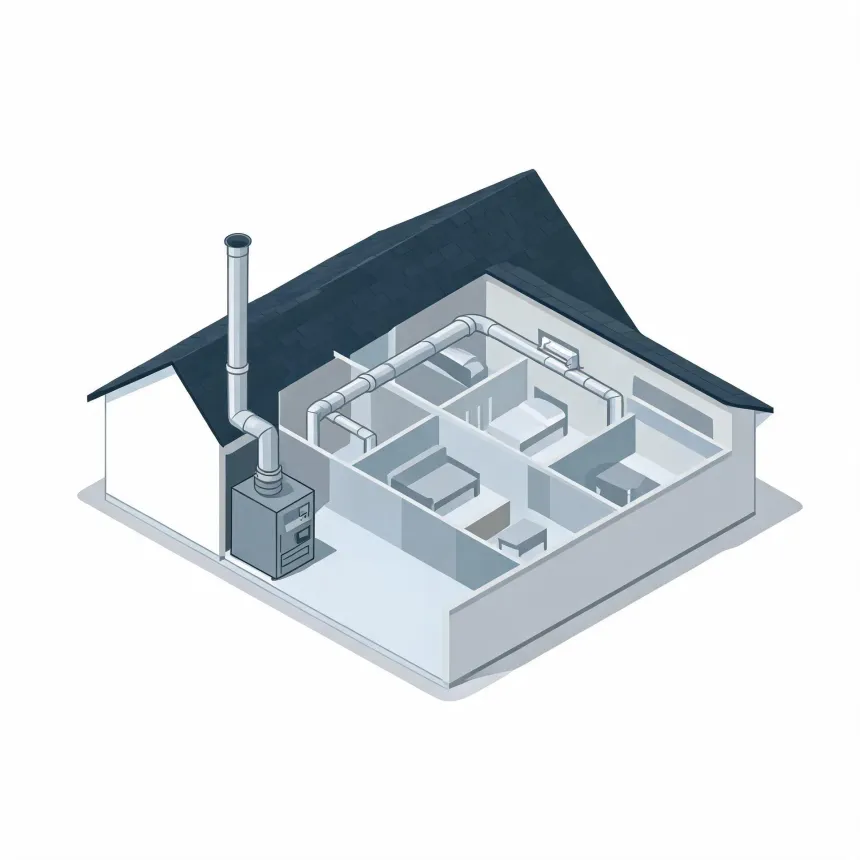
Isometric cutaway illustration of a single-story house with a dark shingled roof, showing interior rooms with beds and furniture, overhead ductwork, and a gray furnace with a tall flue pipe at the exterior wall.
Your furnace works hardest from November through March.

NOAA nClimDiv, 1991–2020 normals

Furnaces in Matamoras get switched on in October.

A part that was already weak won't make it through that first cold stretch.

If your furnace came with the house, repair is the call before replacement

Half the homes here were built by 1985
Heat runs October through May
Winter nights average 18°F
Electricity here isn't cheapPennsylvania homes paid $52.07 per million Btu in 2024, and a struggling furnace burns through it every day it runs.

A furnace that's struggling after months of hard use won't always announce itself with a full breakdown. Sometimes it's a burner that takes a few extra tries to light, or a blower that runs louder than it used to. Those are worth a call before the part fails outright, because a repair done while the furnace is still limping along is usually simpler than one done after it quits for good. Resetting the system or swapping a filter might buy a few days, but it won't tell you why the igniter or the blower motor is struggling in the first place. Someone who can actually trace the symptom back to its cause is what makes the fix hold for the rest of the season.

A furnace that wastes power costs you every day it runs

A furnace that's misfiring or short cycling pulls power the whole time it struggles, and at $52.07 per million Btu that adds up fast. Getting the actual cause fixed now stops the waste instead of paying for it all season.

Find a contractor
A man in a cap, dark jacket and tan pants walks up porch steps toward a navy blue front door, carrying a canvas tool bag filled with hand tools, with a potted plant in a blue planter to the right.
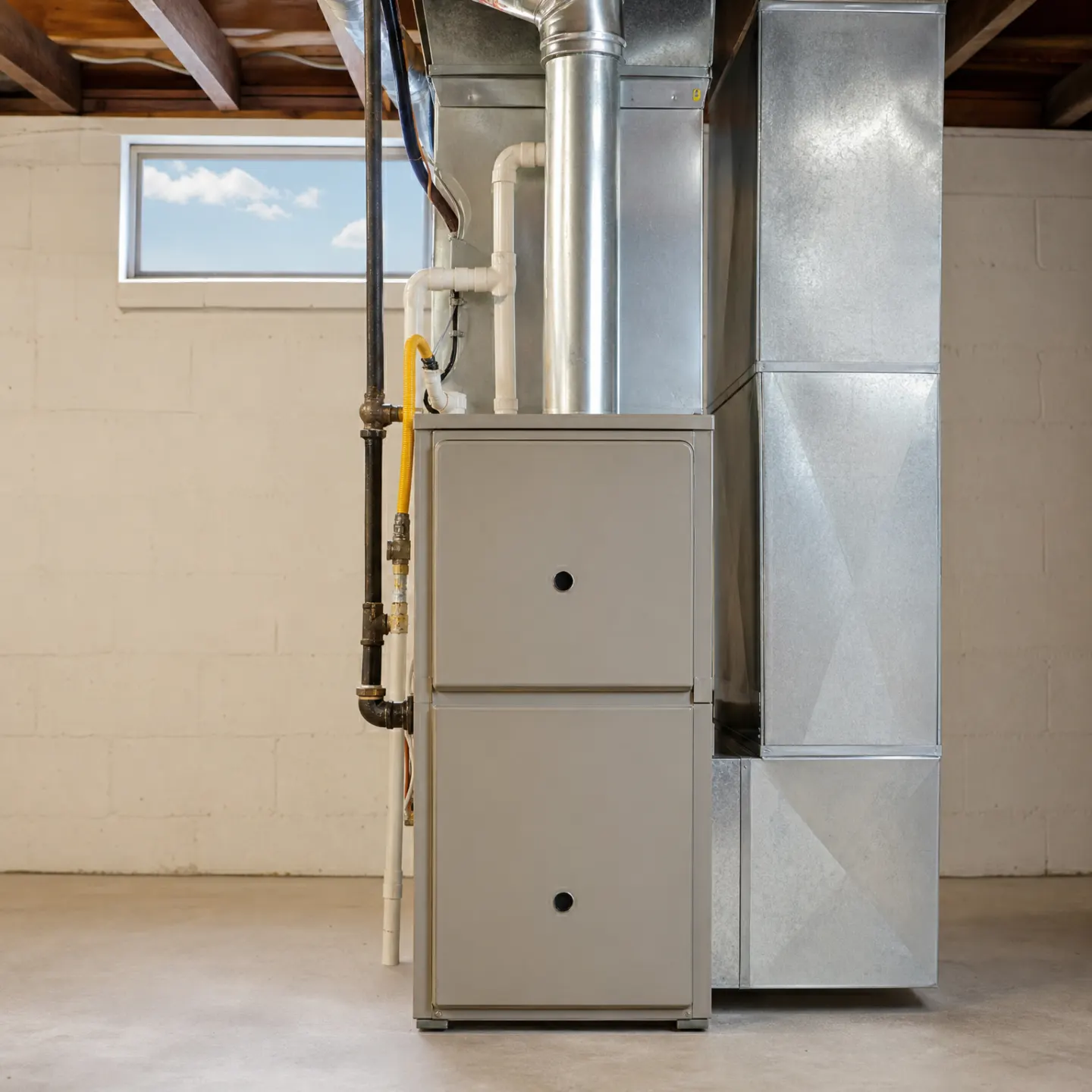
A gas furnace with attached ductwork, gas piping, and condensate lines installed in a concrete-block basement.

A newer furnace is still worth fixing

If your furnace came with the house and the house is newer, that's worth finding out before anyone talks about replacement. A furnace working harder than it should, on a part that still has years left in it, is a repair job, not a teardown. Worth asking whoever comes out to look at the age of the unit itself, not just the symptom.

The noise usually comes first

A furnace that's about to need a repair often tells you before it quits. A boom at startup means gas is building before the igniter catches it. A rattle that wasn't there before can mean a loose panel or a blower wheel that's coming unbalanced. A screech points to a motor bearing that's drying out. None of these fix themselves. They tell you where to send someone before the part fails outright.
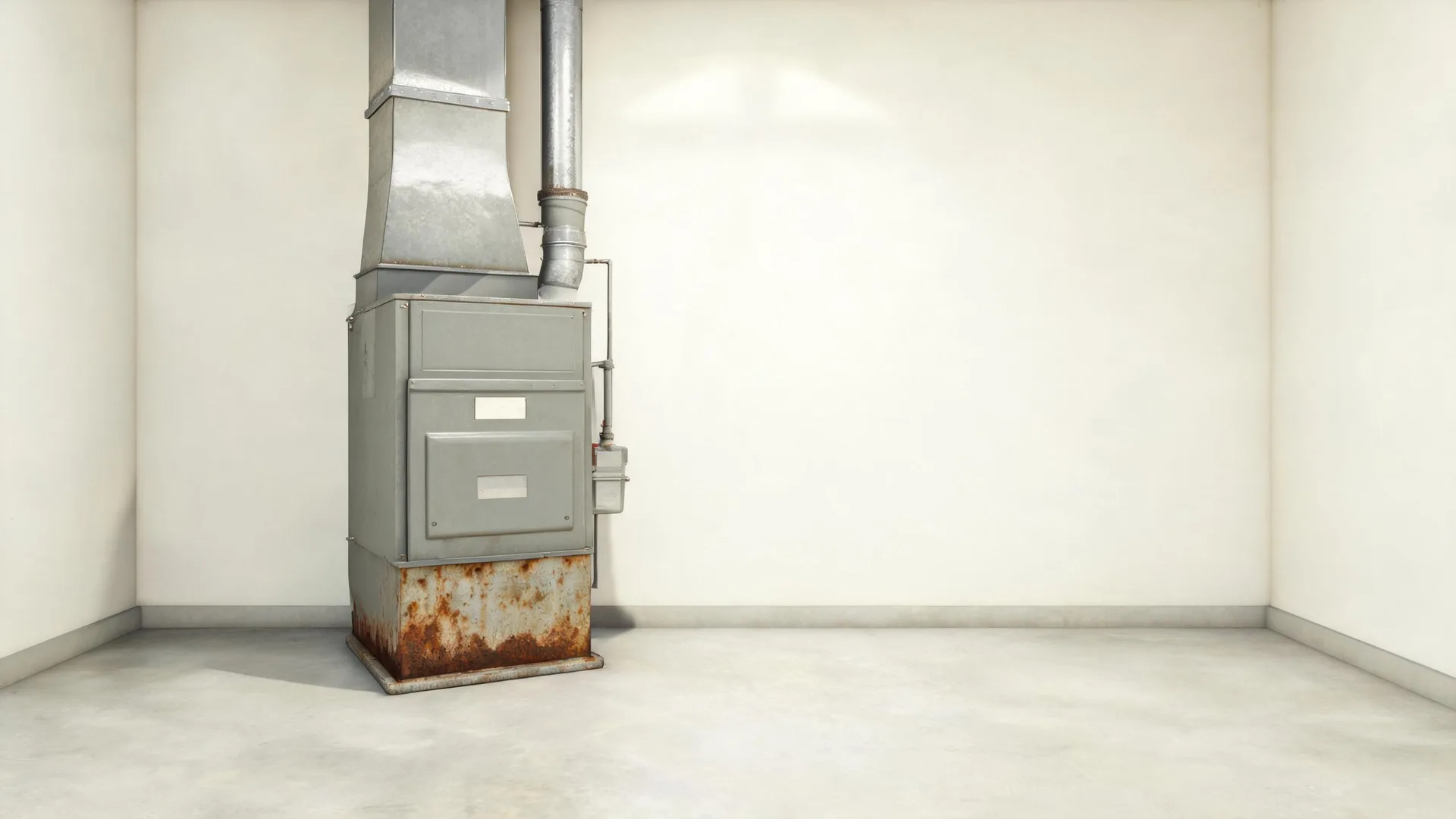
Short cycling wears out the parts that are left

If the furnace is starting up, running a few minutes and shutting off before the house warms up, something is cutting the cycle short. A flame sensor coated in residue can't tell the burner is lit, so the control board shuts the gas off as a safety measure. A clogged filter can starve the system for airflow until it overheats and trips off. Either way, every short cycle is a startup, and startups are what wear an igniter down. Letting it run this way just burns through the parts still working.

Before anyone comes out, check the filter. Pull it and hold it up to a light. If you can't see light through it, air can't get through it either, and that alone can cause short cycling or a furnace that overheats and trips off. Next, check the thermostat has power and is actually set to heat, not just on. Look at the switch on the furnace itself, the one that looks like a light switch on the side of the unit, and make sure it hasn't been bumped off. If there's a flip switch nearby that looks like it belongs to a sink or sump pump, that can be a furnace switch too. Check your breaker panel for a tripped breaker while you're at it. None of this fixes an igniter or a cracked heat exchanger, but it rules out the simple stuff before you pay someone to find it.

A diagnostic visit starts with questions, not tools. Whoever shows up will ask what the furnace was doing. Did it quit outright, or has it been acting up for a while. Did the burners light and then cut out, or never light at all. That history narrows things down faster than guessing from the parts list. Then they pull the panel and let it run through a full cycle, because some problems only show up at ignition and others only show up once the blower kicks on. They'll look at the flame itself, the color and shape of it, and test the flame sensor and igniter with a meter rather than trust how they look. If the furnace is short cycling, they're checking airflow and the limit switch before they touch anything electrical. A part that looks bad is sometimes just reacting to a problem upstream of it. The goal is the actual cause, not just the part that happened to fail first.