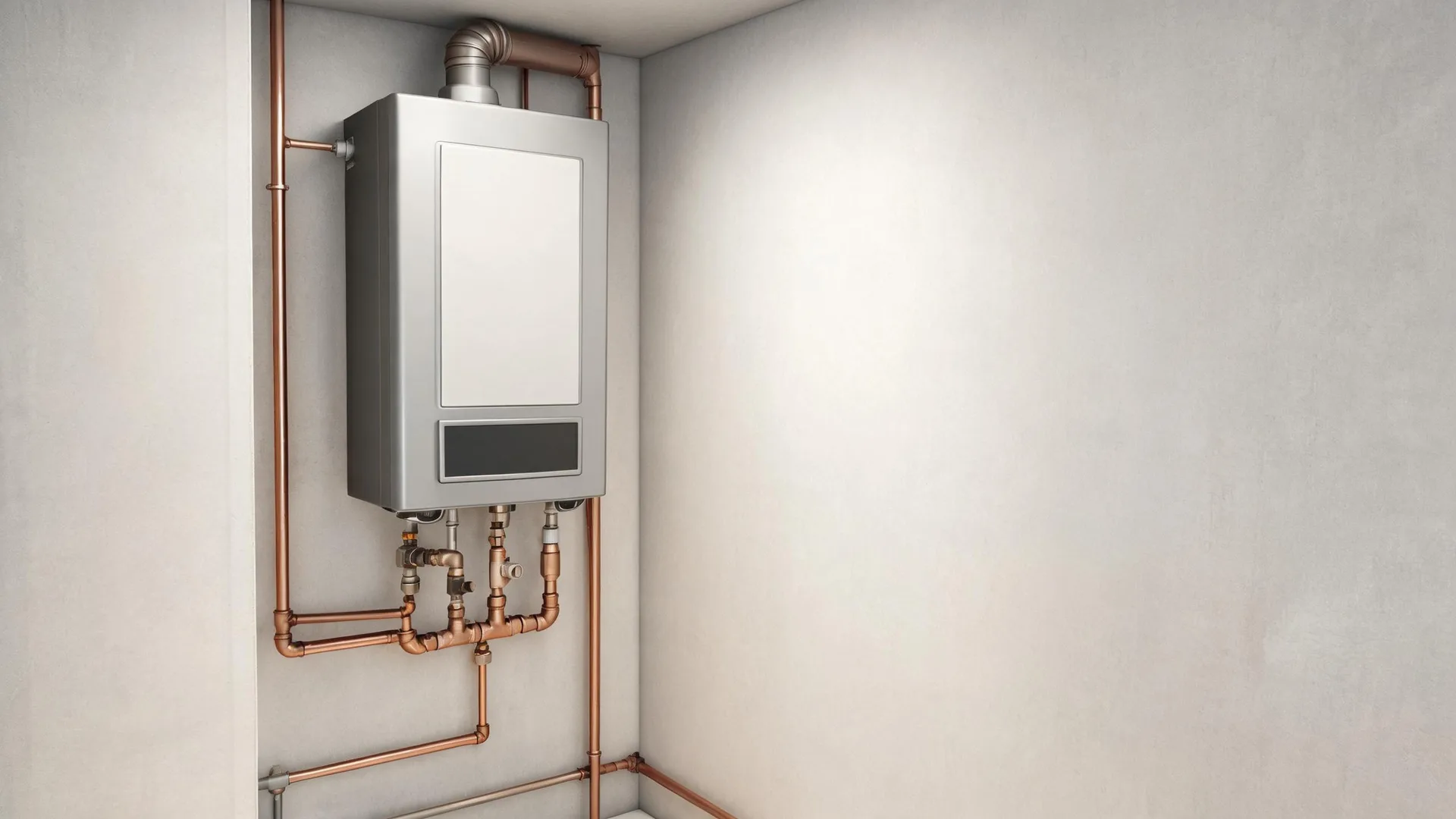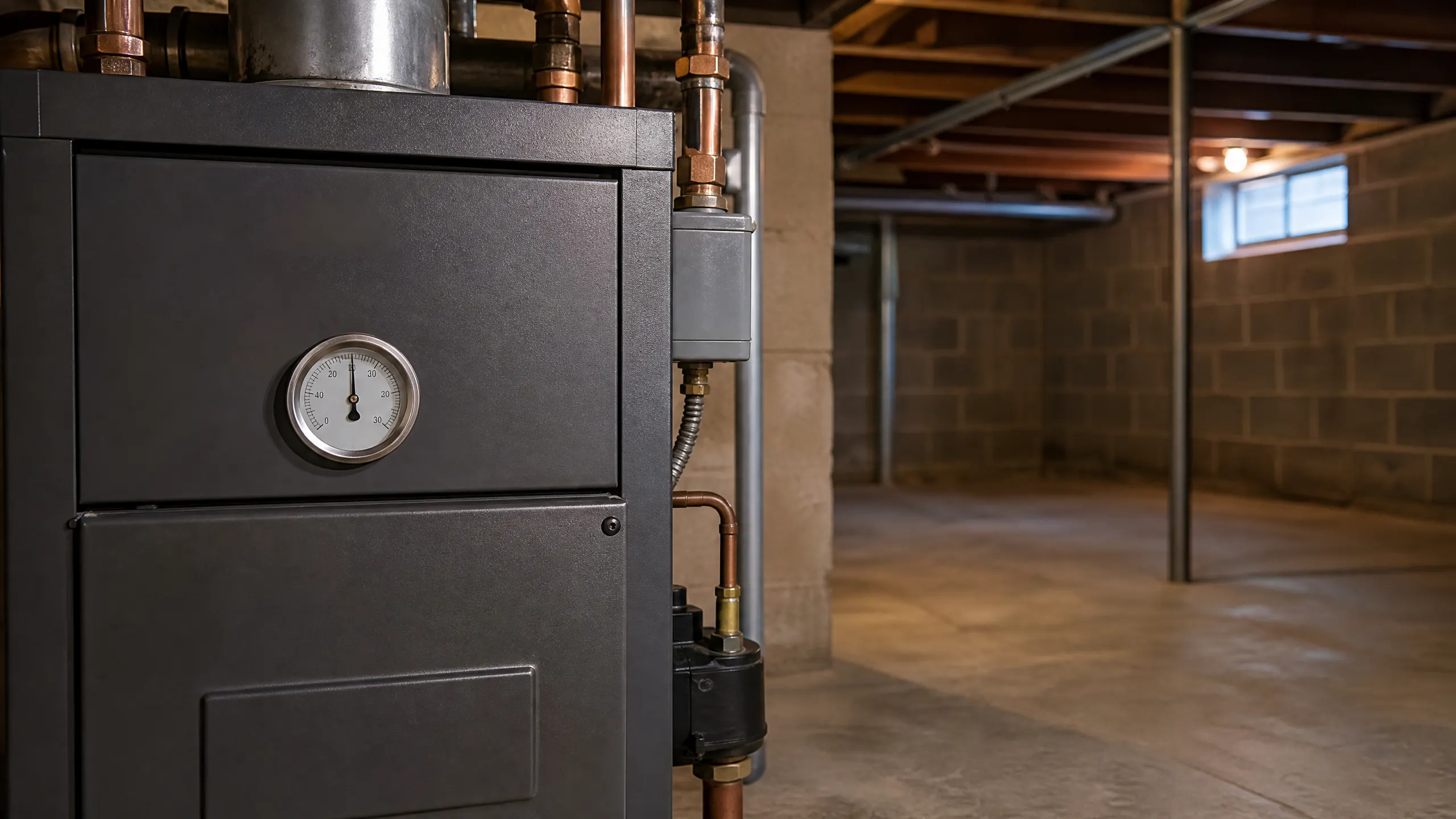
A dark metal boiler with a pressure gauge and copper pipe connections installed in an unfinished concrete basement.

Boiler Installation in Matamoras, PA

Tell us about the job

Takes about a minute. No obligation.

Step 1 of 3: Equipment

Electricity here runs $52.07 per million Btu

Pennsylvania homes paid $52.07 per million Btu of electricity in 2024, state data shows. A boiler that runs on electric heat, or leans on an electric pump and controls, feels that price every time it cycles on.


Efficiency is the number to compare

When you're picking a new boiler, the efficiency rating tells you how much of what you pay for turns into heat in the house. At this price per Btu, a few points of efficiency matter more here than in a state where power costs less.

The boiler is only part of what gets installed.

Venting, piping, and the controls that tie into your house decide how much of the job there is to do.

Eight months of heat a year, down to 18 below freezing

Heat runs October through May
Winter nights average 18°F
Climate zone 5A
Get it done before OctoberHeat runs October through May here, so September is the month to have the new boiler in.

Matamoras sits in zone 5A, a cool zone under the 2021 energy code where heating carries most of the load. Any gas-fired hot water boiler built on or after January 15, 2021 has to hit at least 84 percent AFUE to go in here. That floor is already the law, not an upgrade you pay extra for. The systems on your list have likely cleared it before you ever compare quotes. A federal tax credit is available for units that go beyond that minimum, worth asking about when you're weighing a more efficient model against the baseline.

Compare the efficiency rating before you compare price

At $52.07 per million Btu, the efficiency rating on the quotes in front of you is worth reading closely. Ask each contractor what their option runs on your bills once it's installed.

Find a contractor

The old boiler has to come out whole

A boiler is heavy cast iron or steel, and it doesn't break down into pieces that fit through a door easily. Getting it out often means cutting it apart or draining and disconnecting it section by section before it can be carried out.

The flue and gas line get a second look

An old boiler was sized and vented for itself, not for what replaces it. A new boiler may draft differently or need a different gas line size, so the venting and piping tied to the old unit usually get checked rather than reused as is.

Ask what size boiler each quote is based on, not just the model name. A boiler that's too big for the house will short cycle, turning on and off more than it should instead of running a long steady burn. One that's too small will run constantly and still struggle to keep up on the coldest days. Sizing should come from a heat loss calculation on your actual house, room by room, not a guess based on the old unit's output. If a contractor quotes a number without ever measuring the place, ask how they got it.

Installation day starts with the old boiler coming out, and that alone can take a few hours if it has to be drained and cut down before it fits through the door. Once it's out, the crew runs new venting and piping to match the new unit rather than forcing it onto what was there before. The boiler gets set, piped into the heating loop, and connected to the gas line and flue. Controls and wiring come next, tying the thermostat and any zone valves into the new system. Before anyone leaves, the boiler gets fired up, checked for leaks, and run through its paces so it's actually heating the house, not just switched on.