




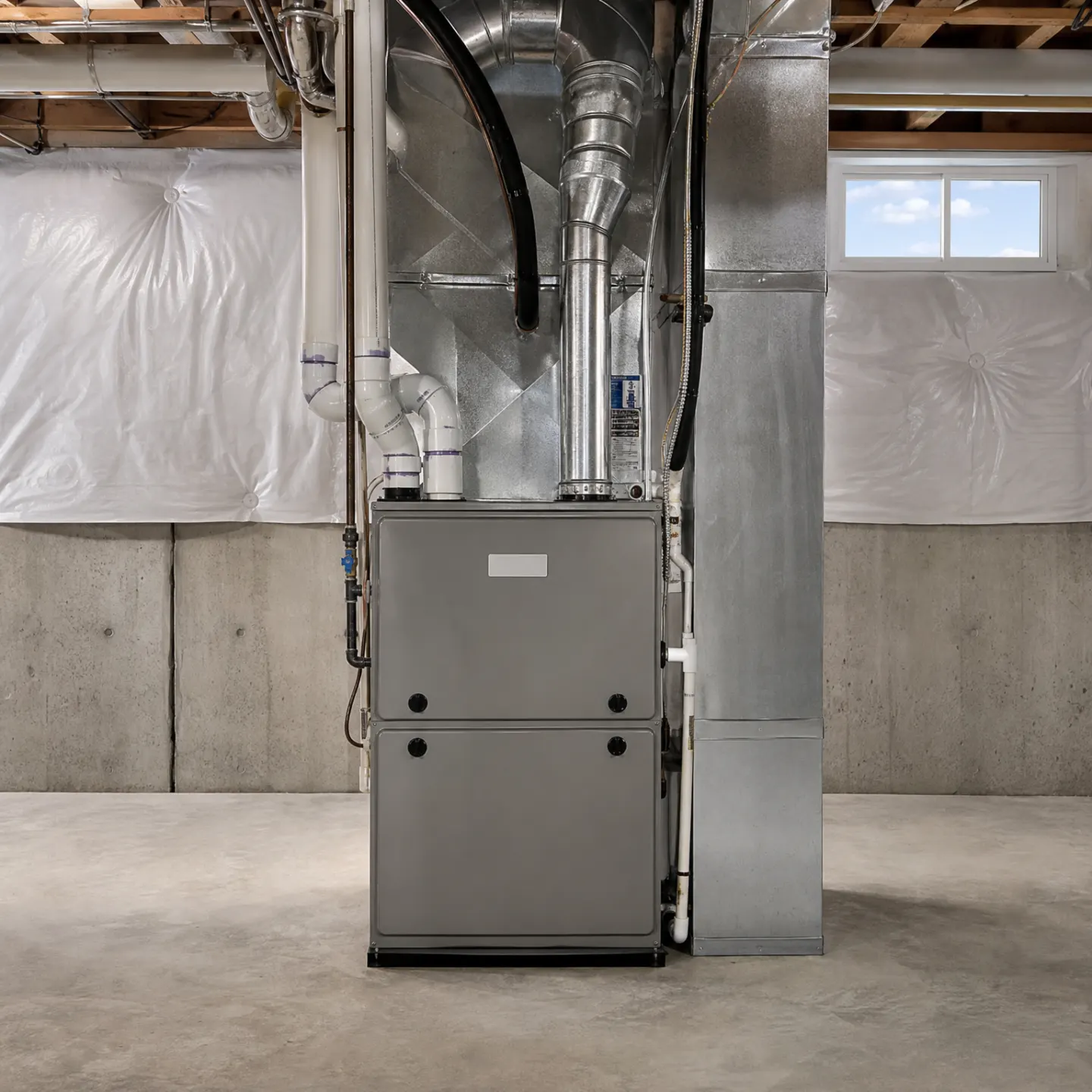
A gray forced-air furnace with metal ductwork stands in an unfinished basement with exposed wooden joists, concrete walls, and a single hanging light bulb.

Furnace Installation in Matamoras, PA

Tell us about the job

Takes about a minute. No obligation.

Step 1 of 3: Equipment

Electricity in Pennsylvania ran $52.07 per million Btu in 2024, and that number lands on every homeowner running an electric furnace or heat pump through a Matamoras winter. A furnace that wastes heat does it every single cycle, all season. The difference between an efficient system and a tired or oversized one shows up on the bill before it shows up anywhere else. Worth keeping in mind while you compare what's available for your home.

8 months
October through May, your furnace is on duty
18°F
the average winter night it heats against
80% AFUE
the federal minimum any new unit must meet
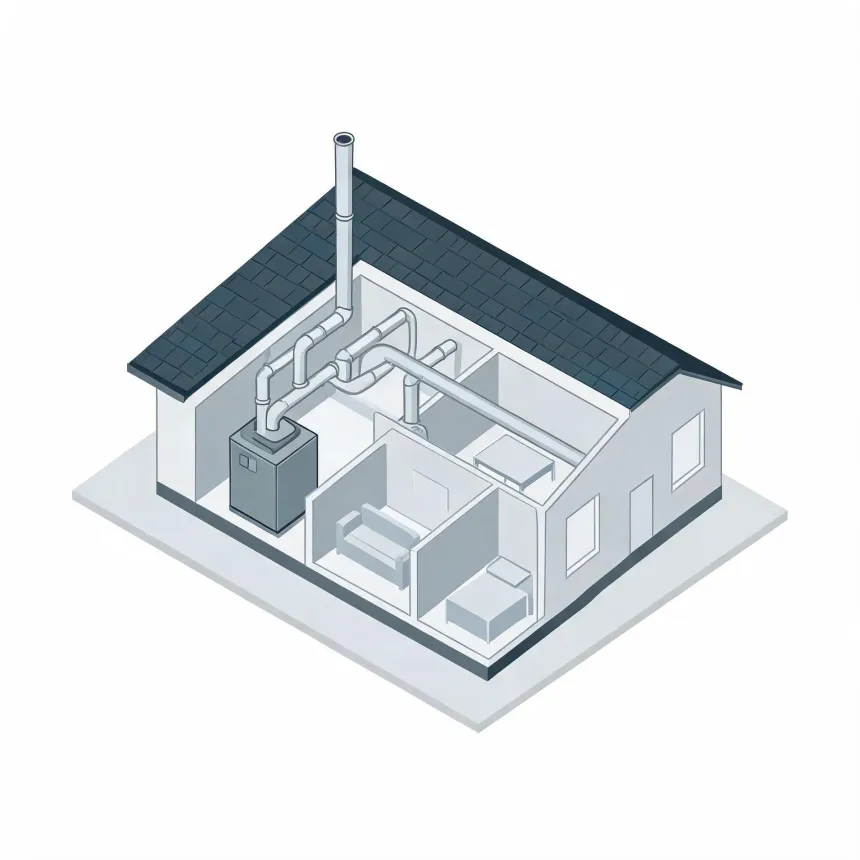
Isometric cutaway illustration of a single-story house showing a gray furnace connected to white ductwork and a flue pipe extending through the shingled roof, with simplified furniture in the interior rooms.
Your furnace works hardest from November through March.

NOAA nClimDiv, 1991–2020 normals

A furnace sized off square footage alone is a guess, not a measurement.

The right size comes from a load calculation that weighs your windows, your insulation and your walls, room by room.

Eight months of heat is a long time to wait on a repair

Heat runs October through May
Climate zone 5A
Winter nights average 18°F
What most of Pike County runs onElectricity heats 37.9% of homes here, more than gas, propane or oil.

Matamoras falls in climate zone 5A, where heating is the bigger job for a furnace all winter. Any gas furnace installed here has to clear 80.0 percent AFUE, the federal floor for non-weatherized furnaces. That floor jumps to 95.0 percent for units built starting December 2028, so the minimum is about to get a lot tighter. A furnace at today's floor is still a legal install now, but it burns more gas per cycle than what the rule will soon require. Ask what AFUE rating is on the unit you're looking at, not just whether it passes.

Get a furnace that doesn't waste what Pennsylvania power costs

At $52.07 per million Btu, every cycle a furnace wastes shows up on your bill all winter. Picking the right size and AFUE now is what keeps that cost down for as long as you own the thing.

Find a contractor
A gray residential gas furnace installed in an unfinished basement, connected to sheet-metal ductwork and PVC pipes.

Eight months a year, against an 18°F night

Eight months of heat a year is most of the calendar. Add nights that average 18°F across December, January and February, and this furnace is running long hours against a real gap between inside and outside. That's the load it answers to, cycle after cycle, from October to May. A furnace sized right for that load wears the way it's supposed to. One sized wrong shows the strain early, in short cycling and parts that give out before their time.

The furnace is the smaller line item

The unit itself is only part of what you're paying for. Ductwork that doesn't match the new furnace's airflow has to be modified or replaced. The vent system often needs to change too, since a higher-efficiency furnace vents differently than an older one, sometimes through a wall instead of a chimney. Gas line size, electrical hookup and the condensate drain all factor in before the furnace ever turns on.
What changes the job on install day

Where the furnace sits in the house, how far it is from the vent termination, and whether the existing ductwork was sized for the old unit all shape the work. A straightforward swap in the same spot with compatible ducts is a different job than one that needs new vent piping or duct modifications to handle the new airflow. The contractor sizing your job should be able to tell you which situation yours is.

Taking out the old furnace is part of the install, not a separate job. A tech disconnects the gas line, the electrical, the vent connection and the ductwork, then physically removes the unit before the new one goes in. If the old furnace vented through a chimney and the new one vents through a wall, that chimney connection gets sealed off, not left open. Any ductwork that doesn't match up with the new furnace's airflow gets modified at the same time, since reusing old ducts as-is on a new system means it'll fight an airflow it wasn't matched to. The old unit itself gets hauled away. None of this is optional work tacked on afterward. It has to happen for the new furnace to vent safely and run the way it's rated to.

Install day starts before the new furnace ever comes off the truck. A tech checks the gas line, the electrical and the vent path against what the new unit needs, then does the teardown described above. Once the old furnace is out, the new one gets set, leveled and connected to gas, power, the vent and the ductwork. Each connection gets tested on its own before the whole system runs together. The gas line gets checked for leaks, the vent gets checked for proper draft, and the furnace gets fired and run through a full cycle so the tech can watch how it responds. A combustion analyzer reads the exhaust to confirm the furnace is burning clean and getting the air it needs. None of this is quick, and a tech who rushes the startup checks is skipping the part of the job that catches problems before you live with them.