Gas is the common fuel here
Utility gas heats 39.5% of occupied homes in Northampton County, more than any other fuel. Electricity comes next at 31.3%, with oil heat behind that.
Takes about a minute. No obligation.
Utility gas heats 39.5% of occupied homes in Northampton County, more than any other fuel. Electricity comes next at 31.3%, with oil heat behind that.
If your home already runs on gas, a gas boiler keeps you on the same fuel line and venting approach. If yours runs on oil, a licensed contractor can tell you what changing fuel types would involve for your setup.
Gas ran $13.12 per million Btu in Pennsylvania last year.
A standard-size, standard-efficiency gas boiler fits that cost fine, no need to pay more for a bigger or higher-tier unit than this house calls for.



Bethlehem falls in climate zone 5A, a cool zone where heating carries more of the load than cooling does. Any gas-fired hot water boiler built on or after January 15, 2021 has to reach at least 84 percent AFUE to go into a home here. That floor rules out the old low-efficiency models but leaves room above it. A federal tax credit is available on qualifying high-efficiency equipment, worth asking about when you're comparing units. The zone sets the minimum. What you pay above that is about comfort and fuel use over the life of the system, not code.
Half the homes in Northampton County were built in 1971 or earlier. An older house can carry radiators, baseboard runs, or pipe sizing that a newer home wouldn't have, and the boiler going in has to match what's already there, not the other way around. A licensed contractor can size the new unit to your actual house.
Find a contractor
The AFUE number is how much fuel turns into heat for the house over a season, with the rest lost out the flue. A boiler rated higher wastes less gas doing the same job. It says nothing about how big the boiler is or how well it matches your radiators and pipes, only how efficiently it burns what it uses.
A boiler's AFUE stays about the same year to year as long as it's maintained, since it comes from the design of the heat exchanger and burner, not from wear. What moves on the bill is the price of gas and how much the house demands that winter. Houses running the same boiler can still see different bills for reasons that have nothing to do with the rating on the label.
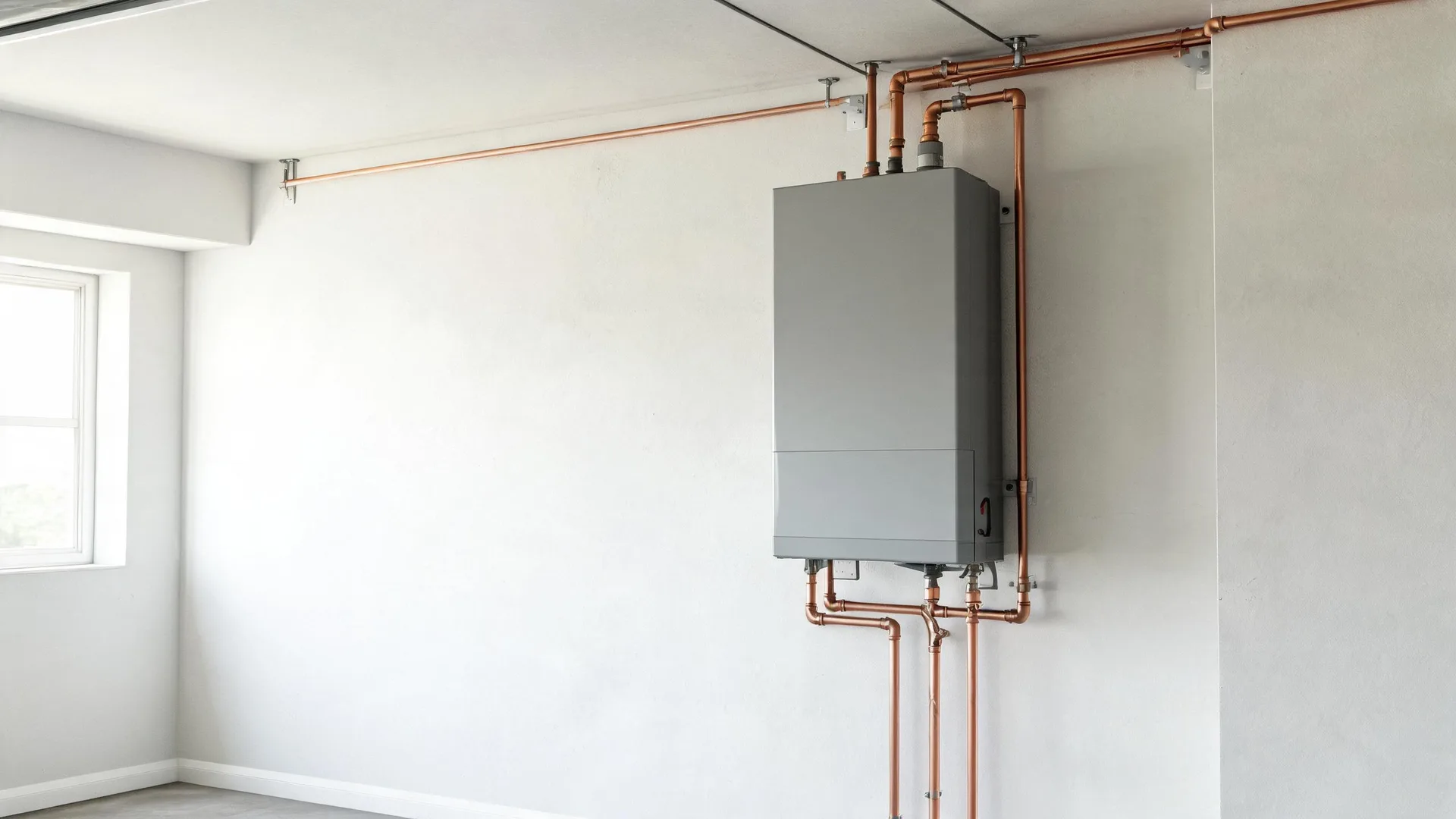
A few things push the price of a boiler install beyond the unit itself. Venting is often the big one. A higher-efficiency boiler usually vents through plastic pipe out a sidewall instead of up a chimney, and if the house was piped for the old way, that means running new venting. Piping near the boiler is another factor. If the new unit sits somewhere different than the old one, or the existing piping doesn't meet what the manufacturer specs, that gets redone too. The gas line can matter as well, since some boilers need more flow than the existing line was sized to deliver. None of this shows up on the price tag of the boiler itself, and it's why similar homes can end up with different scopes of work for what looks like the same job.
Install day starts with the old boiler coming out, and that alone can take a few hours if it's piped into a chimney or tied into baseboard loops throughout the house. The new unit gets set, leveled, and connected to the supply and return lines, then the gas line and venting get run or adjusted to fit where it sits. Electrical and controls come next, including the thermostat wiring and any safety switches the boiler needs to run. Once it's all connected, the system gets filled with water and purged of air, since trapped air in the lines will keep it from heating evenly. The contractor fires it up, checks the flue for proper draft, and tests that every zone or radiator is actually getting heat. A combustion analyzer gets used to check the burn itself, confirming the boiler is drawing air and venting exhaust the way it's supposed to before anyone calls the job done.