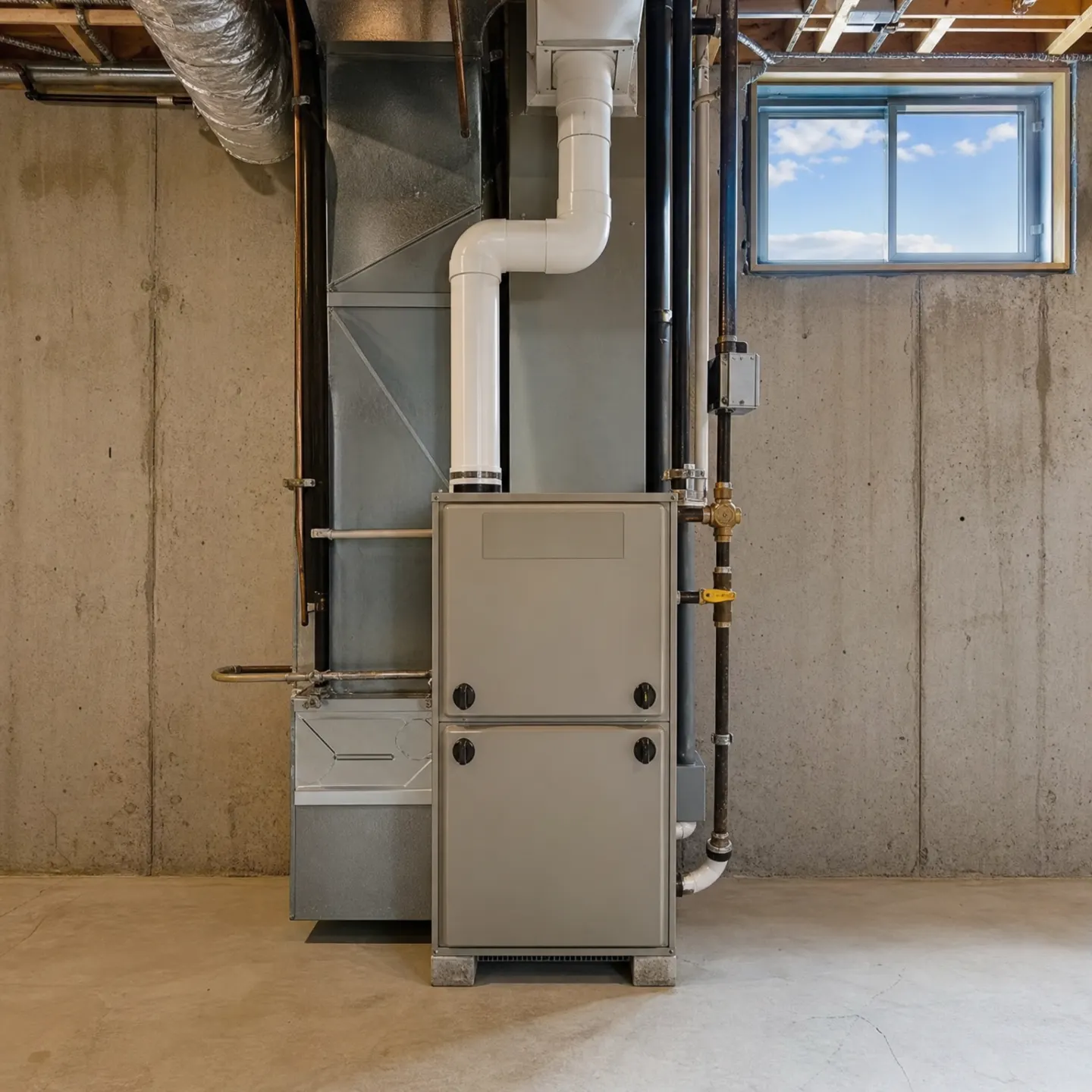
Gas is the common fuel here
Utility gas heats 39.5% of occupied homes in Northampton County, more than electricity, oil or propane. A gas furnace is the system most contractors here install and service most often.
Takes about a minute. No obligation.
Utility gas heats 39.5% of occupied homes in Northampton County, more than electricity, oil or propane. A gas furnace is the system most contractors here install and service most often.
If your home already has a gas line run to a furnace, replacing it with another gas furnace keeps the venting and gas connection the same. Switching fuels means new venting or new gas supply, which is a bigger job.
NOAA nClimDiv, 1991–2020 normals
Furnaces here run about eight months a year, with overnight lows averaging 22°F in January.
A standard-size furnace sized correctly for your home handles that fine, no upsizing needed.



Furnace season here runs October through May, about eight months straight. September is the one month before it starts, and that's the window worth using. A new furnace put in during September gets checked and running before it has to carry a cold night. Wait until the first real cold snap and you're one of many homeowners calling at once, and if the old furnace quits outright, you're picking a system in a hurry instead of looking at what actually fits your house. Installing before the season also means any issue, a draft problem, a thermostat that's wired wrong, shows up while it's still easy to get someone back out.
Northampton County sits in a cool climate zone where heating is the bigger load over the year. Any gas furnace installed has to reach at least 80 percent AFUE, the current minimum. That floor rises to 95 percent in a few years, so a furnace going in now is matched to today's standard.
Find a contractor
A furnace sized for a newer home assumes certain things about the ductwork. How much air it can carry. How tight the place is built. An older home might match that or it might not. Have the ductwork checked against the new furnace's output before it goes in. A furnace that's the right size on paper still needs a duct system that can move the air it produces.
Pulling the old unit and setting the new one is only part of the cost. The vent pipe, the gas line, the supply plenum, the return, all of it has to match what the new furnace needs. If the old venting was sized for a lower efficiency unit, it may need to be redone rather than reused.
A furnace that fits the house still needs ducts that can carry what it puts out. Undersized or leaky ductwork sometimes gets patched during an install, sometimes gets replaced. That decision gets made on site, after the ducts are actually inspected, not before.
Estimates for a typical Northampton County home, from EIA household energy data, Pennsylvania fuel prices and NOAA climate normals. Your home will differ.
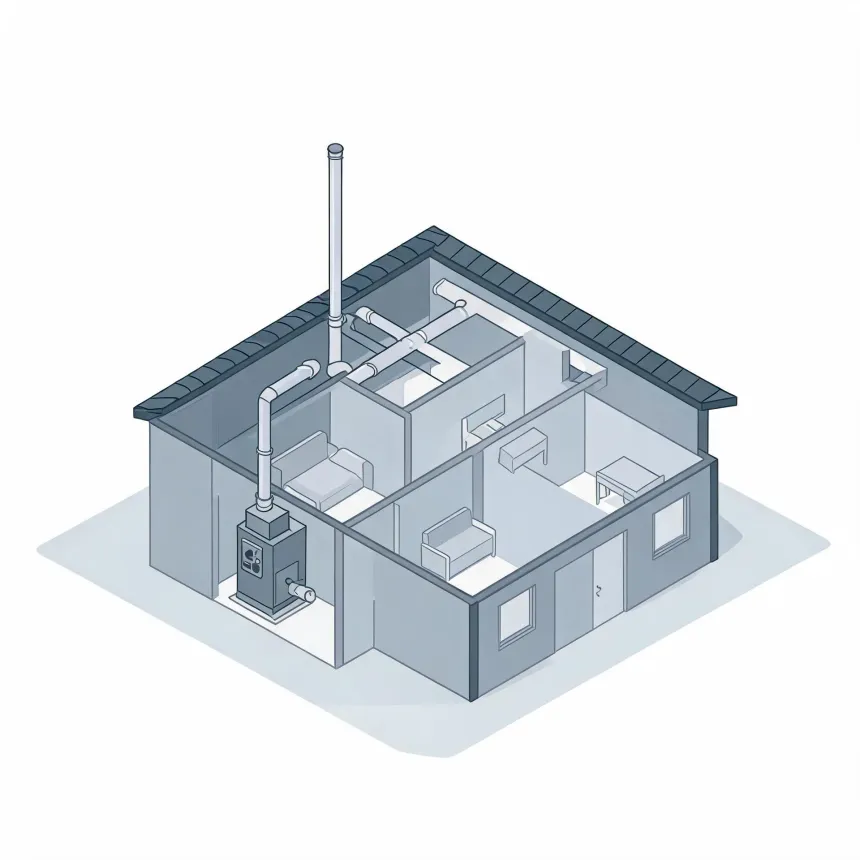
Installation day starts with the old furnace coming out, along with whatever venting and ductwork connections won't carry over to the new one. The new furnace gets set and leveled, then the gas line, vent pipe, supply plenum and return get connected or rebuilt to match what it needs. Once it's hooked up, the gas connection gets pressure tested for leaks before anything is fired. Then it's started up and run through a cycle while static pressure, gas pressure and temperature rise get checked against what the manufacturer specifies for that unit. The thermostat gets wired and tested last, since a furnace that fires correctly but won't respond to the thermostat isn't finished yet. None of this is quick work if it's done right, and skipping the testing steps is how a furnace ends up short-cycling or tripping its limit switch a few weeks in.