




A row of illuminated white colonial houses along a road photographed at dusk.

Furnace Installation in Bristol, PA

Tell us about the job

Takes about a minute. No obligation.

Step 1 of 3: Equipment

Bucks County saw 331 severe weather events between 2015 and 2024. Most of that was wind, 235 events, with 40 winter storms and 35 hail events mixed in. Any of these can knock out power, and when the county's hit this often, a furnace that depends entirely on the grid is a real gamble. Across Pennsylvania, 15% of households lost power for a day or more in 2024. A gas furnace still needs electricity to run its blower and controls, so an outage shuts it down right along with everything else in the house unless you've planned around it.

8 months
October through May, your furnace is on duty
24°F
the average winter night it heats against
80% AFUE
the federal minimum any new unit must meet
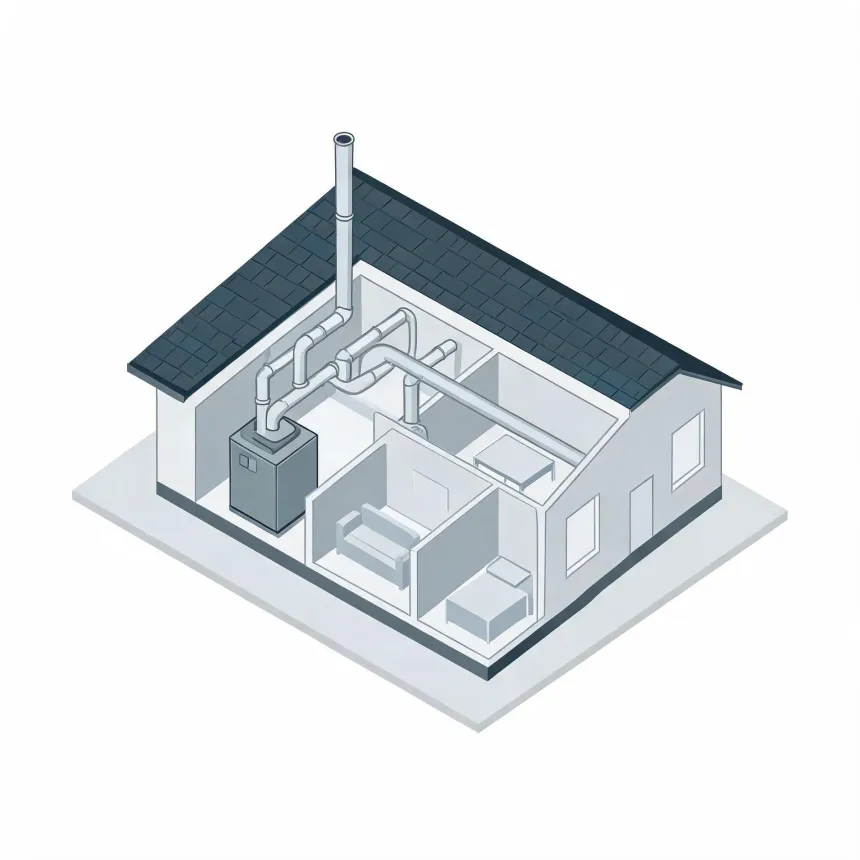
Isometric cutaway illustration of a single-story house showing a gray furnace connected to white ductwork and a flue pipe extending through the shingled roof, with simplified furniture in the interior rooms.
Your furnace works hardest from November through March.

NOAA nClimDiv, 1991–2020 normals

A gas furnace won't light or push out air without electricity, no matter how much gas is behind it.

Ask what each system does the moment the power drops, not just how it runs when the grid is up.

Put it in before October, when the cold and the outages start

Heat runs October through May
Winter nights average 24°F
40 winter storms from 2015 to 2024
Most Of Bucks County Heats With GasGas heats 37.7% of homes in Bucks County, more than any other fuel.

Bucks County falls under climate zone 4A, which asks a furnace to work hard in both directions, enough heat for a cold snap and enough airflow behind the AC come summer. Any furnace installed here has to clear 80 percent efficiency, turning at least 80 cents of every dollar in gas into heat rather than losing it up the flue. That floor rises to 95 percent for units built on or after December 18, 2028, so a furnace bought before that date can still legally be the 80 percent kind. A federal tax credit is available for qualifying high-efficiency furnaces, which is worth asking about when comparing models. Either way, the system still needs power to run, so efficiency on paper doesn't answer what happens when the lines go down.

Plan for the outage now, while you're already planning the furnace

A furnace that cuts out the moment the power does leaves you with no heat until the lines are fixed, not until the gas comes back. If you're installing new, this is the point to ask what keeps the house warm during an outage, whether that's a battery backup for the controls or a generator sized for the blower. Working that out now costs nothing extra to think through. Working it out during an outage does.

Find a contractor
A man in a cap, gray long-sleeve shirt and brown work pants walks up porch steps toward a dark blue front door, carrying a canvas tool bag with tools in its side pockets, beside a potted shrub.
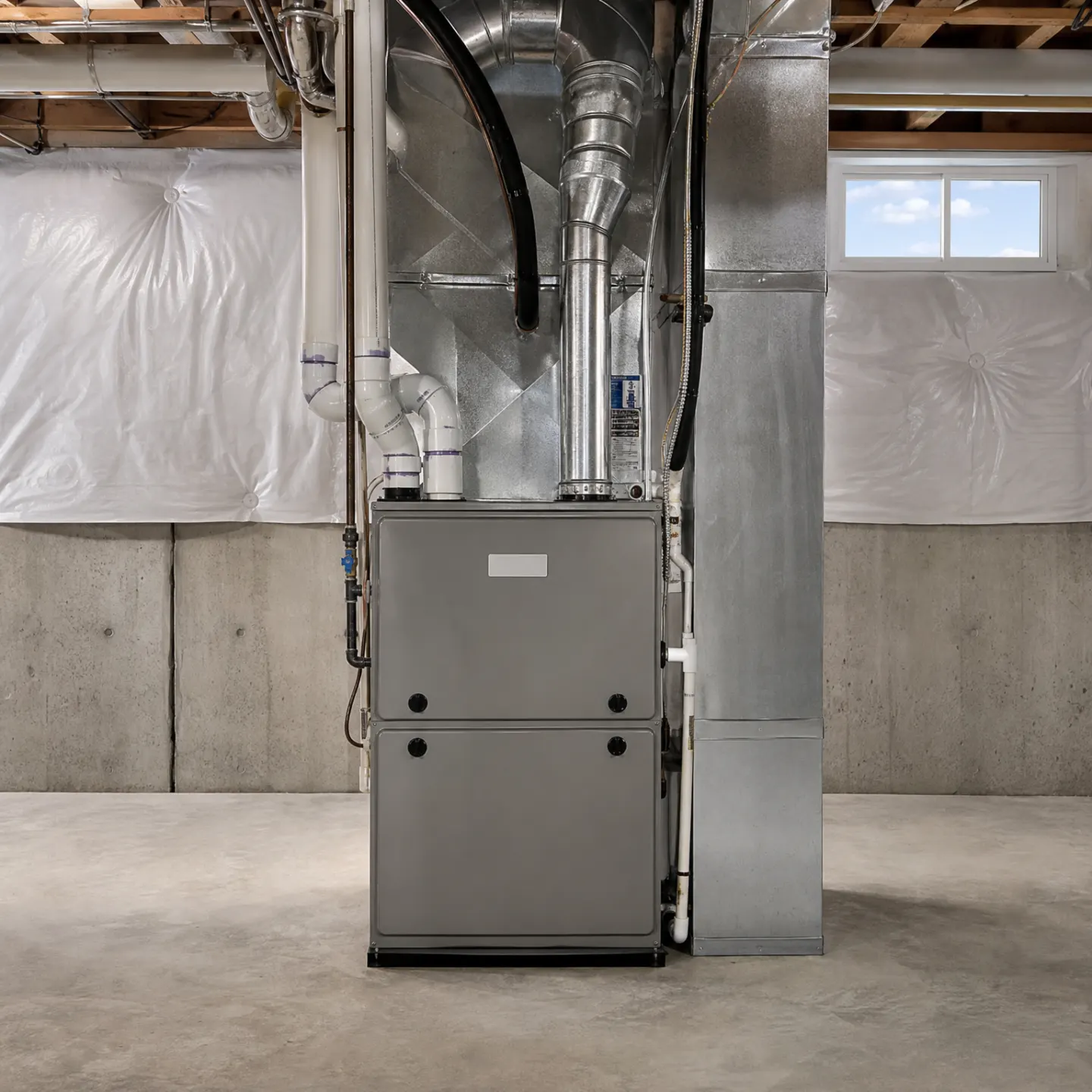
A gray residential gas furnace installed in an unfinished basement, connected to sheet-metal ductwork and PVC pipes.

The Rating Measures Gas, Not How the Machine Holds Up

That efficiency number on the label is measured one way: how much of the gas you burn turns into heat instead of going up the flue. It says nothing about the blower, the igniter or the control board, and those are the parts that fail first and the parts that keep running day after day once the system is sized and installed. A furnace rated higher doesn't wear slower. It still runs on the same schedule, cycling on when the thermostat calls and off when the space hits temperature, over and over through the stretch of the year it's needed. What matters for how long it lasts is routine service, a clean filter, and whether it was sized right for the house to begin with. The rating tells you about the gas bill. It doesn't tell you how the system holds up to months of steady use, and it doesn't tell you what the furnace does the moment power drops, because that's a different part of the machine doing a different job.

Size Drives the Price Before Anything Else

A furnace has to match the heat loss of the house it's going into. One sized too small runs constantly and never quite catches up. One sized too big cycles on and off fast, which wears the heat exchanger and leaves rooms uneven. Getting the size right takes a load calculation, not a guess based on the old unit, and that calculation shapes which furnace is even an option before cost enters the conversation.
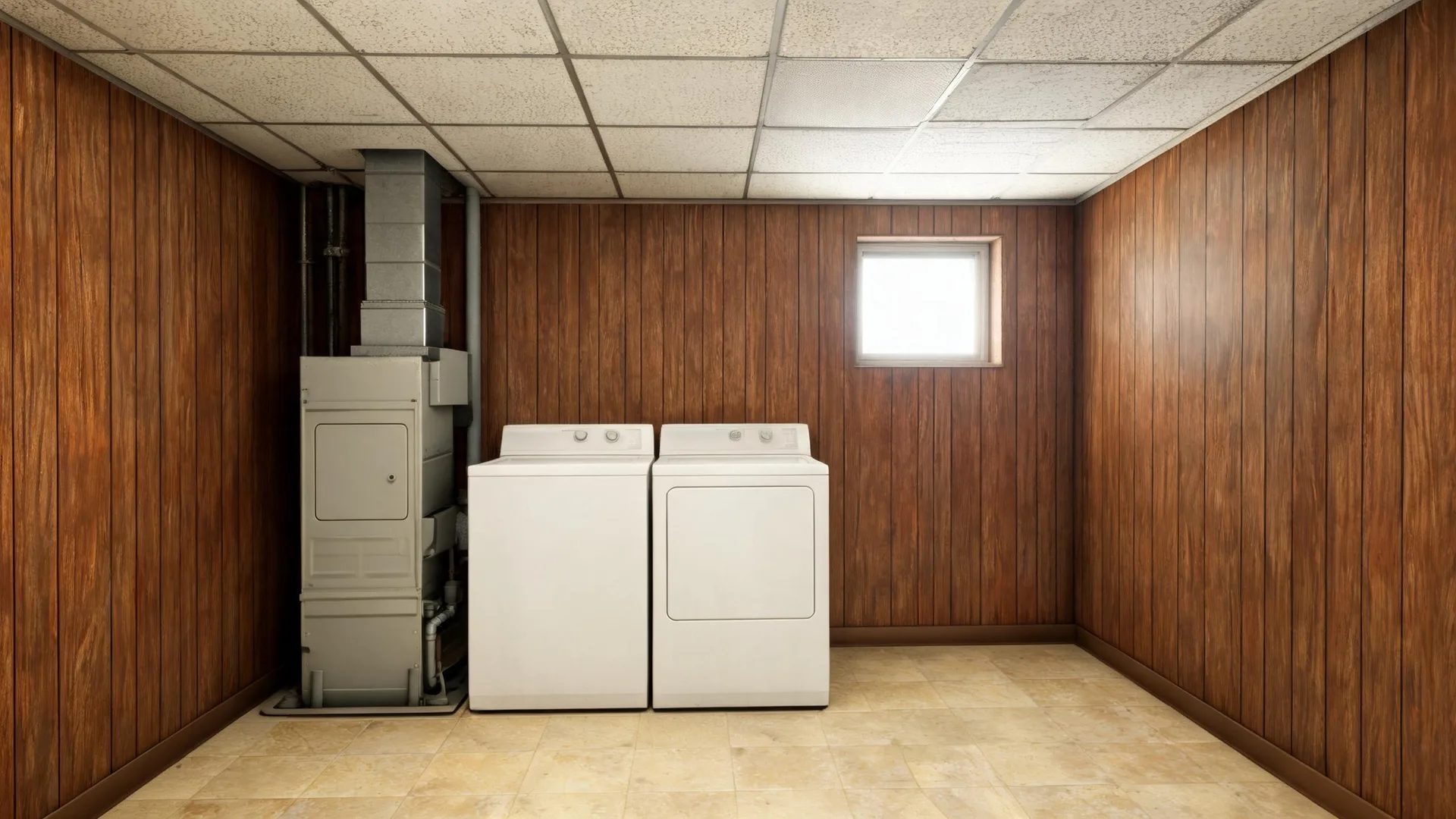
The Install Is More Than the Box

Setting a new furnace in place is the easy part. The job also means connecting to the existing ductwork, running gas and venting to code, and tying into the thermostat and electrical. If the ducts are undersized or leaky, or the venting doesn't match the new unit, that work has to happen too. None of it shows up on the furnace's price tag, but all of it affects what the installation takes to finish.

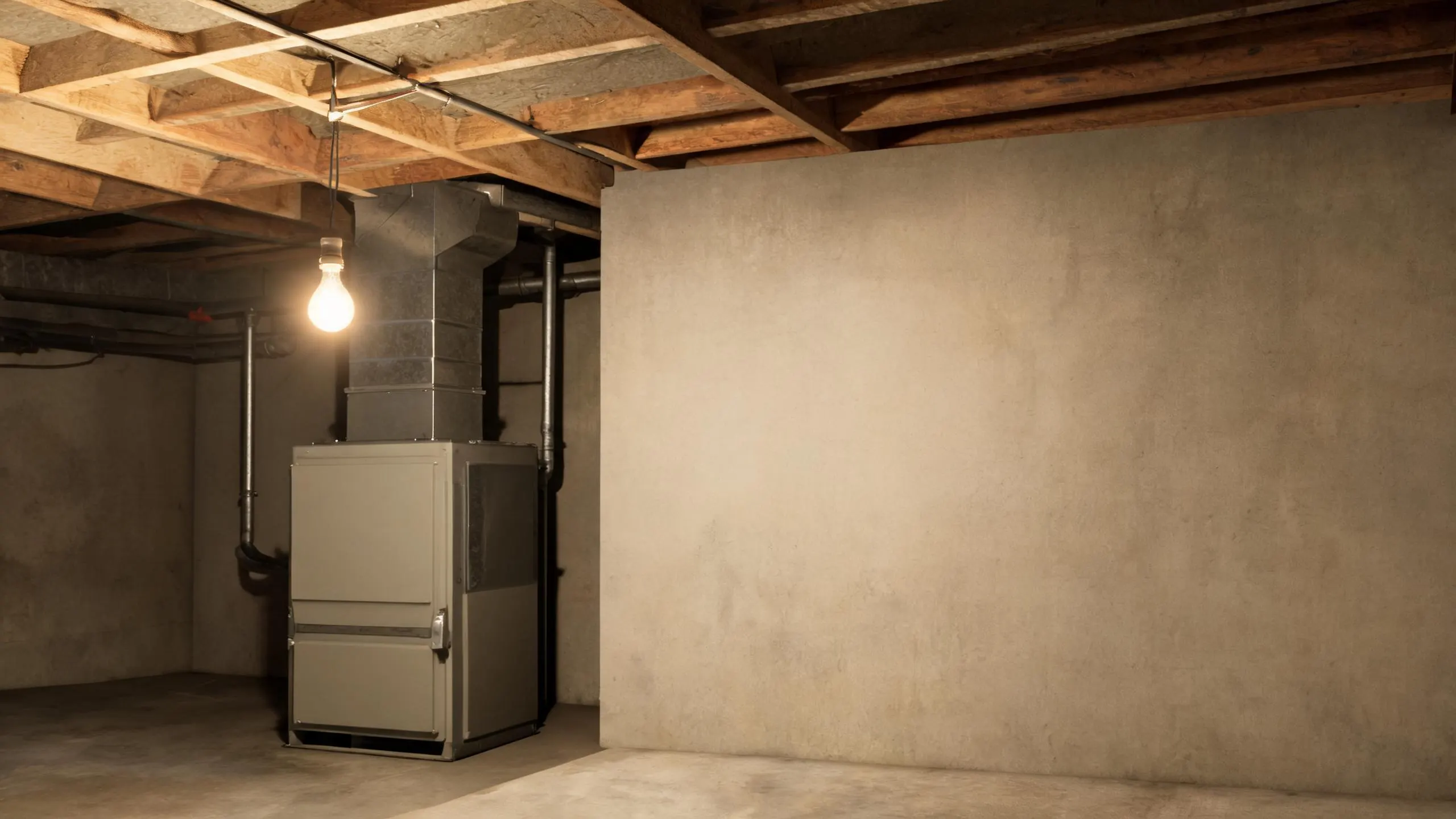
A gray forced-air furnace with metal ductwork stands in an unfinished basement with exposed wooden joists, concrete walls, and a single hanging light bulb.

A high-efficiency gas furnace would save about $120 a year to run in Bucks County compared with a gas furnace.

  • A high-efficiency gas furnace$570 a year
  • A gas furnace$690 a year

Estimates for a typical Bucks County home, from EIA household energy data, Pennsylvania fuel prices and NOAA climate normals. Your home will differ.

Install day starts with the old furnace coming out, not the new one going in. The crew disconnects the gas line, the vent pipe, the electrical, and the ductwork connections, then clears the unit out before anything new goes in its place. The new furnace gets set, leveled, and connected the same way: gas, vent, power, ducts, in whatever order the layout calls for. Once it's hooked up, the gas line gets pressure tested for leaks before the burners ever light. Then comes startup: the igniter fires, the flame sensor confirms it caught, the blower kicks on, and the control board gets checked to make sure it's calling for heat and shutting off the way it should. Airflow gets checked at the registers, and the thermostat gets set up and tested before anyone calls the job done.