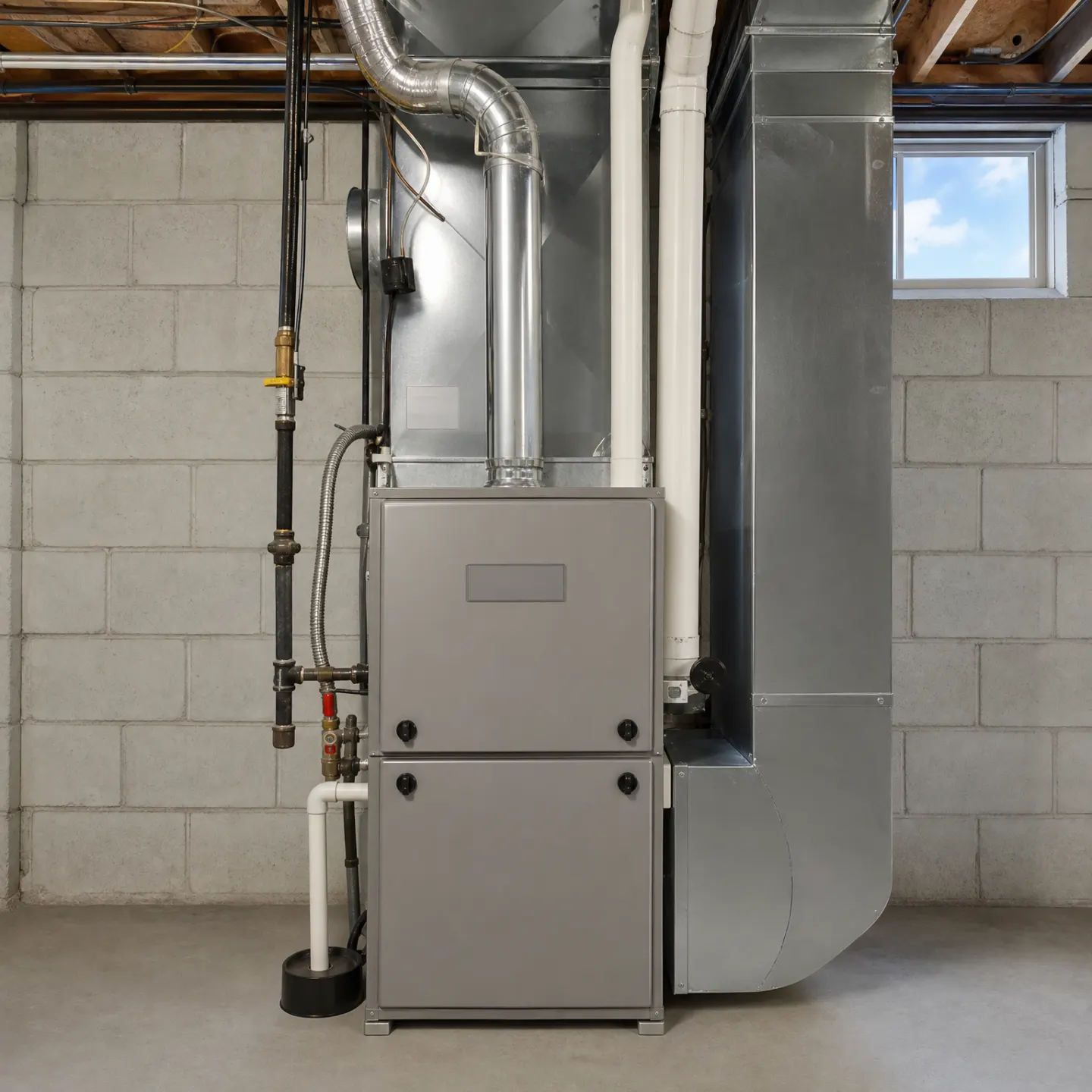
An unfinished basement featuring a grey forced-air furnace with metal ductwork, concrete block walls, exposed wooden joists, and a single hanging bare bulb.

Furnace Repair in Bristol, PA

Tell us about the job

Takes about a minute. No obligation.

Step 1 of 3: Equipment

Bucks County sees real storm damage

Bucks County recorded 331 severe weather events between 2015 and 2024, including 235 cases of damaging wind and 35 hail events. A furnace shares the house with whatever the weather does outside, and wind-driven debris or ice can affect the vents and lines it depends on.

Power doesn't always come right back

15% of Pennsylvania households went at least a day without power in 2024. A gas furnace still needs electricity to run the blower and controls, so a long outage leaves a home without heat even with gas in the line.

8 months
October through May, your furnace is on duty
24°F
the average winter night it heats against
40 winter storms
in ten years, the nights a failure hurts most
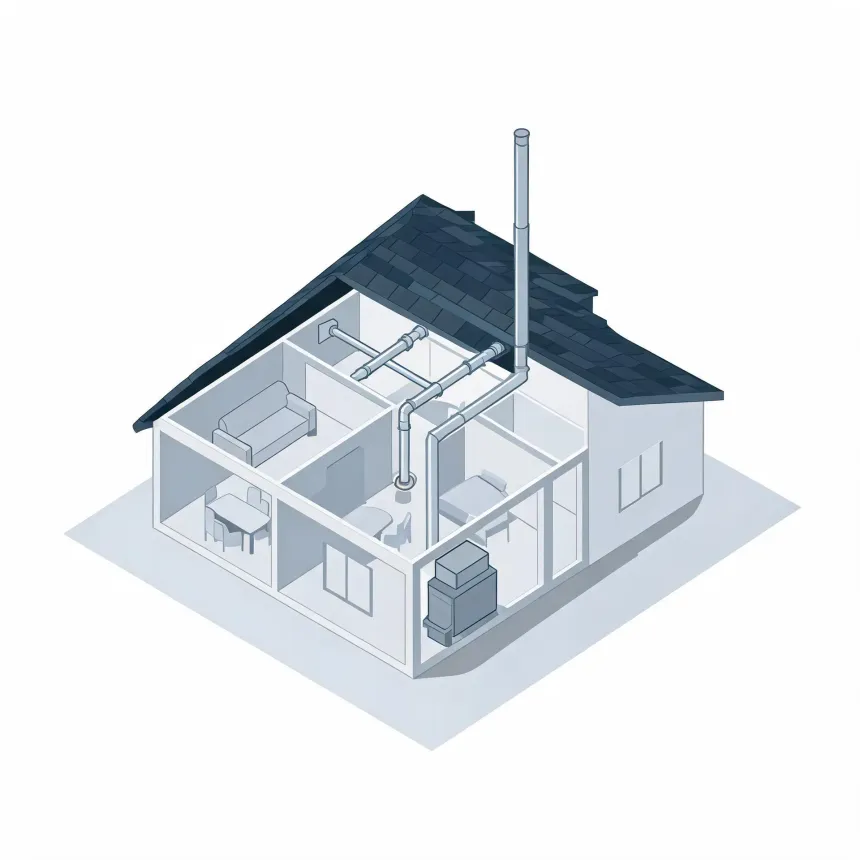
Isometric cutaway illustration of a single-story house showing interior rooms with furniture, ductwork and piping running to a tall vertical flue through the dark shingled roof, and a furnace-like appliance unit on the floor.
Your furnace works hardest from November through March.

NOAA nClimDiv, 1991–2020 normals

Most furnace failures start with the igniter or the flame sensor, not the gas line.

Those parts are cheap to replace but they stop the whole furnace cold until someone does.

Heat starts in October here, and that is when a weak furnace shows it

Heat runs October through May
Climate zone 4A
Winter nights average 24°F

A furnace that's struggling still tries to do its job, and that's often where the damage spreads. A cracked heat exchanger left alone can warp further under the heat cycling on and off. A blower motor running on worn bearings will keep drawing power until it seizes, and when it seizes it can take the control board with it. A flame sensor coated with residue makes the furnace shut off early, and leaving that alone just means more shutdowns, not fewer. Short cycling wears out the parts that start the furnace each time, the igniter especially, since it gets a jolt of current every single cycle. The problem rarely stays the size it started as.

If this storm season reached your furnace, find out now, not when it's zero outside

Wind and ice have had plenty of chances to reach the vents and lines your furnace depends on. If a tech is already coming out for a repair, have them check what the outdoor unit and venting took. A furnace that still runs isn't the same as one that came through clean.

Find a contractor
A gray high-efficiency gas furnace installed in an unfinished basement, surrounded by gas lines, a condensate drain, and sheet-metal ductwork.

A furnace that's been running a long time tells you before it fails

A furnace gives warning before it quits. It doesn't just go from fine to broken. The signs show up in how it sounds, how it smells, and how long it takes to do what it used to do without thinking about it. A furnace that used to kick on and heat the room without you noticing, now taking longer, or cycling more than it used to, is telling you something wore down. A knock or a rattle when the blower starts is often a wheel that's come loose or bearings going. A burning smell that doesn't fade after the first few minutes of the season isn't dust burning off anymore, it's something overheating. Yellow flame instead of blue means the gas isn't burning clean, and that's not a cosmetic difference, it means combustion gases aren't going where they should. A furnace that shuts off before the room gets warm is usually a flame sensor losing its read on the flame, not a thermostat problem. None of these fix themselves. They get worse the longer the furnace runs on them.

Check these before you pick up the phone

Make sure the thermostat is set to heat and the temperature is set above room temperature, not just on. Check the furnace switch, the one that looks like a light switch near the unit, and make sure it's on. Look at the breaker for the furnace and reset it if it's tripped. If the furnace has a standing pilot, check whether the pilot light is lit. None of this requires opening the cabinet or touching gas or electrical connections.

What those checks tell you

If the furnace runs after one of these fixes, the problem was simple and you just saved yourself a trip charge. If the breaker trips again right after you reset it, stop, that means something is drawing too much power and needs a tech to find it. If the power's been out and the furnace still won't start once it's back, the control board or blower may need a reset only a tech can do. Either way, you'll be able to tell the tech exactly what you checked, which saves time on the call.

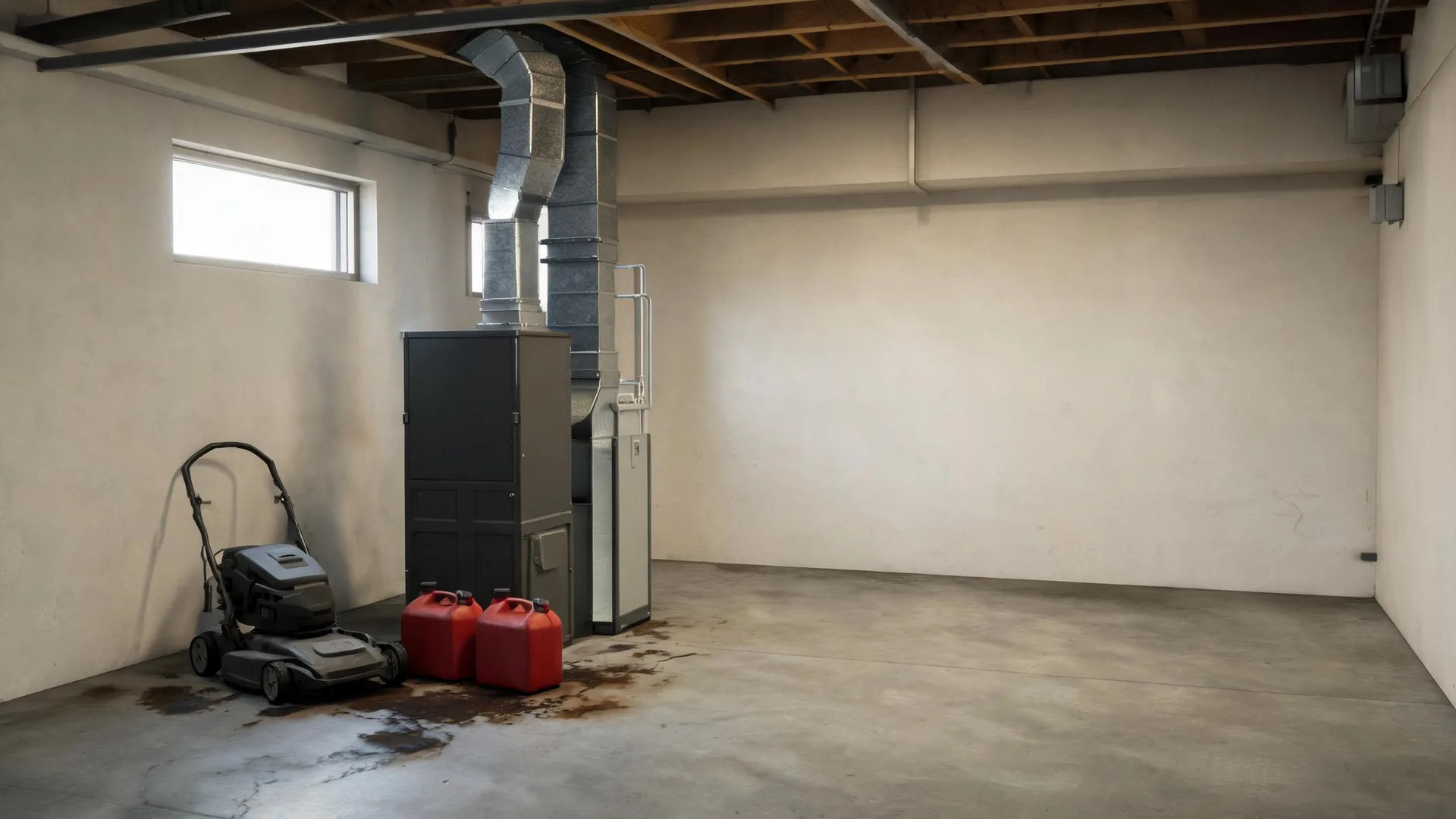
An unfinished basement containing a metal furnace with ductwork, exposed wooden joists on the ceiling, cardboard boxes, a coiled cable, and a single hanging incandescent bulb.

A new furnace would cut about $140 a year off heating for a typical Bucks County home.

  • A new high-efficiency furnace$570 a year
  • An older furnace$710 a year

Estimates for a typical Bucks County home, compared with an older unit built to the previous federal minimum, from EIA household energy data, Pennsylvania fuel prices and NOAA climate normals. Your home will differ.

Repair makes sense when one part has failed and the heat exchanger is sound.

Replacement makes sense when the heat exchanger is cracked or the furnace keeps needing parts.

A furnace is worth fixing more often than people expect. The cabinet, the ductwork, the gas line, those outlast almost everything else in the system, so a repair is usually about one part, not the whole unit. Age matters more than any single symptom. A furnace in its first half of life is almost always worth repairing, whatever's gone wrong with it. One that's old and has already had a few repairs behind it is a different question, especially if the next repair is the heat exchanger, since that's the part that's expensive enough and central enough to change the math. The question worth asking isn't just what this repair costs, it's whether the furnace is likely to need another one soon after.