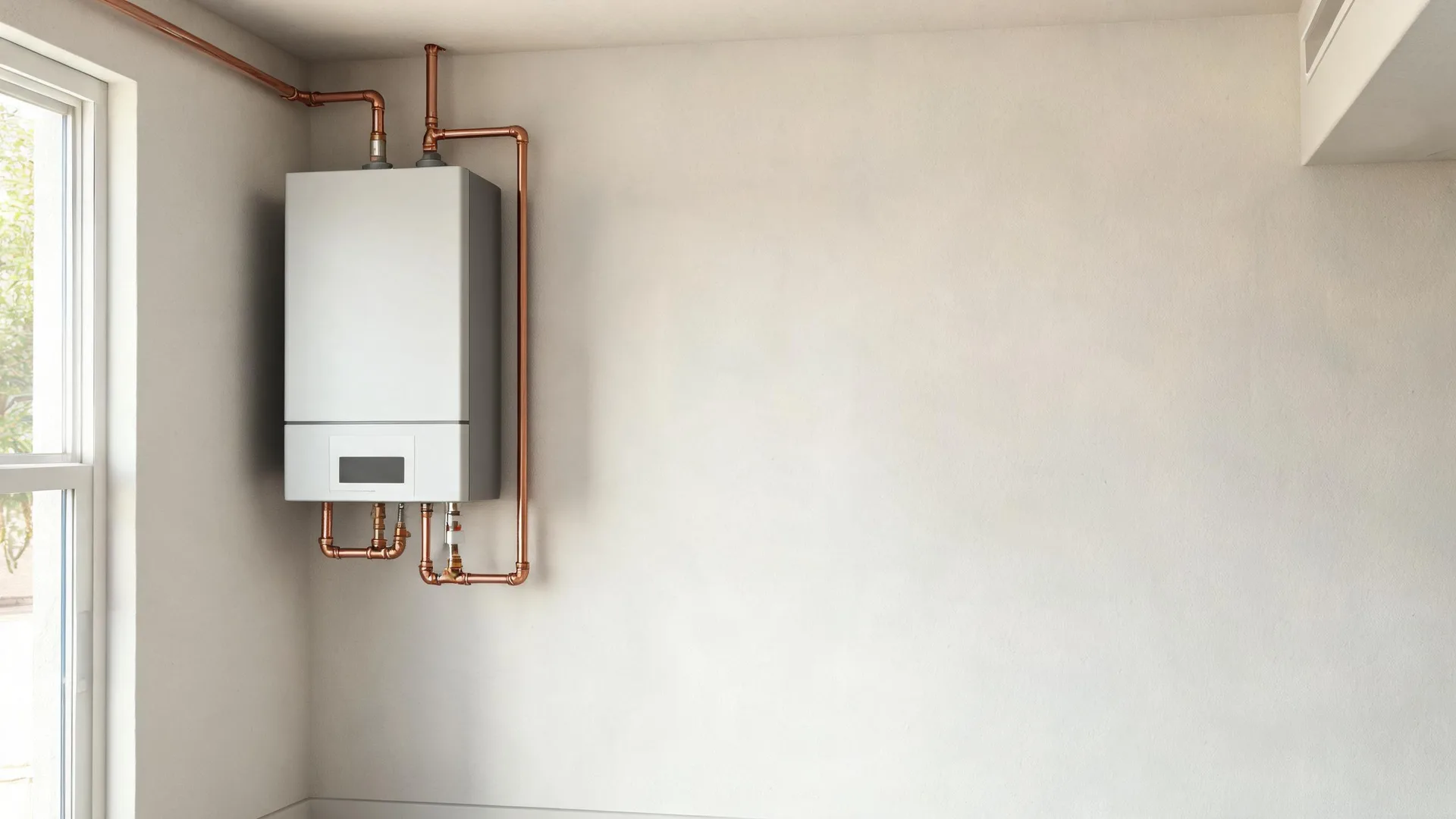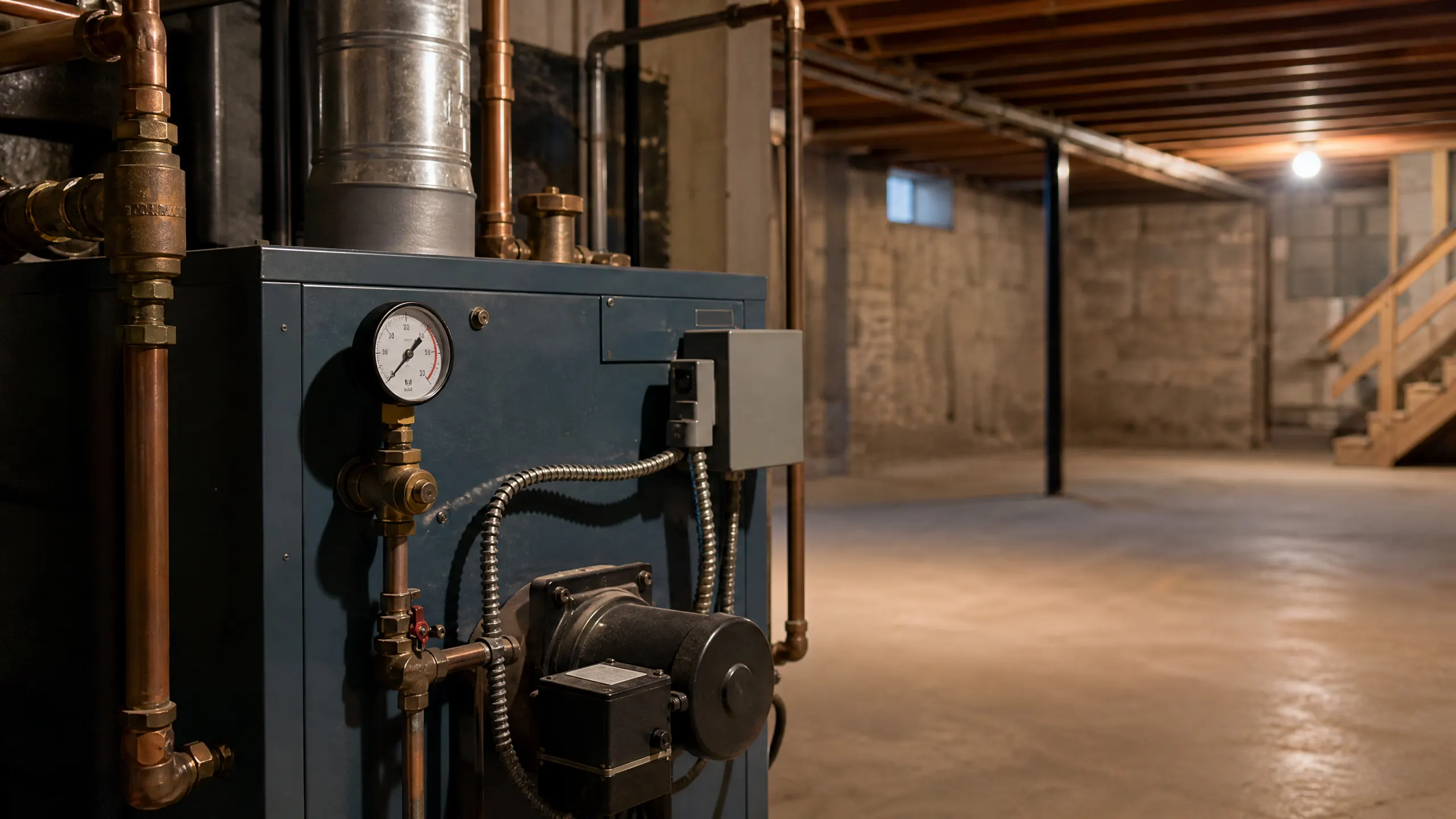
A blue steel boiler with copper pipes and a pressure gauge mounted in an unfinished basement with stone walls and wooden stairs.

Boiler Installation in Bristol, PA

Tell us about the job

Takes about a minute. No obligation.

Step 1 of 3: Equipment

Storms come through Bucks County often

Bucks County recorded 331 severe weather events between 2015 and 2024, including 235 cases of damaging wind and 40 winter storms with heavy snow or ice. A boiler installed here will sit through a lot of weather over its life.


Power doesn't always hold through it

Across Pennsylvania, 15% of households went at least a full day without power in 2024. A gas boiler still needs electricity to run its controls and circulator, so an outage can mean no heat and no hot water even with gas in the line.

A boiler install is priced by what the job needs, not by one number on a brochure.

The boiler itself is only part of it. Venting, piping, the zone controls and how the old system comes out all factor into what the job takes.

Eight months of heat a year leaves a small window to get this right

Heat runs October through May
Climate zone 4A
Winter nights average 24°F
Gas Heats This CountyUtility gas heats more Bucks County homes than any other fuel, at 37.7 percent.

Bucks County falls into climate zone 4A, which asks real work of both heating and cooling and leans humid. Any gas boiler installed here has to meet that zone's standard. Since January 15, 2021, new gas-fired hot water boilers have had to turn at least 84 percent of the gas they burn into heat over a season. That rule narrows the field before cost or brand ever comes into it. A contractor sizing a system here is already working within that floor.

Plan for the power to go out, not just the heat to go on

A boiler install is the time to decide where the unit sits, how the venting is protected, and what happens to heat and hot water if the power drops. Some setups hold up through an outage better than others. Worth settling before the new system goes in, not after the next storm finds the gap.

Find a contractor

How it's sized, not just what it's rated for

A boiler has to be sized to the actual heat loss of the house, room by room, not picked off a chart by square footage. One that's too big will short cycle, turning on and off before the water ever gets up to temperature, which wears the burner and the heat exchanger early. One that's too small will run constantly and still fall short on the coldest days. Ask whoever is bidding the job to walk through how they're sizing it and what they're basing it on.

What happens if the power cuts out

A gas boiler still needs power to run its controls, its igniter and its circulator pump, so a outage stops it cold even with gas in the line. Some installs plan for this and some don't. Ask whether the system can be set up to run on a backup power source, and if so, what that takes: a manual transfer switch, a permanent hookup, or nothing at all unless it's added later.

That efficiency number on the label is the AFUE rating, and it tells you how much of the fuel the boiler burns actually turns into heat in your home over a season, with the rest going out the vent. A higher number means less of what you're paying for goes up the flue. Two boilers can heat the same house and cost very different amounts to run depending on where that number sits. It's worth knowing that a higher-rated boiler is usually a different kind of machine inside, often with a different venting setup, not just a better-built version of the cheaper one. That changes what the installer needs to run for venting and where the unit can go. Ask what rating the unit you're being quoted carries, and ask whether the venting it needs is already in place or has to be added.

Installation day starts with the old boiler coming out, and that alone can take a few hours if it's piped into baseboard or radiators that have been there a long time. The installer has to drain the system, disconnect the gas and water lines, and get the old unit clear before anything new goes in. Once the space is open, the real layout work happens: setting the new boiler, running the venting to code, and tying in the gas line, the water lines and the electrical for the controls and circulator. Zone valves or zone circulators get wired in to match however the house is split up for heat. Near the end, the installer purges air from the system, checks the gas pressure, and fires the boiler to watch how it ramps up and settles into a steady burn. Before they leave, a good installer walks the house with you, checks that every zone is actually getting heat, and shows you where the shutoffs are.