



White colonial houses with lit windows photographed at dusk along a tree-lined residential street.

Mini Split Installation in Bristol, PA

Tell us about the job

Takes about a minute. No obligation.

Step 1 of 3: Equipment

Bucks County saw 331 severe weather events between 2015 and 2024. Damaging wind caused 235 of those, hail hit 35 times, and 12 tornadoes touched down in the county over that span. A mini split's outdoor unit sits outside through all of it, exposed to wind-driven debris and hail. Winter storms with heavy snow and ice hit 40 times over that same period, and that kind of weather is what knocks power out for a day or longer. Statewide, 15% of households lost power for at least 24 hours in 2024. When that happens, a mini split stops heating or cooling until the power comes back, so where the outdoor unit goes and how it's protected matters before it's installed, not after a storm.

8 months
October through May, your system heats
3 months
June through August, it cools
24°F
the average winter night it heats against
84°F
the average summer afternoon it cools against
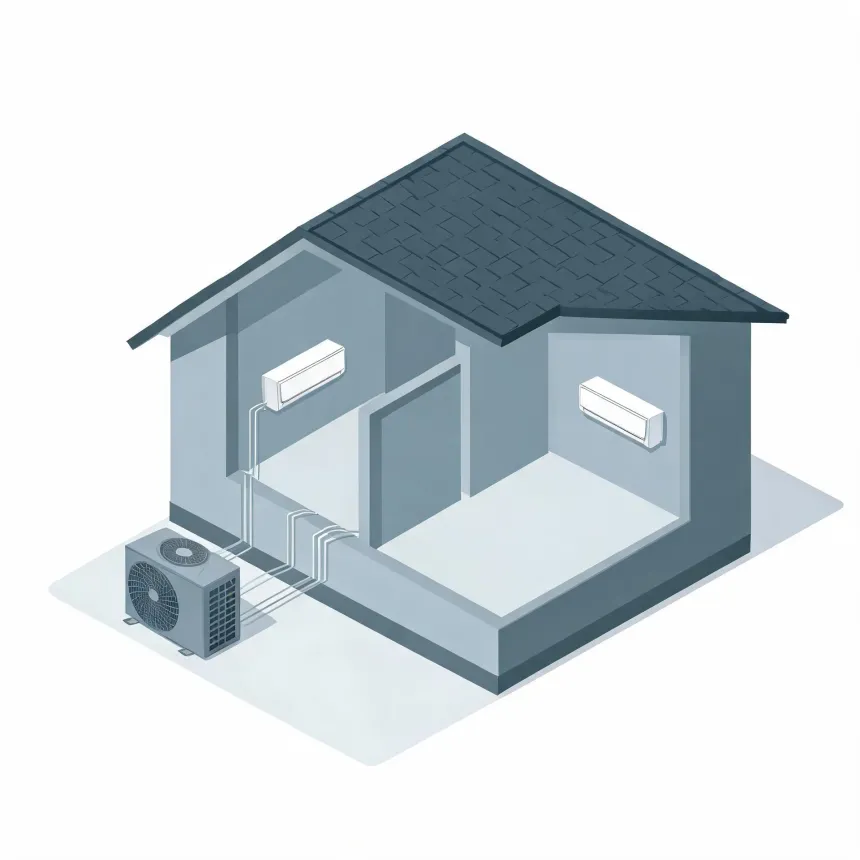
Isometric cutaway illustration of a small house showing two wall-mounted indoor air conditioning units connected by refrigerant lines to an outdoor condenser unit on the ground outside.
Your system heats October through May and cools June through August.

NOAA nClimDiv, 1991–2020 normals

Gas heats more homes in Bucks County than any other fuel.

A mini split works alongside a gas furnace instead of replacing it, so most homes here are adding cooling and backup heat, not starting over.

Power costs 19.11 cents a kilowatt-hour here, and this system runs all summer

Power here costs 19.11 cents per kilowatt-hour
Cooling runs June through August
Summer afternoons average 84°F

Bucks County falls in climate zone 4A, a mixed zone that asks real work of both heating and cooling systems. Any mini split installed here, no matter the brand, has to meet the federal minimum for a split-system heat pump: at least 14.3 Btu of cooling for every watt-hour it uses, and at least 7.5 Btu of heat for every watt-hour in winter. That's not a target, it's the floor. A unit built on or after January 1, 2023 that doesn't clear those numbers can't be sold as a split-system heat pump at all. So the real choice is which system clears that bar by the most, not whether it clears it.

Plan for the outage before the installer shows up

Decide now where the outdoor unit will sit and how it will be shielded, and ask what happens to heat and hot water if the power drops for a day. Get that settled during installation, while it's a decision instead of a scramble.

Find a contractor
A man in a cap, gray T-shirt and tan work pants climbs porch steps toward a blue front door, carrying a canvas tool bag in his right hand, with a potted shrub in a blue planter beside the door.
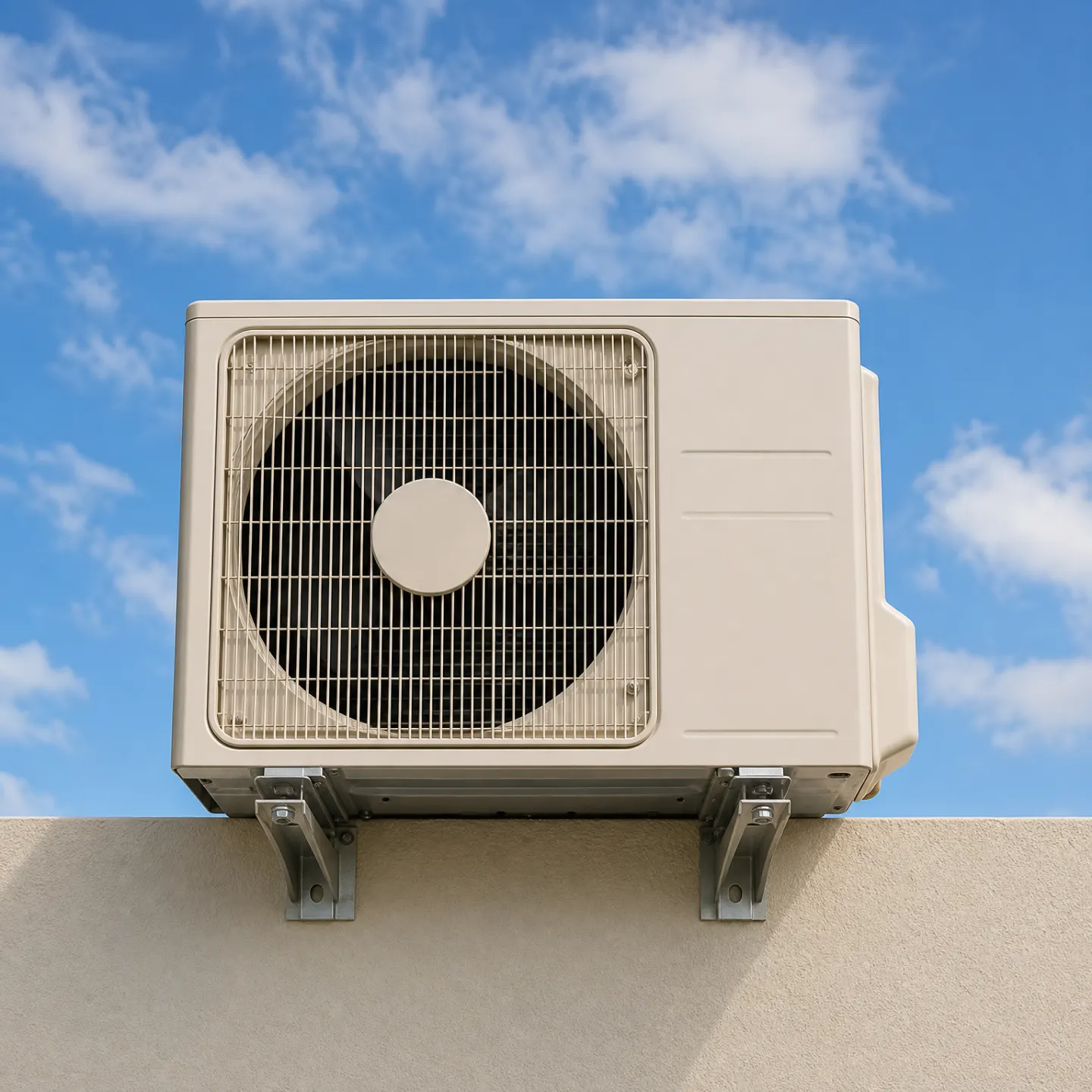
A beige split-system air conditioner outdoor condenser unit mounted on metal wall brackets atop a stucco wall.

Install before June, not during the first heat wave

Cooling starts in June here and runs through August. Before that, in May, the ground is still clear to schedule the work and get it done right. Wait until the first hot week and you're installing under pressure, with the outdoor unit going in fast instead of being placed where it should be. Winter matters too. Overnight lows average 24°F across December, January and February, and a mini split has to keep delivering heat through that, not just the mild stretches on either side of it. Getting it in before June means it's tested and running before the first humid day asks anything of it.

Ask what happens when the power goes out

A mini split needs electricity to run, full stop. There's no pilot light or standing flame to fall back on. If backup power matters to you, ask whether the system can run on a generator or battery backup, and ask what size that backup needs to be. Some outdoor units draw more on startup than they do once running, which matters when you're sizing a generator.
Ask how the outdoor unit will be mounted and protected

The outdoor unit has a compressor and a fan, and both sit outside year round. Ask where the installer plans to place it, how high off the ground, and whether it will have any kind of cover or windbreak. A unit mounted low and exposed takes the brunt of wind-driven debris and falling ice. One set back or elevated, with a clear path for drainage and airflow, holds up a lot better over the years.

The old system doesn't have to come out before the new one goes in. If it's a window unit or a set of portable ACs, those just get disconnected and hauled off once the mini split is running. If there's an older ducted system staying in place for backup heat, it's left alone and the mini split gets added as its own zone, with its own line set and its own control. The only time real demolition happens is swapping out an existing ductless system, and even then it's usually just the indoor head and the outdoor unit coming down, not any wiring in the walls. Whatever gets removed, the refrigerant inside has to be recovered properly rather than vented, so that part of the teardown isn't a quick job even when the unit itself is small.

The choice between a unit that just clears the federal minimum and one that beats it by a wide margin shows up on the power bill for as long as it runs. Ask to see the HSPF2 and SEER2 numbers for the exact unit going in, not just the model line it belongs to. A higher-rated system costs more to install, but it draws less power doing the same job, and here that difference is worth more than it would be somewhere with cheaper electricity. Compare a few units on those ratings before deciding, the same way you'd compare the price quotes.