



A white wooden picket fence curves along a mown lawn in front of a row of similar gray clapboard houses with gabled roofs, backed by large leafy trees.

Mini Split Installation in Norristown, PA

Tell us about the job

Takes about a minute. No obligation.

Step 1 of 3: Equipment

Electricity in Pennsylvania ran 17.77 cents per kilowatt-hour in 2024. That makes how well a mini split runs matter more here than in a state where power is cheap. The compressor in a mini split ramps up and down to match the room instead of switching on and off at full power. That means it draws less current to hold a temperature than a system built to run at one speed only. Look at the HSPF2 and SEER2 numbers when comparing units, since those tell you how much electricity a given system turns into actual heating and cooling. A unit sized right for the room it serves holds that efficiency. One that's too big will short cycle and cost more to run than its rating suggests.

7 months
October through April, your system heats
4 months
June through September, it cools
25°F
the average winter night it heats against
85°F
the average summer afternoon it cools against
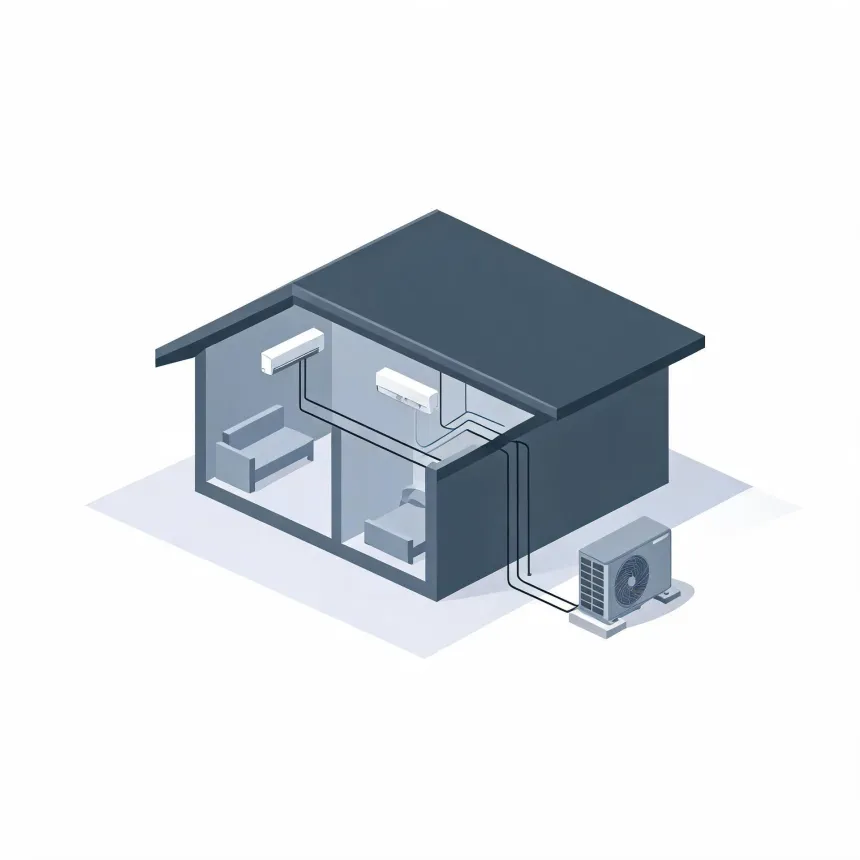
Isometric illustration of a cutaway house showing two wall-mounted mini-split indoor units connected by line sets to an outdoor condenser on a pad outside.
Your system heats October through April and cools June through September.

NOAA nClimDiv, 1991–2020 normals

A mini split sized by the room's square footage alone is usually wrong.

Getting it right means a load calculation that counts windows, insulation, and ceiling height, not a tape measure.

Half the homes here were built by 1971, and the mini split has to match the house it's going into

Half the homes here were built by 1971
Cooling runs June through September
Summer afternoons average 85°F

Gas heats most homes in Montgomery County, just over half. Oil heats another 14.5 percent, and electricity heats 27.4 percent outright. A mini split doesn't replace a gas or oil furnace here so much as sit alongside one, covering a room or an addition that the ducted system doesn't reach well, or taking over cooling so the furnace only has to handle winter. For the homes already heating with electricity, a mini split can do more of the job, since it moves heat instead of generating it and uses less power per degree than baseboard or resistance heat. Either way, the question is what the rest of the house is already running on, not just what's going into the one room.

Efficiency pays here

Power costs more here, so an efficient system pays you back on every bill.

Find a contractor
A man in a cap, gray T-shirt and tan work pants climbs porch steps toward a blue front door, carrying a canvas tool bag filled with tools, beside a blue planter with a shrub.
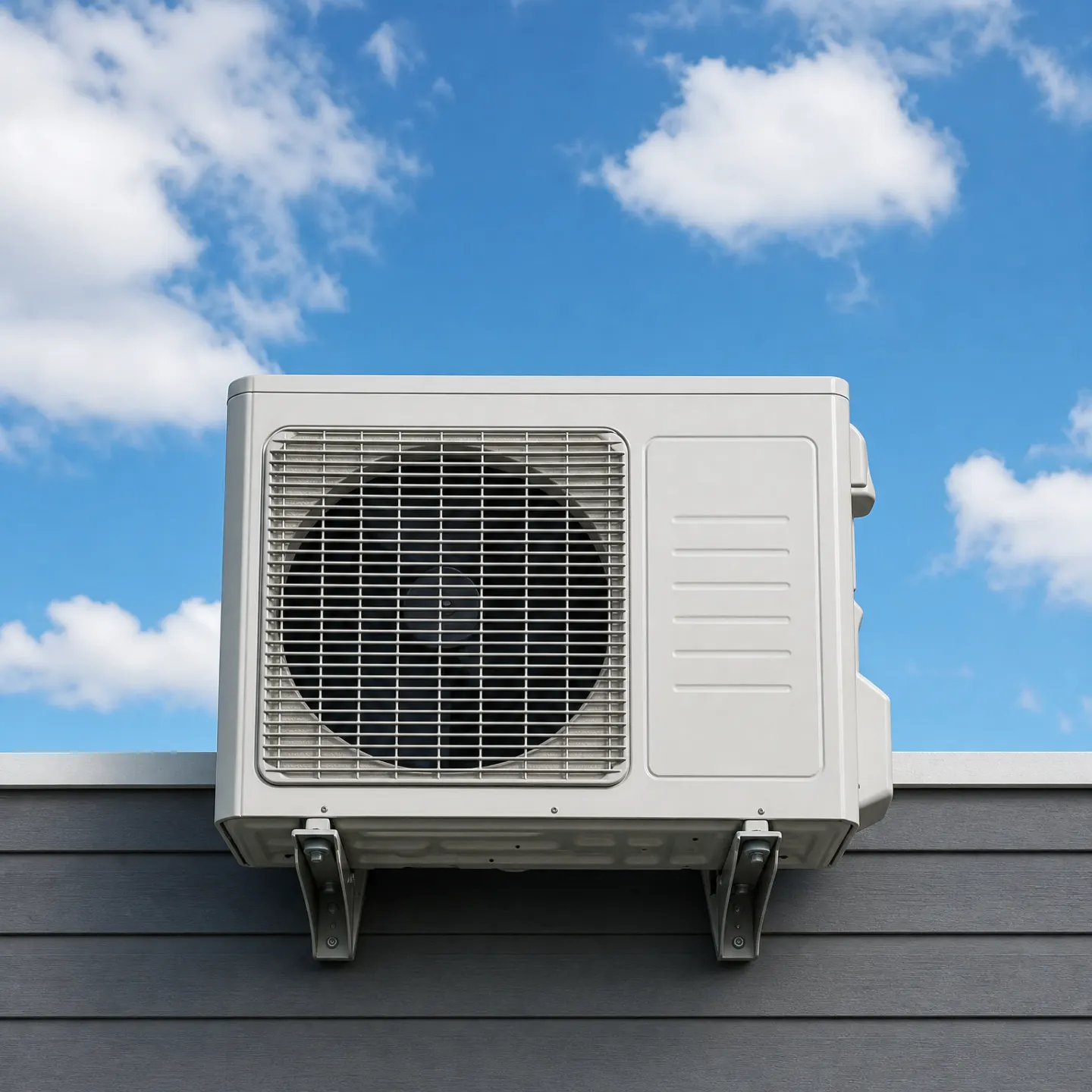
A white outdoor air conditioner condenser unit mounted on metal wall brackets against gray horizontal siding, with a blue sky and white clouds behind it.

Install before June, not during it

Cooling here runs June through September, about four months a year. Get a mini split installed in May and it's ready before the first hot stretch, with time to spare if anything needs adjusting. Wait until June and you're asking for an install the same week you need the thing running.

The rating is the best case, not the promise

SEER2 and HSPF2 numbers come from a lab, with the unit sized right and installed clean. A mini split hits those numbers when the install matches the conditions it was tested under. A line set that runs too long, a weak refrigerant charge, or a unit too big for the room all pull real performance below what the sticker says.
Cooling and heating are rated separately

SEER2 tells you how the unit cools. HSPF2 tells you how it heats. A mini split can carry a strong cooling rating and a weak heating one, which means it holds a room cold in summer but struggles to keep it warm later. Check both numbers against what the unit actually needs to do, not just the one that looks best on the label.

Ask how many zones one outdoor unit is running and how it handles all of them calling for different temperatures at once. A single-zone system is simple. One indoor head, one outdoor unit, one job. A multi-zone system splits one outdoor unit's capacity across several rooms, and if every zone calls for cooling or heat at the same time, the unit can't give each room what a dedicated system would. Ask what happens to the rooms not currently calling, since some multi-zone systems let an idle zone drift further from its setting than a single-zone one would. Ask about the line set length each indoor head needs and whether the quote already accounts for it, because a longer run between indoor and outdoor units changes how the system performs. And ask who services the brand locally, since a mini split sitting unserved after a breakdown is worse than one that cost more to install.

Installation starts outside, with where the outdoor unit sits. It needs clearance on all sides for airflow and a spot that won't trap it under eaves dripping ice melt or against a wall where noise carries into a window. Inside, the indoor head goes high on a wall or ceiling, on the side that lets the line set reach the outdoor unit without a long run through framing. The crew drills one hole through the wall for the line set, the condensate drain, and the electrical whip, then connects the refrigerant lines and brazes the joints. After that the system gets pressure tested and pulled down to a vacuum to clear out any moisture or air before the refrigerant charge is released into the lines. Once it's running, a tech checks the charge, the airflow at the head, and the drain line before calling it done.