





White colonial houses with lit windows and dark shutters line a tree-lined street at dusk, bordered by dry-stacked stone walls.

Mini Split Installation in Chester, PA

Tell us about the job

Takes about a minute. No obligation.

Step 1 of 3: Equipment

Electricity in Delaware County averaged 19.12 cents per kilowatt-hour in 2025, higher than in most US counties. A mini split runs on electricity alone, so that rate applies to every hour it works. Summer here adds to the load. A dew point around 63°F through June, July and August means the air holds a lot of moisture, and a mini split has to pull that moisture out before the room actually feels cooler. A unit that does this well costs less to run than one that doesn't, and in a place where power already costs more, that difference shows up on the bill every month, not just in summer.

7 months
October through April, your system heats
4 months
June through September, it cools
27°F
the average winter night it heats against
85°F
the average summer afternoon it cools against
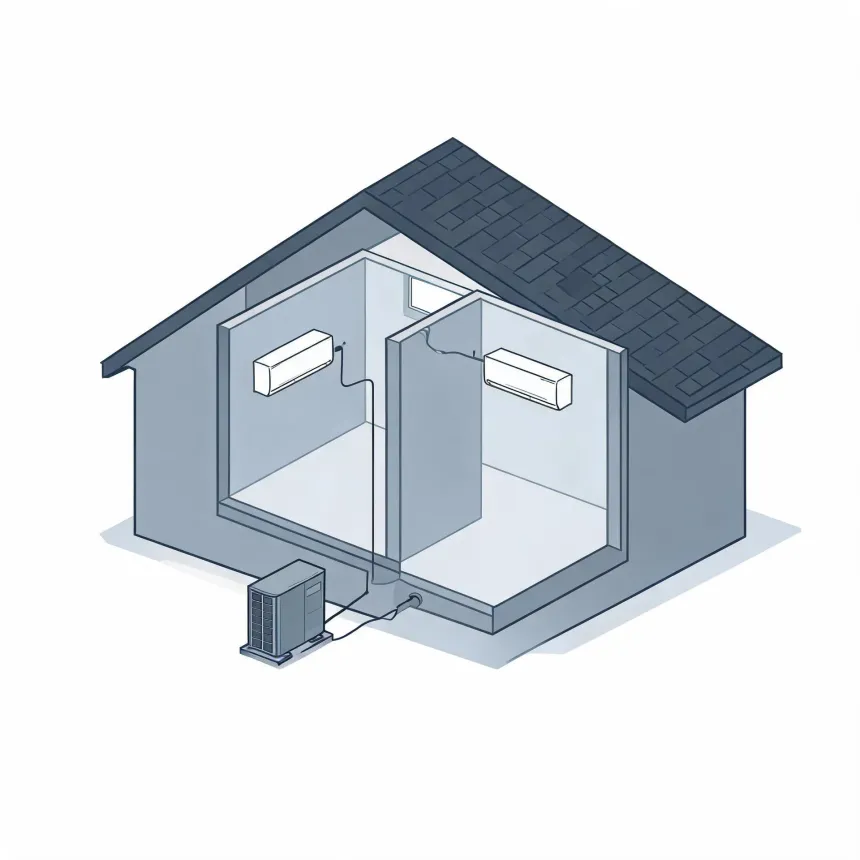
Isometric line illustration of a cutaway house with two rooms, each with a wall-mounted indoor air conditioning unit connected by lines to an outdoor condenser unit on the ground outside.
Your system heats October through April and cools June through September.

NOAA nClimDiv, 1991–2020 normals

Gas heats 60.1% of homes in Delaware County, more than any other fuel.

A mini split works alongside that gas furnace instead of replacing it, so this installation is about adding cooling, not rethinking how the house stays warm.

Half these houses were built before anyone thought about central air

Half the homes here were built by 1957
Climate zone 4A
Power here costs 19.12 cents per kilowatt-hour
May Is When This Gets DoneCooling starts in June and runs through September, so the install happens before the first hot day, not during one.

Delaware County falls under zone 4A in the 2021 energy code, a mixed climate that asks real work of both sides of a mini split, heating and cooling alike. That rating sets a floor. Any split-system heat pump manufactured from 2023 on has to remove at least 14.3 Btu of heat per watt-hour of electricity over the summer and deliver at least 7.5 Btu per watt-hour over the winter. A ductless mini split falls under this same rule. There's no separate, looser standard for going ductless, so the unit going on the wall here has to clear the same bar as any other heat pump sold today.

The rate is set. What you install decides what you pay against it

Electricity here costs more than most places get it for. That part is fixed. What is not fixed is how much of it this system needs to do its job. A unit that clears the efficiency floor uses less power to move the same heat or pull the same moisture out of the air. That gap shows up on every bill it runs through, not once a year.

Find a contractor
A man in a dark long-sleeved shirt and tan work pants, seen from behind, carries a canvas tool bag up porch steps toward a blue paneled front door of a house with light lap siding and a potted flowering plant.
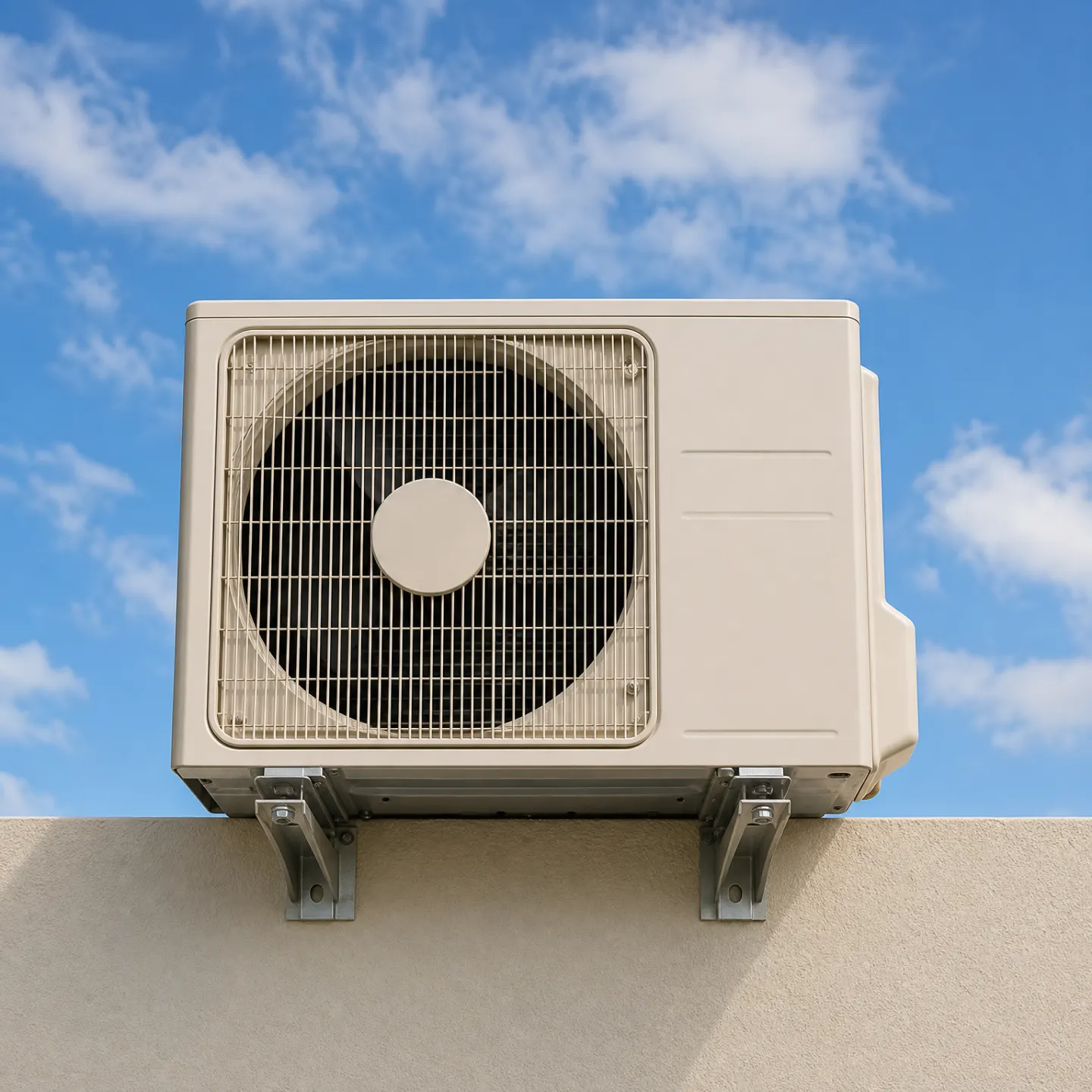
A beige split-system air conditioner outdoor condenser unit mounted on metal wall brackets atop a stucco wall.

This House Has Been Standing Since Before Central Air Was Normal

Half the homes here were built in 1957 or earlier. A house that age was never set up for a mini split, so the walls, the breaker panel and the spot the old owners picked for a window unit all need a second look before anything goes on the wall. Line sets have to run somewhere, and the electrical has to carry the new load alongside whatever already draws on it. None of that shows up by guessing. It shows up when someone walks the house and plans the install around what's actually there.

The Equipment Is One Line on the Quote

The indoor head and outdoor compressor are only part of what gets priced. Labor to run the line set, mount the condenser on a pad or bracket, and tie into the electrical panel often adds up to more than the equipment itself. A single-zone system with a short line set run is a different job than a multi-zone setup with heads in three rooms and line sets routed through two floors.

What's Already There Changes the Job

A dedicated circuit that doesn't exist yet has to get added, which means opening up a wall or running conduit to the panel. A breaker panel already near its limit may need a subpanel before it can take the new load. Where the line set has to go, whether through an exterior wall, a crawlspace, or up through a soffit, decides how much of the job is straightforward and how much is cutting and patching.

When you're comparing quotes, ask what SEER2 and HSPF2 numbers each system actually carries, not just the brand or the size. Two outdoor units that look the same on a spec sheet can pull very different amounts of power to do the same job. Ask how many zones the system supports and whether the outdoor compressor can actually run all of them at once without losing capacity, because some can only run a fraction of their rated zones at full output at the same time. Ask what happens at low load, since a system that can't throttle down will short cycle, turning on and off instead of running steady, and that wears the compressor faster. Ask whether the quote includes a line set cover or hide kit, because a bare line set running up an exterior wall looks different than one that's been boxed in. Ask what warranty covers the compressor versus the labor to replace it, since those are often not the same length of time.

Install day starts with the outdoor compressor and the indoor head going up, but most of the time goes into what connects them. The line set carrying refrigerant between the two has to be run through a wall, brazed at each joint, then pressure tested before anyone opens the valves. Skip that test and a slow leak shows up months later as a system that cools less every week until it does nothing at all. The electrical gets tied in separately, usually its own circuit back to the panel, since a mini split draws steady power whenever it's running and shouldn't share a breaker with anything else. Once the lines are charged and the power is live, the tech checks refrigerant levels against what the manufacturer specs for that line length, because a run that's longer or shorter than standard changes how much refrigerant it needs to work right. Last comes airflow, setting the head to actually reach the room it's mounted in rather than just blowing at the nearest wall.