A golden retriever sleeps on a neatly made bed in a minimalist bedroom equipped with a wall-mounted air conditioning unit.

Mini Split Installation in Johnstown, PA

Tell us about the job

Takes about a minute. No obligation.

Step 1 of 3: Equipment

Gas and oil both heat homes here

Utility gas heats 46.8% of homes in Cambria County, and fuel oil or kerosene heats another 29.0%. Electricity is a distant third at 14.0%. A mini split in this area is usually going in alongside one of those systems, not replacing it outright.

That changes what the install needs to do

If your home runs on gas or oil, a mini split is likely there to cover rooms that furnace doesn't reach well, or to take over cooling for the summer. The contractor sizing the job needs to know what's already heating the house before deciding how the mini split should fit in.

8 months
October through May, your system heats
2 months
July through August, it cools
20°F
the average winter night it heats against
78°F
the average summer afternoon it cools against
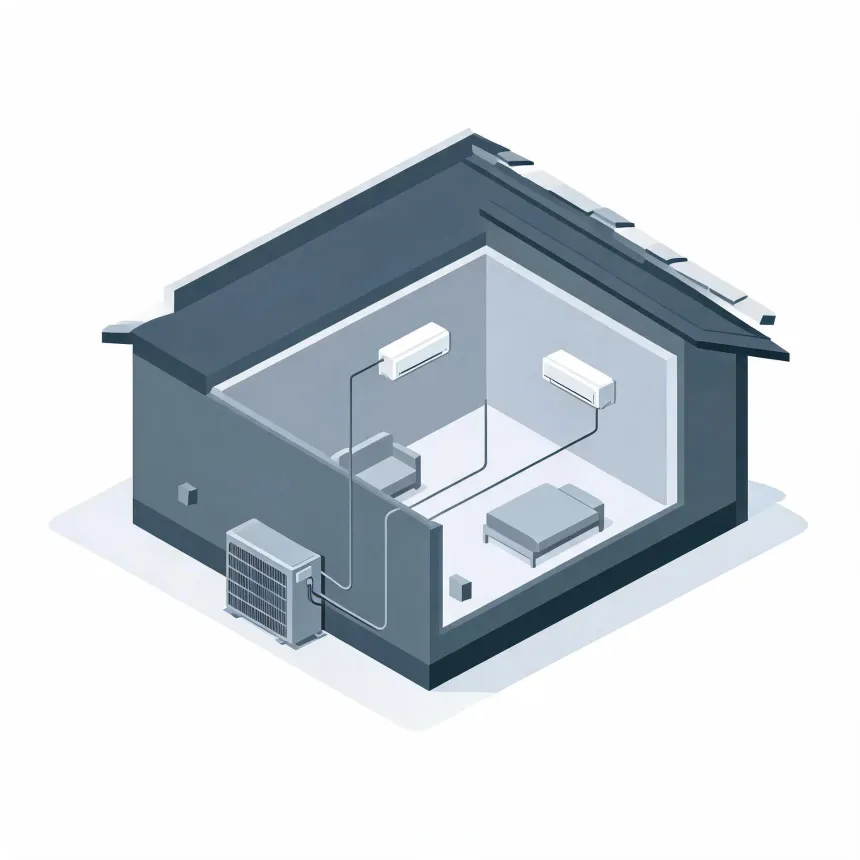
Isometric illustration of a cutaway house interior showing two wall-mounted indoor air conditioning units connected by line sets to an outdoor condenser unit beside the exterior wall.
Your system heats October through May and cools July through August.

NOAA nClimDiv, 1991–2020 normals

Johnstown doesn't put any unusual load on a mini split.

A standard size and efficiency rating is enough to heat and cool the rooms it's assigned to.

Half the homes here were built by 1956. A mini split still has to go in without tearing up walls that old.

Half the homes here were built by 1956
Cooling runs July through August
Summer afternoons average 78°F

Cambria County sits in climate zone 5A, a cool zone where heating carries more of the load than cooling. Any mini split installed here, ductless or not, counts as a split-system heat pump under the federal standard, and units built from 2023 on have to clear 14.3 SEER2 for cooling and 7.5 HSPF2 for heating. There's no separate, looser rule for ductless equipment. That floor is what a contractor is working from when they size and quote a unit for your home. A system priced below that efficiency simply isn't allowed on the market now, so the real comparison is which qualifying unit fits the rooms you need covered. Installing one may also qualify you for a federal tax credit, worth asking about when you're comparing quotes.

Get it installed in June, before cooling starts in July

Cooling here only runs July and August. If the mini split is meant to cover those two months, June is the time to get it in. Have it done before July and the unit is ready for the first hot day instead of catching up partway through it.

Find a contractor
A man seen from behind in a dark jacket and tan work pants climbs wooden porch steps toward a dark blue front door, carrying a worn canvas tool bag in his right hand, with a potted shrub in a blue planter beside the entry.
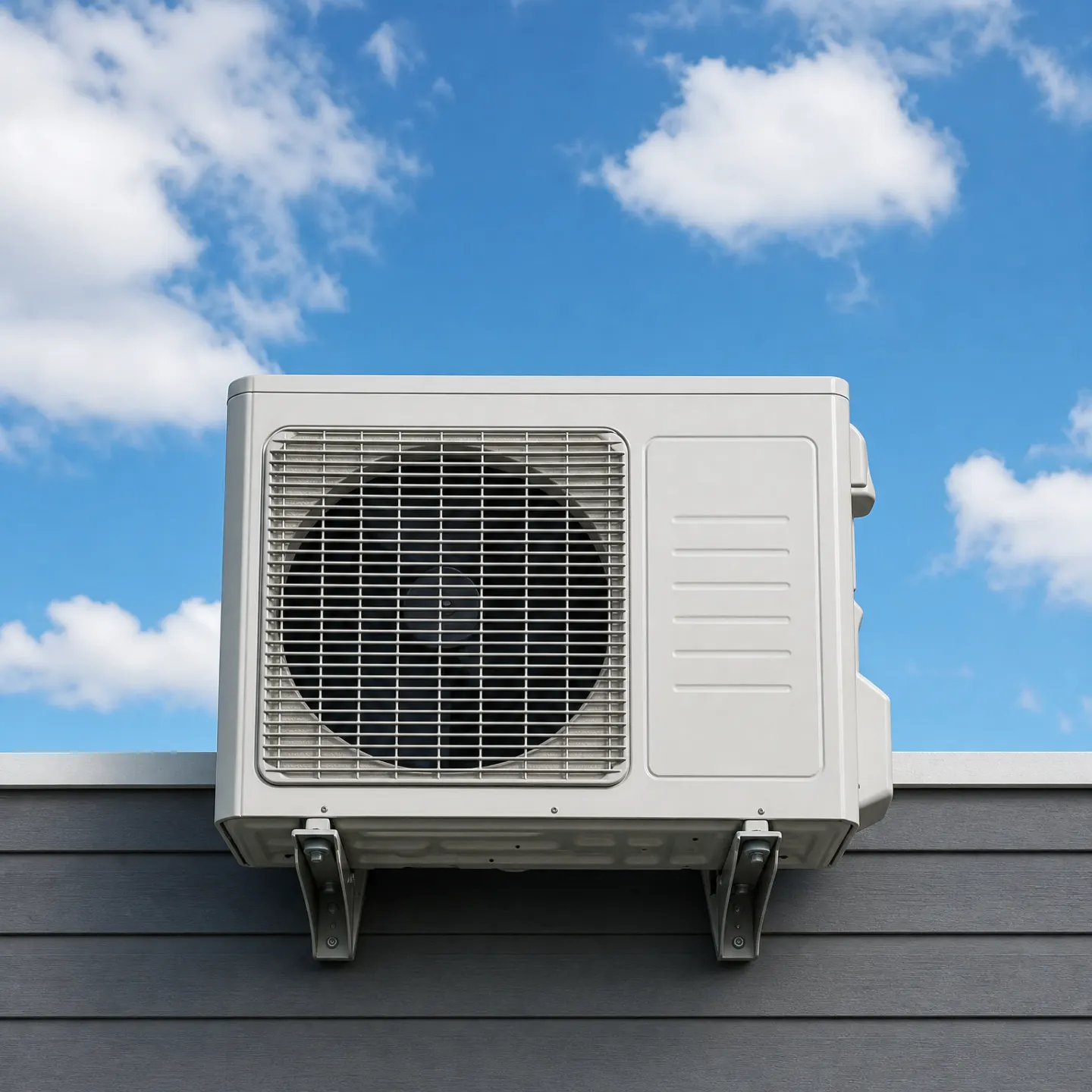
A white outdoor air conditioner condenser unit mounted on metal wall brackets against gray horizontal siding, with a blue sky and white clouds behind it.

Two months of cooling, mild afternoons

Cooling runs about two months here, July and August, with afternoon highs averaging around 78. That's a short, mild stretch for a compressor to work through. A mini split here spends most of the year at moderate output rather than running flat out against heat. Less strain over time means a repair down the line is usually worth making rather than a sign to replace the whole unit.

The rating is a split number, not one

A mini split carries separate ratings for cooling and for heating, and they measure different things. The cooling figure tells you how much cooling it delivers per unit of electricity it draws over a season. The heating figure does the same for heat. A unit can be strong on one and average on the other, so if heating matters more for your job, ask about that figure specifically instead of assuming a good cooling rating means the whole unit is efficient.

The rating only pays off if the unit fits the room

An oversized mini split with a great efficiency rating still runs in short, frequent bursts, cycling on and off instead of settling into a steady run. Short cycling wastes power and wears the compressor down faster than a properly sized unit would. The rating on the label describes the equipment on its own, not how it performs once it's matched to a specific room, and that matching is a separate job the contractor still has to do.

What drives the cost of a mini split install is mostly labor, not the unit itself. Running the line set between the outdoor compressor and the indoor head takes time, and the more wall or roof it has to cross, the more time it takes. A straight shot through one exterior wall is a different job than a line set routed up through a chase or across a long run to reach a second floor. The electrical side matters too. Some homes already have a circuit that can be adapted, and some need a new dedicated one run back to the panel. Multi-zone systems, where one outdoor unit feeds several indoor heads, cost more than a single zone because each head needs its own line set and its own mounting work. Where the outdoor unit can sit, and how easy that spot is to reach with the right clearance, plays into it as well.

Install day starts outside with the compressor. It needs a pad or bracket, clear air on at least a couple sides, and a path back to wherever the indoor head is going. Running the line set is most of the work. A hole gets drilled through the wall and the refrigerant lines, the drain line and the electrical whip all get fed through together, then it's sealed up against weather. Once the indoor head is mounted and connected, the line set gets evacuated with a vacuum pump to pull out air and moisture before any refrigerant moves through it. Skip that step and the system can develop a leak or lose efficiency months later. After that the lines get charged, the system gets powered on, and the contractor checks airflow at the head and the temperature split between the air going in and the air coming out. A straightforward single zone job usually wraps in a day. Anything routed through a chase, up to a second floor, or feeding multiple heads takes longer, since each additional head is its own line set and its own mounting work.