




White colonial houses with lit windows and dark shutters line a tree-lined street at dusk, bordered by dry-stacked stone walls.

Boiler Installation in Johnstown, PA

Tell us about the job

Takes about a minute. No obligation.

Step 1 of 3: Equipment

Half the homes in Cambria County were built in 1956 or earlier. A boiler going into a house that age is usually replacing one that was sized for radiators or piping that may still be there. Whoever installs the new boiler needs to work with what's actually running through your walls now, not just swap in a new box where the old one sat. If your home still has its original radiators, ask the installer to check that the new boiler matches them. The right size depends on the rooms it has to heat and the pipes carrying the water there, not just the model that fit the last one.

Boilers in Johnstown run from October clear through May, eight months of the year.

A new boiler has to be sized for your rooms and your pipes, not just dropped in where the old one sat.

Eight months of heat is eight months a failing boiler can leave you cold

Heat runs October through May
Winter nights average 20°F
Climate zone 5A

Cambria County sits in climate zone 5A, a cool zone where heating carries most of the load. Any gas-fired hot water boiler installed here now has to hit at least 84 percent AFUE, the federal minimum since January 2021. That rules out the oldest, least efficient boiler designs for new installs. If you're weighing a few models against each other, that efficiency floor is already decided for you, the question is what's above it. Buyers who install this year should also ask about the federal tax credit for qualifying high-efficiency equipment.

Most homes here heat with gas, so a gas boiler is the straightforward replacement

Gas heats close to half the homes in Cambria County, more than any other fuel. If your boiler runs on gas now, replacing it with another gas boiler means working with the gas line, the venting and the piping already in place, instead of starting over with a different fuel. That keeps the job closer to a swap than a conversion.

Find a contractor
A man in a dark cap, dark shirt and tan work pants walks up wooden steps toward a blue front door, carrying a worn canvas tool bag in his right hand, with a potted shrub beside the entry.

The boiler itself is one line item

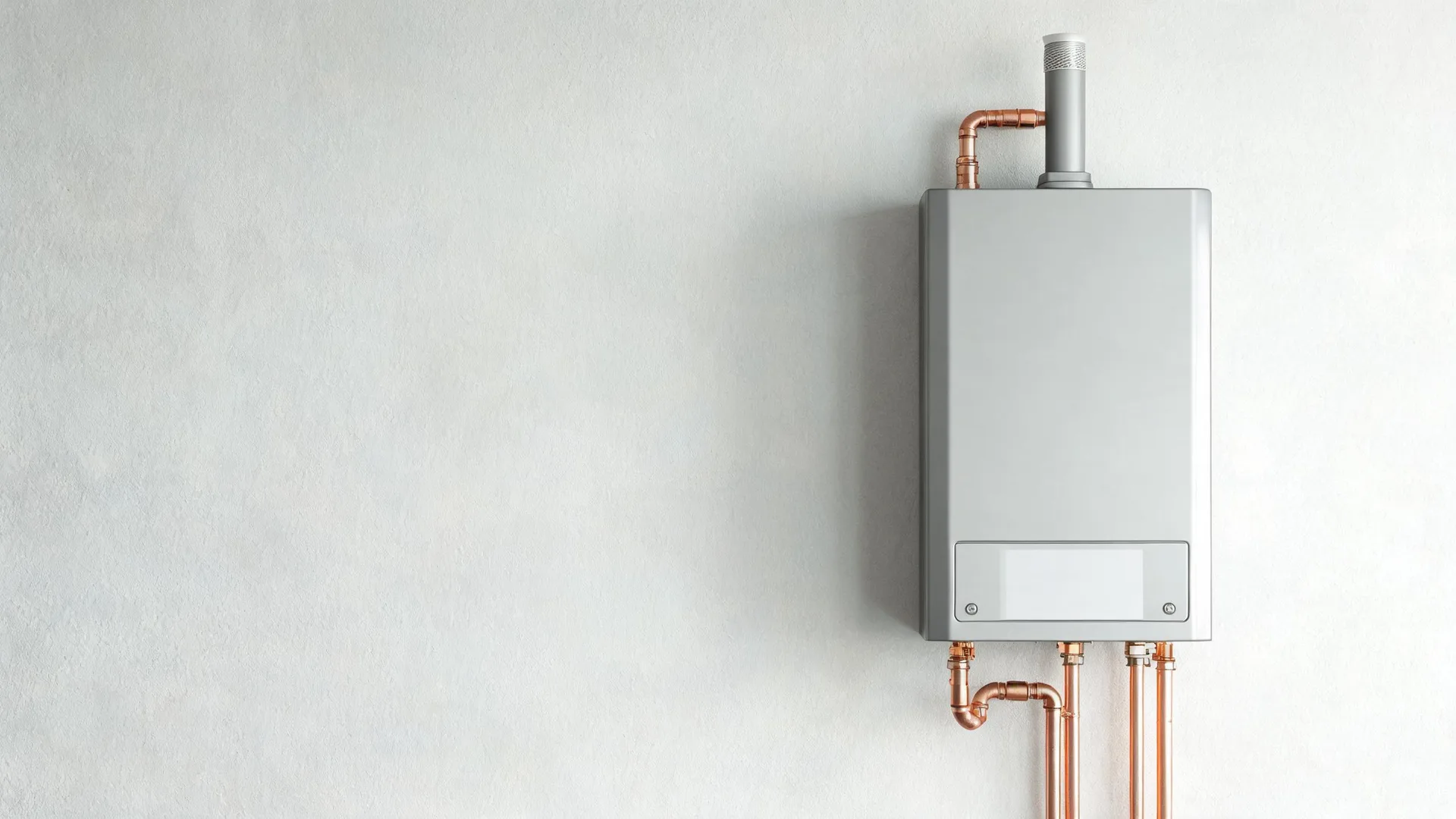
A boiler is priced by its output and its venting type. A bigger house with more radiators or baseboard loops needs more boiler than a small one. Beyond the unit, the price reflects what has to change around it. New venting if the boiler is a different type than the old one. An upgraded gas line if the new unit needs more fuel than the old one supplied. New controls or a new expansion tank if the old ones don't match the new system. None of that shows up on a spec sheet. It shows up when the installer looks at the piping and venting already there.
What's hidden costs more than what's visible

Pulling out an old boiler can turn up pipe that's corroded, undersized, or run in a way that no longer makes sense for the new unit. Radiators that were never balanced against each other add labor that has nothing to do with the boiler itself. So does piping that was patched over the years instead of replaced. An installer who prices the job after opening up the system gives a truer number than one who prices it from the driveway.

Ask what each boiler is rated for, not just what it costs. Models at the same price can heat very different amounts of space. Ask how the venting works, because a boiler that vents through a sidewall isn't a straight swap for one that vented up a chimney, and that changes the job, not just the unit. Ask what controls come with it. Some boilers adjust their water temperature to match how cold it is outside, which asks less of the parts over time. Ask what the warranty covers on the heat exchanger versus the rest of the unit, since that's usually where the terms split. And ask who stands behind the sizing if the output turns out wrong for the house, since a boiler is only as good as the numbers used to size it.

Installation day starts with the old boiler coming out, and that's when the piping and venting finally show themselves in full. The new unit gets set, leveled, and connected to the near-boiler piping, which is its own small job since that piping has to match the new boiler's specs, not the old one's. Venting gets run next, through the wall or up the chimney depending on the unit, and that run has to be pitched and sized correctly or the boiler won't draft the way it should. Gas gets connected and checked for leaks before anything is fired. Once it's running, the installer bleeds air out of the system, checks that water is circulating through every radiator or loop, and sets the controls to match the house. A boiler that fires up but never gets purged of air or balanced across the zones will run louder and heat less evenly than it should, so that last part of the day matters as much as the unit itself.