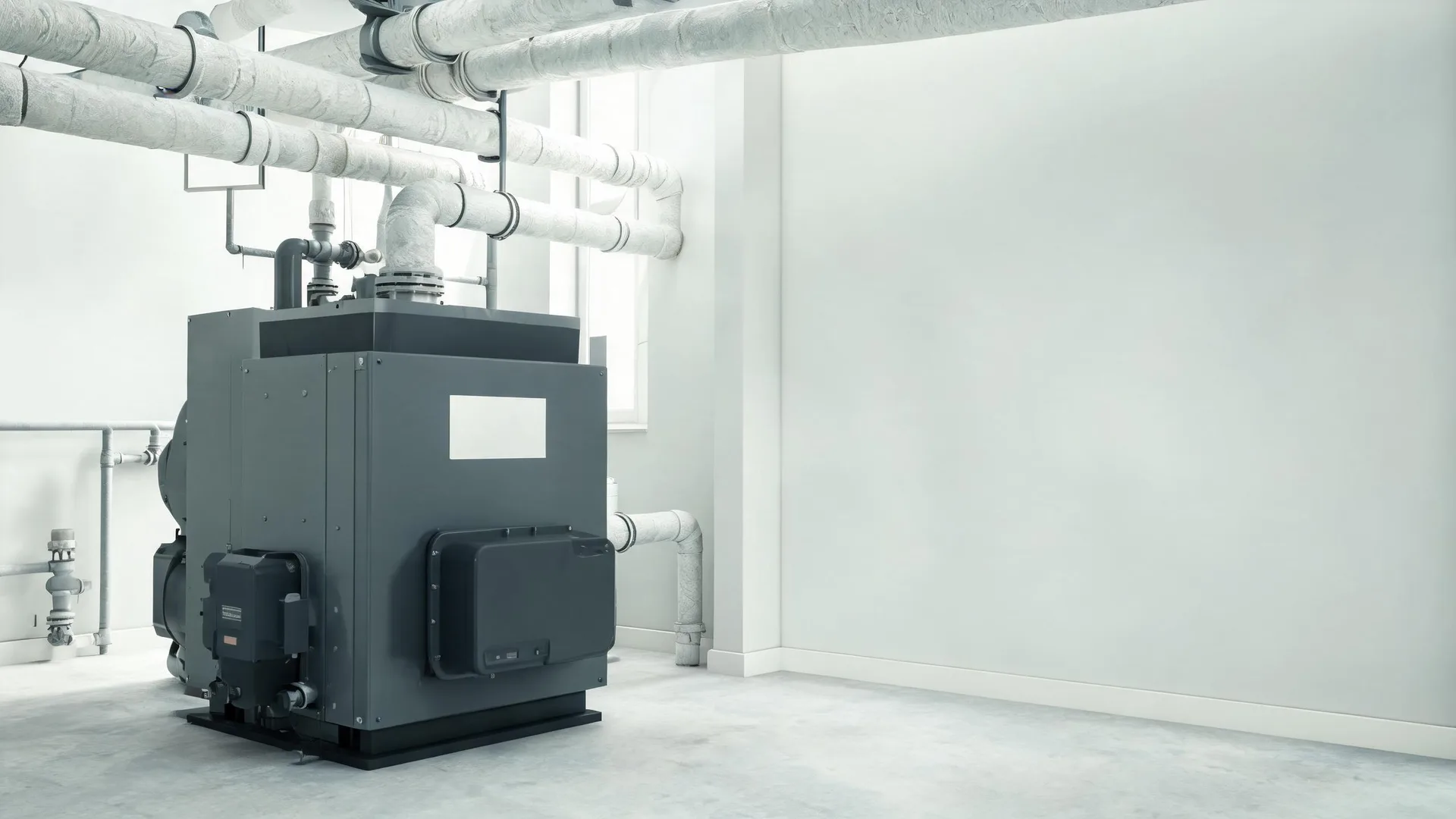
Oil runs the bill up fast
Fuel oil cost Pennsylvania homes $25.15 per million Btu in 2024. A boiler that wastes heat burns through oil at that price all winter long.
Takes about a minute. No obligation.
Fuel oil cost Pennsylvania homes $25.15 per million Btu in 2024. A boiler that wastes heat burns through oil at that price all winter long.
At that price per Btu, a boiler install here is really a decision about how much of that oil turns into heat in your house and how much goes out the flue.
A boiler installed in September is running fine by the time October cold sets in.
Wait until the overnight lows hit 22 degrees and you're choosing a boiler under pressure, not on your terms.



Bedford County falls under zone 5A in the 2021 energy code, a cool zone where the heating load drives the design. Any new boiler going in here has to meet that standard, and for a gas-fired hot water boiler built on or after January 15, 2021, the rule is it has to turn at least 84 percent of the gas it burns into heat over the winter. That floor narrows what a contractor can put in your basement. It also means the unit doing the work has already cleared a bar built for a place where winter is the main job, not an afterthought.
Ask the contractor for the AFUE rating on any boiler you're considering before you decide. That number tells you how much of the oil you buy turns into heat in the house instead of going out the flue, and at $25.15 per million Btu, the gap between a low rating and a high one shows up on every bill all winter.
Find a contractorA boiler doesn't unhook like a water heater. The old one gets drained, disconnected from the supply and return lines, and cut loose from the flue and gas or oil line before anyone can move it. Cast iron boilers are heavy enough that they often get broken down in place just to get them out the door. Whoever installs the new one has to deal with the carcass of the old one first.
The old piping, the zone valves, the circulator pumps and the expansion tank were all sized around the boiler coming out. A new boiler running at a higher efficiency can need different venting, a different flue, or changes to that piping to work right. Reusing old parts without checking them against the new boiler is how a good boiler ends up running like a mediocre one.
A few questions tell you more than any brochure. Ask what the standby loss is, meaning how much heat the boiler bleeds off when it isn't actively firing, since that heat is gone whether the house needed it or not. Ask whether it's a cast iron boiler or a steel or copper heat exchanger, because they hold heat differently and fail differently, and a cracked cast iron section is a different repair than a leaking copper one. Ask what the turndown ratio is: a boiler that can fire at a lower rate on mild days instead of blasting full output and shutting off wastes less heat than one that only knows on and off. Ask how the boiler modulates to match the heat the house is actually losing that day, not just the coldest day of the year. And ask what maintenance it needs, because a boiler that needs its combustion checked and its heat exchanger cleaned every year costs you in time even when it isn't costing you in fuel.
Half the houses in Bedford County were built in 1971 or earlier. A boiler going into a house that old is going into piping and radiators sized for whatever sat there before, not for the unit being sold today. That's not a reason to worry, but it is a reason to have someone look at what's already there before the new boiler shows up. The radiators or baseboard, the pipe sizes, the zoning, all of it was set up around a boiler that may have run hotter or colder than the one replacing it. A boiler sized and set up for the house you actually have will heat it evenly. One just swapped in for whatever was there will leave you guessing why some rooms never quite get warm.