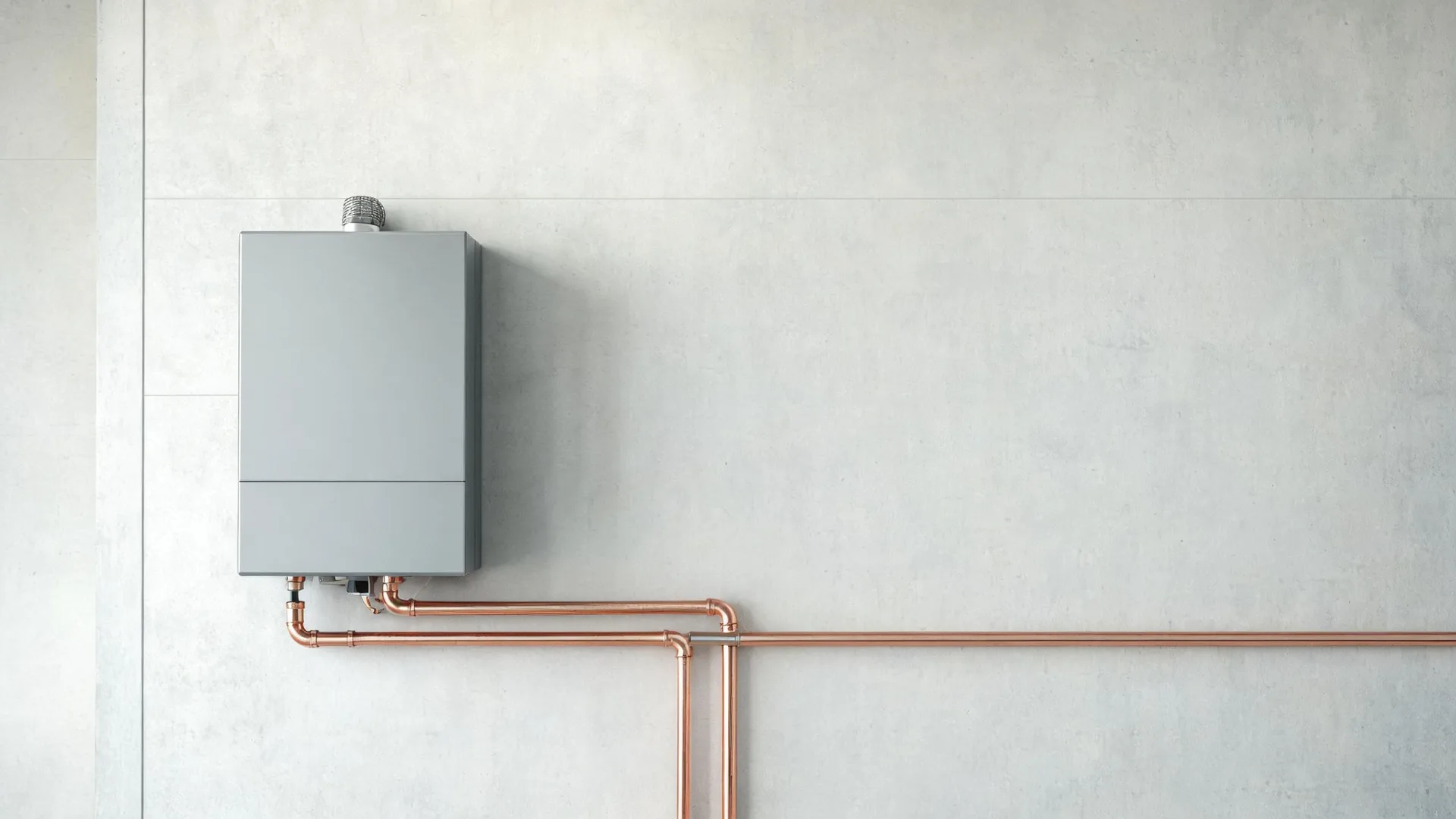
Gas is the default here
Utility gas heats 56.9% of homes in Blair County, more than any other fuel. A gas boiler is the common choice in Altoona, and parts and service for one are easy to find.
Takes about a minute. No obligation.
Utility gas heats 56.9% of homes in Blair County, more than any other fuel. A gas boiler is the common choice in Altoona, and parts and service for one are easy to find.
If your house already has a gas line run to a boiler, replacing it with another gas boiler is usually the straightforward path. The venting and gas supply are already there to match.
Gas runs $13.12 per million Btu in Pennsylvania.
A standard-size, standard-efficiency gas boiler fits an Altoona home fine. There's no reason here to pay more for a bigger or higher-efficiency unit.



Replace it before the season starts, so it happens on your schedule, not in a hurry.
Find a contractor
The efficiency number on a boiler tells you how much of the fuel it burns turns into heat for the house, and how much goes out the flue. A higher rated boiler uses less gas to make the same heat, year after year. It doesn't tell you how big a boiler you need or how well it will heat the place. That part comes from sizing the unit to the house, not from the rating on the label.
Boilers with a higher efficiency rating use a different kind of heat exchanger to pull more heat out of the exhaust before it leaves, and that adds cost to the unit itself. That cost has to be worth it over the years the boiler runs. In a house that doesn't need much heat to begin with, a standard-efficiency boiler can pay for itself in comfort just fine, without the extra you'd spend climbing the rating.
When you're comparing quotes, ask how each contractor arrived at the size they're quoting. A boiler sized off square footage alone is a guess. The real method is a heat loss calculation, room by room, that accounts for window area, wall construction and ceiling height. Contractors can look at the same house and land on different sizes, and the one who did the calculation is the one to trust. Ask what's included in the quote beyond the boiler itself. New venting, a new expansion tank, an updated gas line, or changes to the zoning can all be part of a proper install, and they change the price. Ask about the warranty on the heat exchanger specifically, since that's the part most expensive to replace and the one manufacturers treat differently from the rest of the unit. And ask what happens to the existing piping and radiators. A boiler swap that reuses old piping without checking it for scale or leaks is starting the new unit off with the old system's problems.
Installation day starts with the old boiler coming out, along with whatever venting and piping isn't being reused. The new unit gets set, leveled, and connected to the water piping, the gas line, and the flue. Electrical and controls are wired in, then the system gets filled with water and purged of air, because trapped air in the lines causes noise and uneven heat later. The gas line gets pressure tested before anything is fired. Once it's running, the contractor checks the flue draft, tests the safety controls, and balances the zones so heat reaches every radiator or loop the way it should. A combustion analyzer reading at the flue confirms the boiler is burning clean and set up correctly, not just that it turns on. None of this is quick work, and a boiler that gets fired up and walked away from without these checks is one that causes problems down the line.