Gas is the common choice here
Utility gas heats 56.9% of occupied homes in Blair County. A gas furnace is what most installers here size, vent and stock parts for.
Takes about a minute. No obligation.
Utility gas heats 56.9% of occupied homes in Blair County. A gas furnace is what most installers here size, vent and stock parts for.
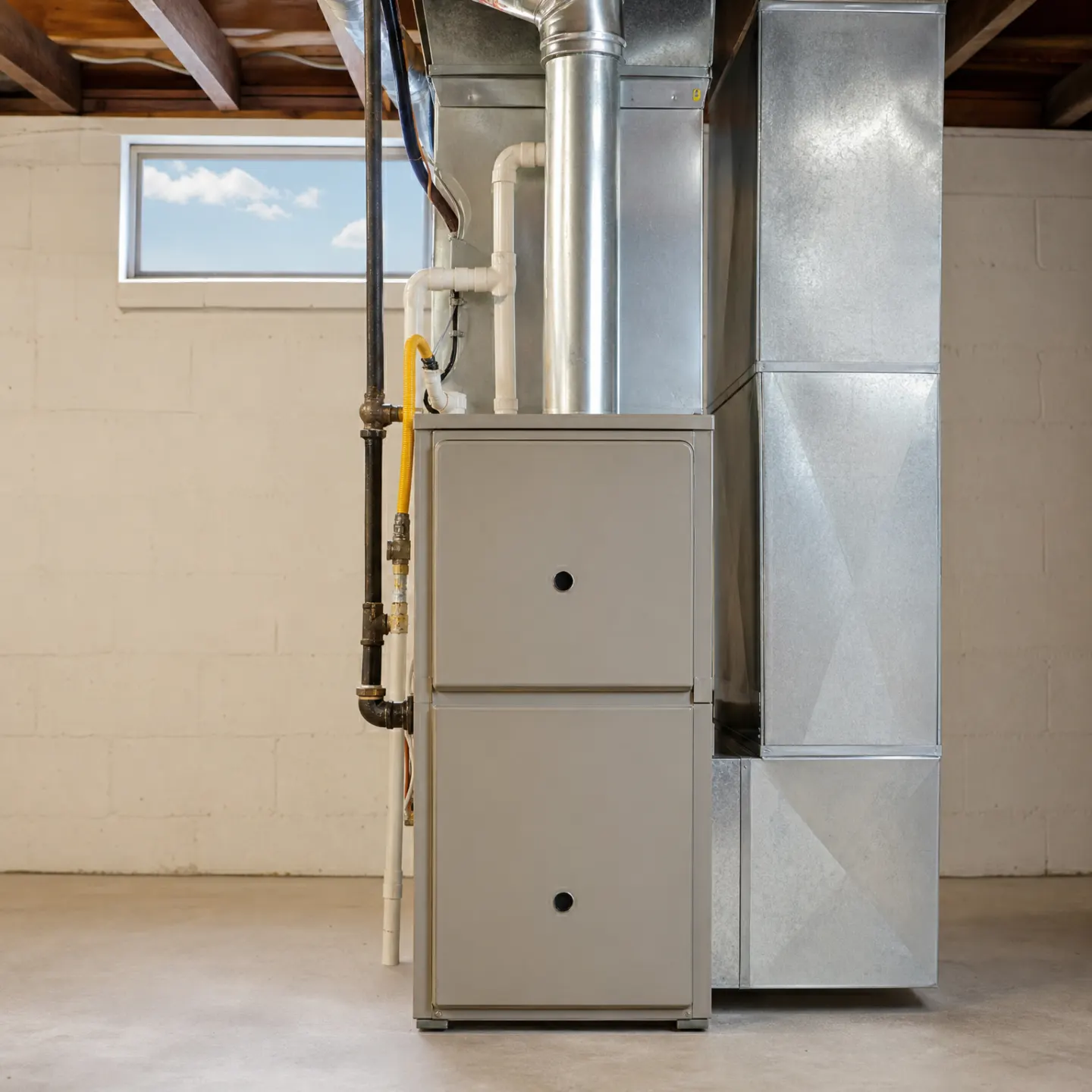
If a gas line already runs to your furnace, replacing it with another gas furnace avoids opening up new fuel supply or rewiring for electric heat.
NOAA nClimDiv, 1991–2020 normals
Gas here runs $13.12 per million Btu.
A standard-efficiency furnace sized to your house is enough. There's no local cost reason to pay more for a bigger or higher-tier unit.



A furnace that's too big for the house cycles on, satisfies the thermostat fast, and shuts off again before it's warmed the place evenly. You get a blast of hot air, then cold floors, then another blast. All that starting and stopping wears the ignition system and the blower motor harder than a furnace that runs longer, steadier stretches. Too small and it just never catches up on the coldest days, running constantly and still losing ground. The right size comes from a load calculation, a room by room look at window area, insulation, ceiling height and air leakage, not a guess based on the old unit or the square footage alone. A contractor measures the house to size the furnace, not the other way around.
With overnight lows averaging 21°F through December, January and February, your furnace needs to hold its own on the coldest nights, not just get by on the mild ones. A standard-efficiency unit sized to your house does that. There's no local reason to pay for a bigger or higher-tier furnace than the load calculation calls for.
Find a contractorOnce the new furnace is in, the old one gets disconnected from the gas line, the vent and the ductwork and hauled out. There's no refrigerant to recover like there is on an air conditioner, so the removal itself is simple. The heat exchanger on the old unit has been cracking a little more with every heating cycle for years, and the blower motor bearings have been wearing since the day it was installed. None of that is visible from outside the cabinet, which is why a furnace can look fine right up until it won't start. A contractor pulling the old unit can usually tell from the exchanger and the wiring how much longer it would have gone. Scrap haulers take the cabinet for the metal. What's left behind is the flue connection and the gas line stub, which get capped or reused depending on how the new furnace vents.
Most manufacturers cover the heat exchanger and other parts for a set number of years, but that doesn't mean the labor to replace them is free. Some installers register the warranty and include their own labor coverage for a shorter stretch. Ask what's covered after the installer's workmanship warranty runs out, not just what the manufacturer promises.
A furnace installation involves gas line work and venting, and most places require a permit and inspection for that. A contractor who pulls the permit is putting the work on record and standing behind it. One who skips it is leaving you to find problems on your own, after the walls are closed up and the old furnace is already gone.
Estimates for a typical Blair County home, from EIA household energy data, Pennsylvania fuel prices and NOAA climate normals. Your home will differ.
Install day starts with the old furnace still running, so there's heat in the house while the crew sets up. Once it's shut down and disconnected, the new furnace gets set in place, and that's when the duct connections, the gas line and the vent all get fitted to it, not the other way around. The ductwork rarely lines up perfectly with a new cabinet, even one the same size as the old one, so there's usually some sheet metal work to close the gaps. The vent gets checked for the right slope and length for the new furnace, since the diameter and material depend on what the new unit calls for. Once it's hooked up, the gas line gets pressure tested before anything is lit, and the furnace runs through a full cycle so the technician can check the flame, the temperature rise and the airflow before calling it done. A thermostat that worked fine on the old system doesn't always talk to the new one the same way, so that gets tested too.