



What winter here does to a heat pump
Blair County heats for eight months a year, October through May, and the overnight low over those months averages 21°F. That number matters because a standard heat pump starts losing ground before it gets anywhere near that cold. Below 40°F it already puts out less than its rated capacity. Below about 35°F it often needs backup heat to keep up. The average night here sits under both marks.
Over half the nights in heating season here, about 130 of them, fall at or below freezing. On every one of those nights a standard heat pump is working under at least one of those two marks, often both. That is not a rare cold snap. That is most of the winter.
The deep cold is a smaller problem than it sounds. Only about 3 nights a year reach 0°F here, and field testing of cold-climate heat pumps found that even on those nights, backup heat rarely had to carry the whole load. The part of winter that actually strains a heat pump is the long stretch in the 20s and 30s, not the handful of nights near zero.
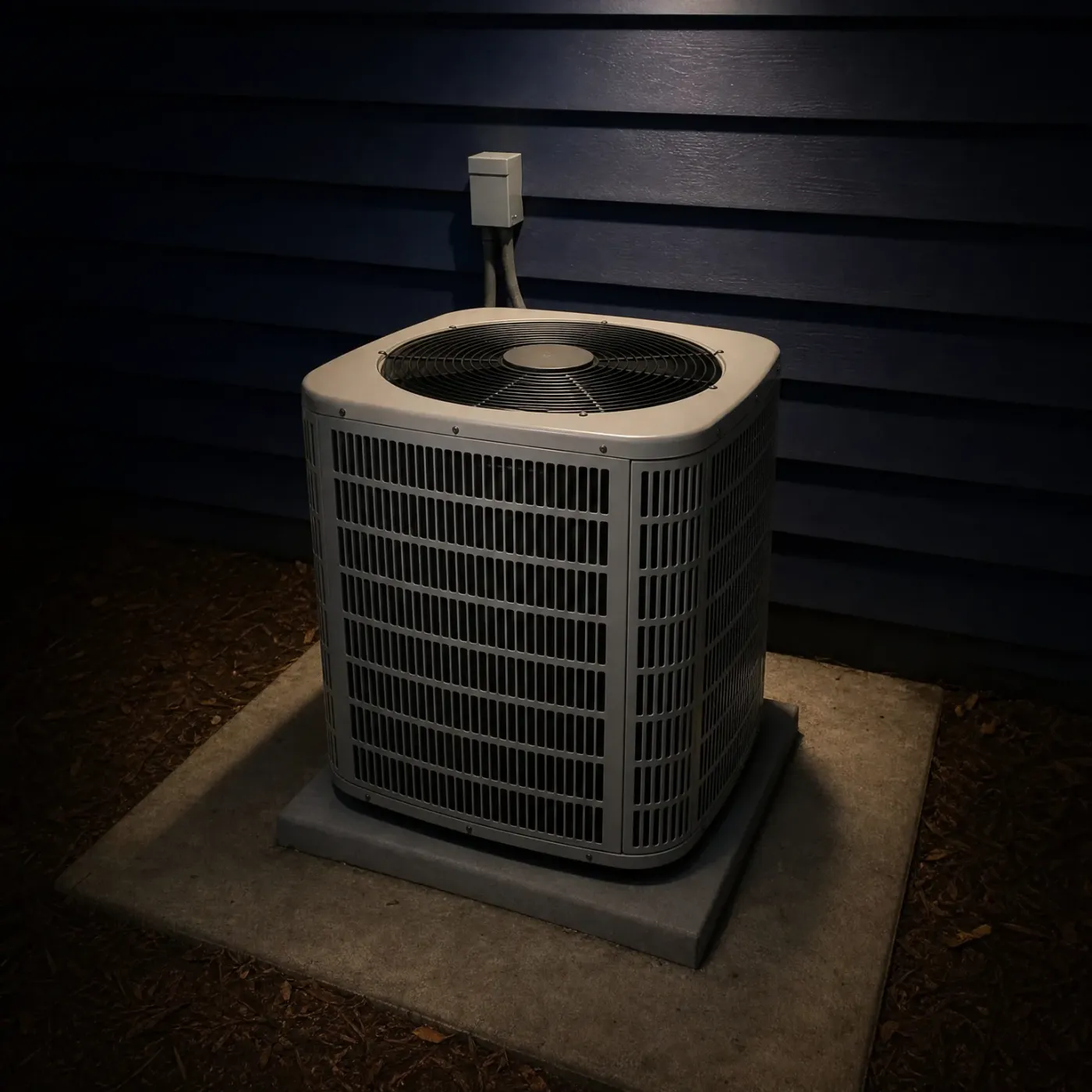
There is a version built for this. The ENERGY STAR Cold Climate heat pump has to prove it still makes at least 1.75 units of heat per unit of electricity at 5°F, and hold onto 70 percent of its 47°F capacity at that temperature, checked by outside testing. A standard heat pump is not built to that mark. If a heat pump is going into a Blair County house, this is the distinction that decides whether it keeps up on the nights that matter here.