



A gray tabby cat sleeps curled up on a dark gray bed in a dimly lit modern bedroom with warm ceiling cove lighting and a wall-mounted air conditioning unit.

Mini Split Installation in Altoona, PA

Tell us about the job

Takes about a minute. No obligation.

Step 1 of 3: Equipment

Utility gas heats 56.9% of homes in Blair County, more than any other fuel, with fuel oil or kerosene next at 19.9%. A mini split doesn't replace that furnace. It works alongside it, handling a room or zone the main system doesn't reach well, like a finished basement or an addition built after the ductwork went in. For the 16.5% of homes already heating with electricity, a mini split can do more of the work itself, since it moves heat instead of generating it. Either way, check what your home heats with now before deciding what the mini split needs to cover.

8 months
October through May, your system heats
2 months
July through August, it cools
21°F
the average winter night it heats against
81°F
the average summer afternoon it cools against
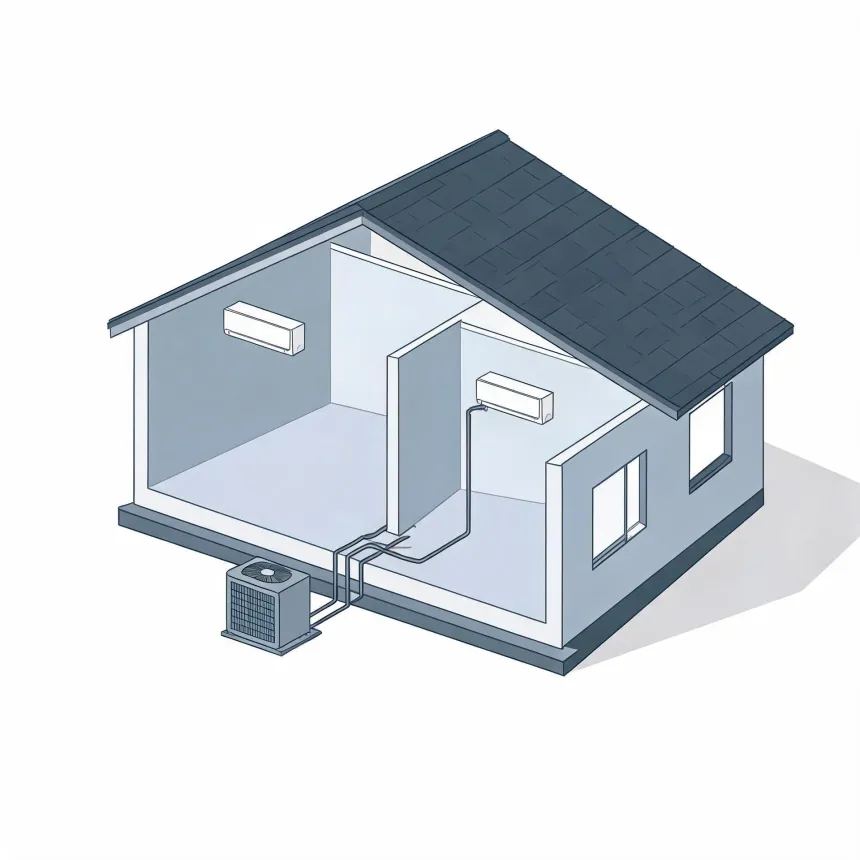
Isometric cutaway illustration of a small house with a dark shingled roof, showing two wall-mounted indoor units connected by lines running to an outdoor condenser unit beside the building.
Your system heats October through May and cools July through August.

NOAA nClimDiv, 1991–2020 normals

Cooling here runs about two months, July and August, with afternoon highs around 81°F.

A mini split in Altoona isn't working against heat most of the year, so a mid-range unit is enough to cover the room.

Half the homes here were built by 1957, and a mini split has to work with that house, not a new one

Half the homes here were built by 1957
Cooling runs July through August
Summer afternoons average 81°F

Electricity in Pennsylvania ran 17.77 cents per kilowatthour in 2024. A mini split's cost to run comes down to two things, that rate and how much the unit works, and nothing about Altoona pushes the second one higher. Cooling here is a couple of months of moderate heat, not a long stretch of extreme afternoons, and the equipment already meets the federal minimum for this climate zone. There's no case here for paying up for a bigger compressor or a higher efficiency tier than the room calls for. Size the unit to the space and let the rating follow from that.

Have it in before July

Cooling here only runs July through August. Getting the mini split installed before July means it's ready on day one of the season, with no scramble to get someone out once the heat sets in.

Find a contractor
A man in a navy long-sleeve shirt and tan work pants, seen from behind, carries a canvas tool bag up light-colored porch steps toward a blue front door.
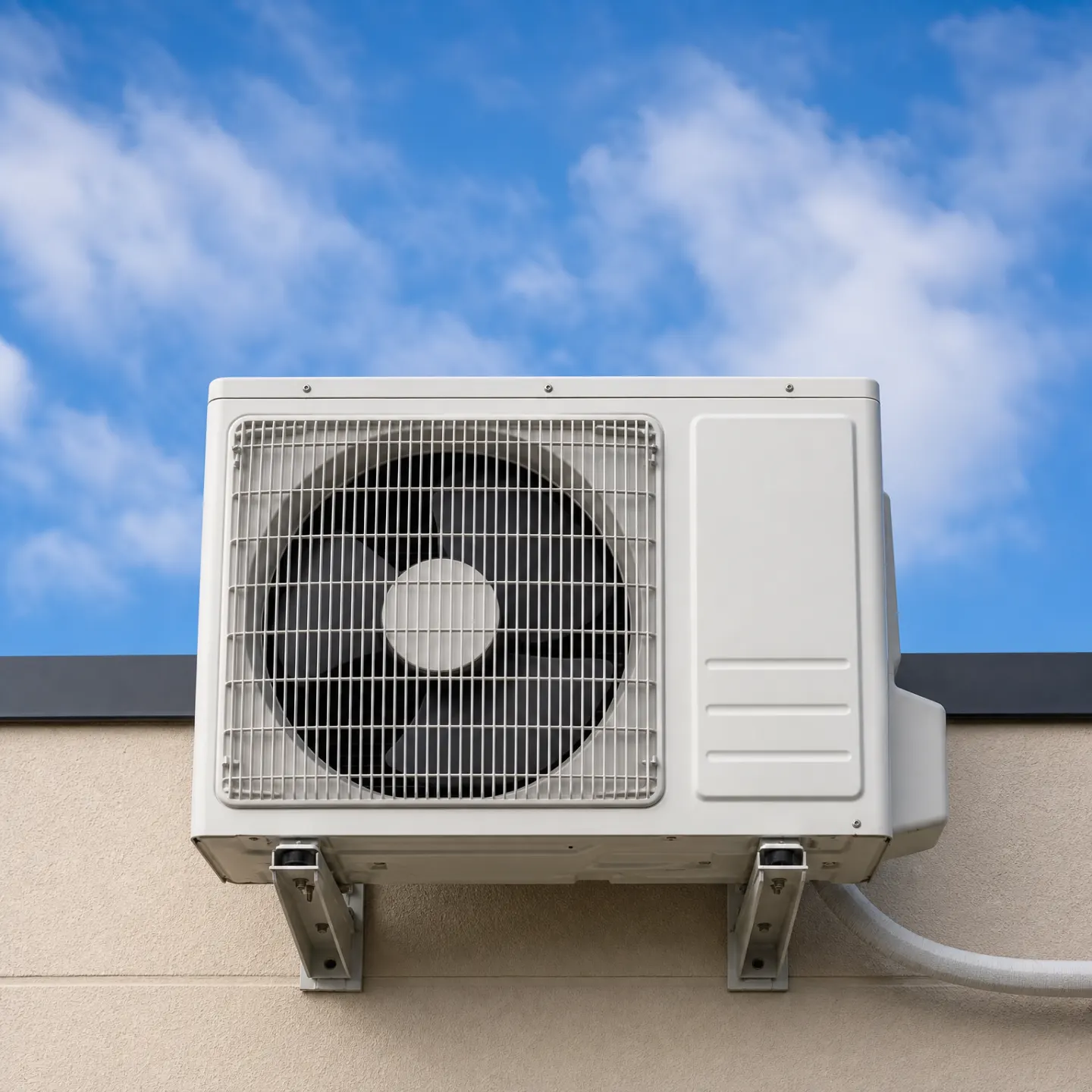
A white mini-split air conditioner outdoor condenser unit mounted on metal brackets against a beige stucco exterior wall, with a blue sky and scattered clouds in the background.

The route has to be found, not assumed

A mini split needs a line set run from the outdoor unit to the indoor head, through a wall or up through framing. In a home built after the layout was planned for one, there's often a clear path already. In a home built in 1957 or earlier, that path doesn't exist yet, and the installer has to work out one that fits the wall as it actually is. Ask what route they're planning before install day, not after the hole is cut.

The rating only describes the equipment

SEER2 and HSPF2 tell you how efficiently the unit converts electricity into cooling or heat under test conditions. They don't tell you what the room actually needs. A unit sized wrong for the space will run inefficiently no matter what the label says, so the rating is only useful once the room itself has been sized correctly.
A higher number is a trade-off, not just a bonus

Equipment with a higher efficiency rating usually costs more upfront and can have more parts that need service down the road, like a variable-speed compressor instead of a simpler single-stage one. Whether that trade is worth it depends on how much the unit will actually run. A mini split covering a room used year-round earns back a higher rating faster than one covering a space used only occasionally.

Ask how many indoor heads the system supports and whether it's one head to one outdoor unit or several heads on one outdoor unit. A single-zone system is simpler and usually easier to service, since there's one head and one compressor matched to each other. A multi-zone system lets one outdoor unit run several rooms, but if that outdoor unit needs service, every room on it loses conditioning at once, not just one. Ask what happens if one indoor head fails on a multi-zone setup, whether the rest keep running or the whole system shuts down. Also ask about the compressor type, since a variable-speed compressor adjusts output to match the room instead of just switching on and off, which matters more in a room with steady, year-round use than one used occasionally.

Install day starts outside, with the outdoor unit set on a pad or bracket and the refrigerant lines run to wherever the indoor head is going. That line set gets connected, then the system is evacuated with a vacuum pump to pull out air and moisture before any refrigerant moves through it. Skip that step and the system can run with moisture trapped in the lines, which causes problems well after the installer is gone. Once the lines are charged, the indoor head gets mounted, the condensate drain is run so the unit has somewhere for moisture to go, and the whole system gets powered on and tested across both heating and cooling. A tech checking the line temperatures and airflow at the head is confirming it's actually moving the right amount of heat, not just that it turns on.