White colonial houses with lit windows and dark shutters line a tree-lined street at dusk, bordered by dry-stacked stone walls.

Furnace Installation in DuBois, PA

Tell us about the job

Takes about a minute. No obligation.

Step 1 of 3: Equipment

Oil costs more to burn here

Fuel oil ran $25.15 per million Btu in Pennsylvania in 2024. If your furnace runs on oil, that price sets the floor for every bill no matter what you do, so the only lever left is how much of that heat actually reaches the rooms.

Efficiency is the lever you control

A new furnace with a higher efficiency rating turns more of that expensive oil into heat instead of exhaust. At that price per million Btu, a few points of efficiency are worth asking about when you compare models.

8 months
October through May, your furnace is on duty
19°F
the average winter night it heats against
80% AFUE
the federal minimum any new unit must meet
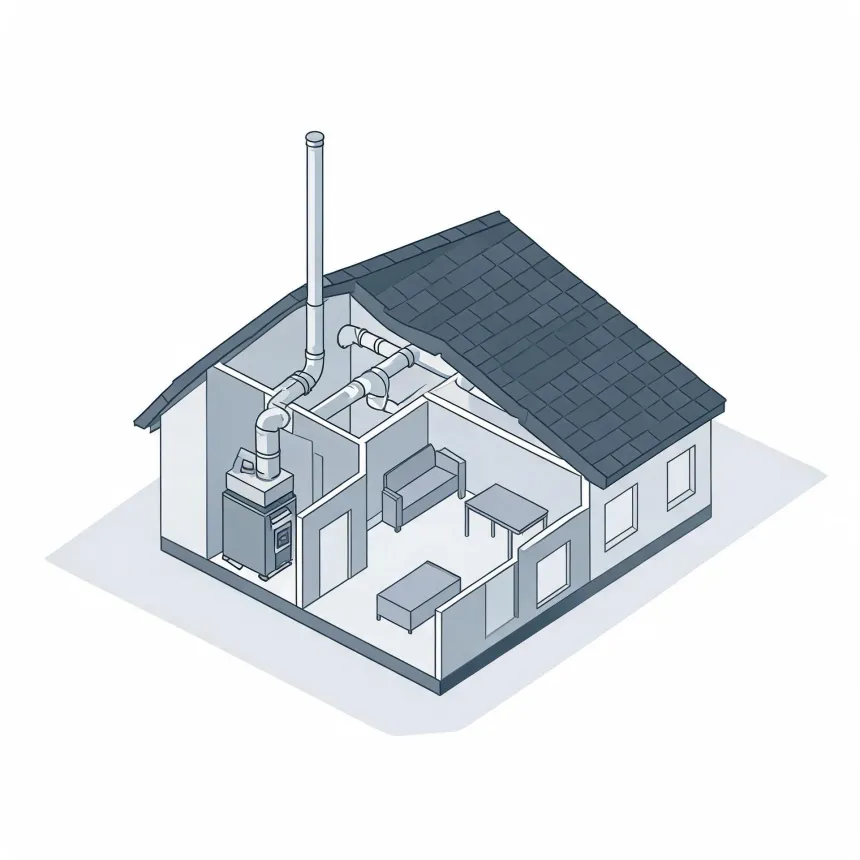
Isometric line illustration of a cutaway single-story house with a shingled roof, showing an interior furnace connected to ductwork and a tall vertical flue pipe, plus simple furniture in the adjacent room.
Your furnace works hardest from November through March.

NOAA nClimDiv, 1991–2020 normals

Furnaces in Clearfield County run from October through May, eight months of the year.

A furnace sized wrong for this place runs more hours under more strain, and parts give out sooner.

Eight months of heat starts in October, so get it done in September

Heat runs October through May
Winter nights average 19°F
Climate zone 5A

DuBois sits in zone 5A, a cool zone where heating carries most of the load. Any gas furnace installed here now has to clear 80.0 percent AFUE, the federal minimum for non-weatherized furnaces. That floor jumps to 95.0 percent in a few years, but a furnace bought now only has to meet today's number. Most furnaces sold now clear 80 percent without trying, so the real comparison is how far above that floor a given model sits.

Half the homes here were built in 1970 or earlier

Half the homes in Clearfield County were built in 1970 or earlier. A furnace install in a house that age is a different job than one in new construction, from the venting to how the old system was sized in the first place. The new furnace has to match the house you actually have, not a generic one.

Find a contractor
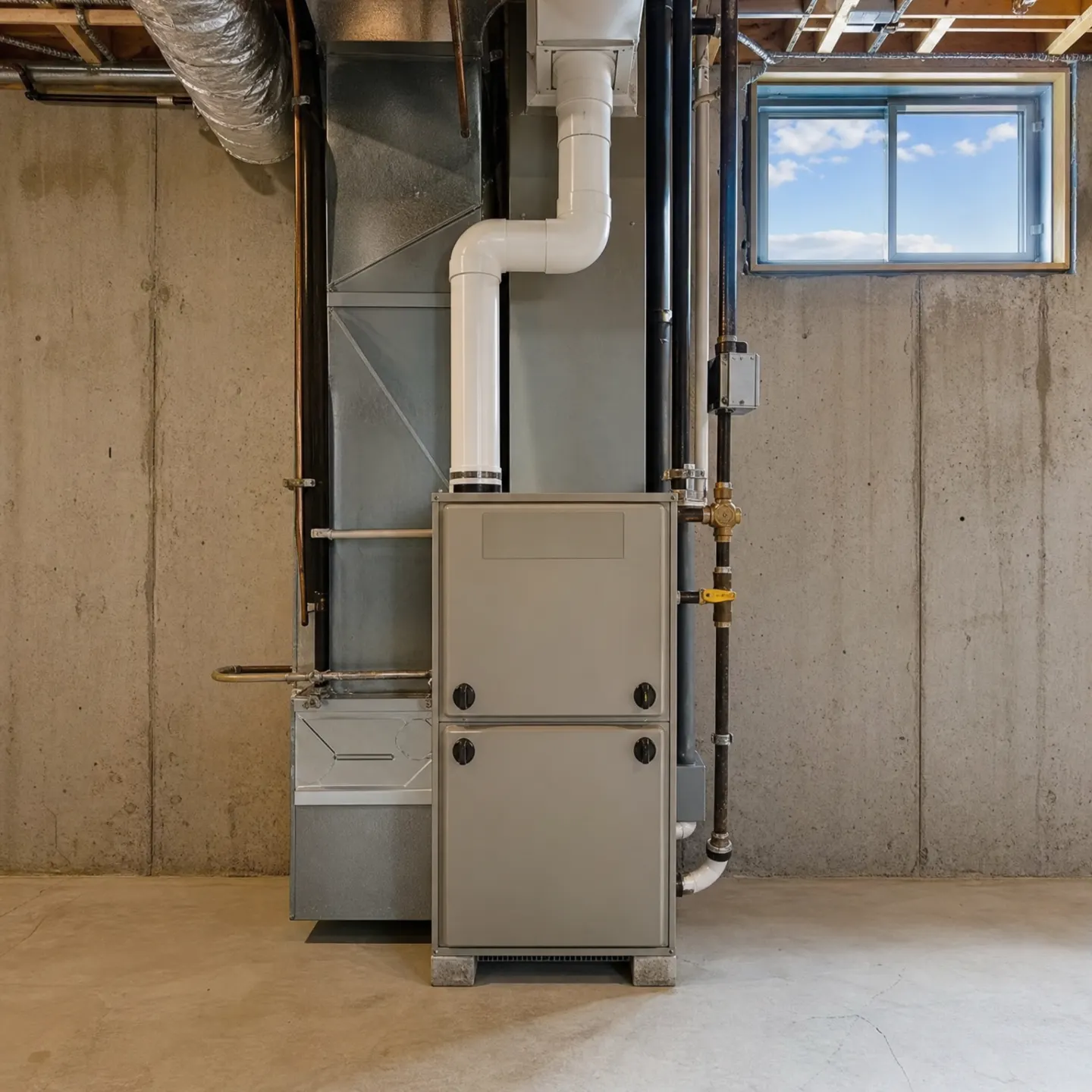
A gray gas furnace with attached ductwork and piping installed in an unfinished concrete basement.

Size it for this house, not the last furnace

A contractor sizing your furnace for a house this age starts with a load calculation, not the rating plate on the system coming out. The old furnace may have been oversized to begin with, which is common in houses built before anyone ran these numbers room by room. Ask whoever quotes the job to show you the calculation, not just a number that matches what was there before.

Ask what happens to the old ductwork

A new furnace moves a different volume of air than the one it replaces, and ducts sized for the old system do not always suit the new one. Undersized or leaky ducts can choke a correctly sized furnace and show up later as rooms that never heat evenly. Ask whether the ducts were inspected as part of the quote or just assumed to be fine.

Ask what the warranty actually covers

A furnace warranty usually splits the parts from the labor, and the labor piece often comes from whoever installed it, not the manufacturer. Ask what voids the coverage, since skipped maintenance or a wrong-sized filter can do it. Get it in writing rather than taking a verbal promise on what is covered.

The old furnace gets disconnected from the gas or oil line, the venting, and the ductwork, then hauled out whole. Nobody rebuilds it on site piece by piece. If it ran on oil, the line gets capped and the old tank is either removed or decommissioned, depending on where it sits. A chimney liner that served the old flue may no longer be needed if the new furnace vents through a different route, and an unused liner should get sealed off rather than left open to the house. Whoever pulls the old unit should leave you with the gas line, oil tank, and venting in a safe, finished state, not just a gap where the furnace used to sit.

Installation day itself runs on a schedule you can follow. The old furnace comes out first, then the crew checks the ductwork, gas or oil line, and venting against what the new unit actually needs before anything goes in. Setting the new furnace, connecting it to the plenum, and running the gas or electrical line takes most of the day. Once it's hooked up, a tech fires it and checks the heat exchanger, the flue draft, and the gas pressure or oil nozzle against the manufacturer's spec, not just whether warm air comes out. Expect the house to be without heat for stretches while the old system is disconnected and the new one goes in, so this isn't a job to start without a plan for the gap. Before anyone leaves, you should see the system run through a full cycle and get a walkthrough of the thermostat and any new controls.