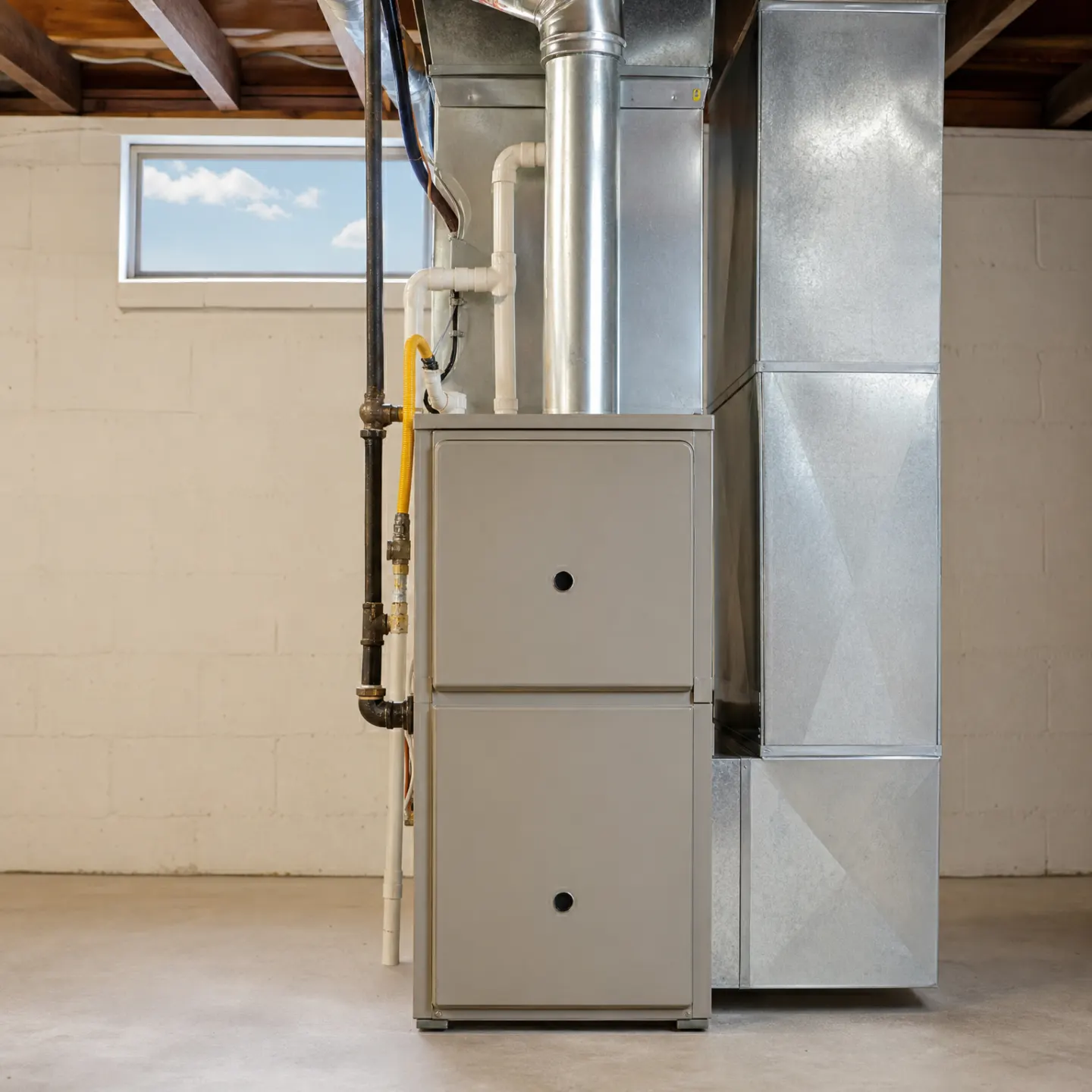
An unfinished concrete basement containing a gas furnace with sheet-metal ductwork, utility shelving, and exposed overhead joists.

Furnace Repair in DuBois, PA

Tell us about the job

Takes about a minute. No obligation.

Step 1 of 3: Equipment

The tech checks before taking anything apart

A diagnostic starts with questions about what the furnace is doing, then moves to the thermostat, the filter, and the vents before any panel comes off. Reading the furnace's own fault code off the control board, if it has one, usually narrows things down fast. Only after that does the tech open it up and test the igniter, the flame sensor, or the pressure switch with a meter.

What the visit tells you

By the end, the tech should be able to say what part failed and why, not just that the furnace doesn't work. That matters because some failures are isolated, like a cracked igniter, and some point to a bigger problem, like a clogged flue or a failing heat exchanger. Knowing which one you have is what tells you whether to fix it or start planning for a new furnace.

8 months
October through May, your furnace is on duty
19°F
the average winter night it heats against
11 winter storms
in ten years, the nights a failure hurts most
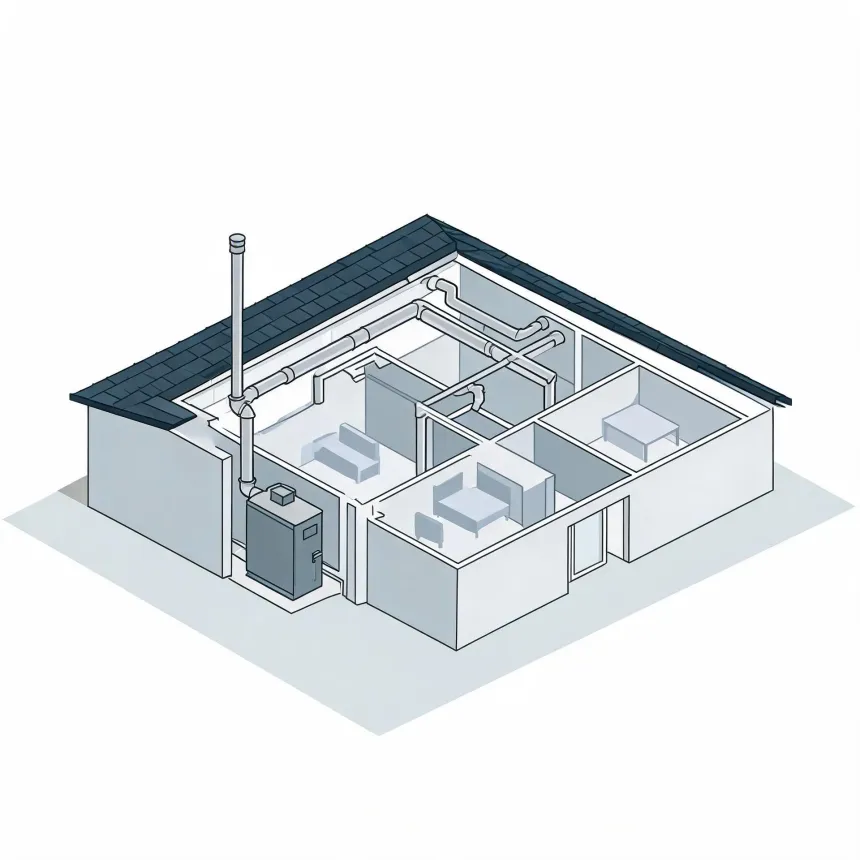
Isometric line illustration of a cutaway single-story house showing interior rooms with furniture, ceiling ductwork, and an exterior furnace unit with a tall flue pipe.
Your furnace works hardest from November through March.

NOAA nClimDiv, 1991–2020 normals

Fuel oil in Pennsylvania ran $25.15 per million Btu in 2024.

A furnace short-cycling or running long on oil at that price turns a small fault into a real cost fast.

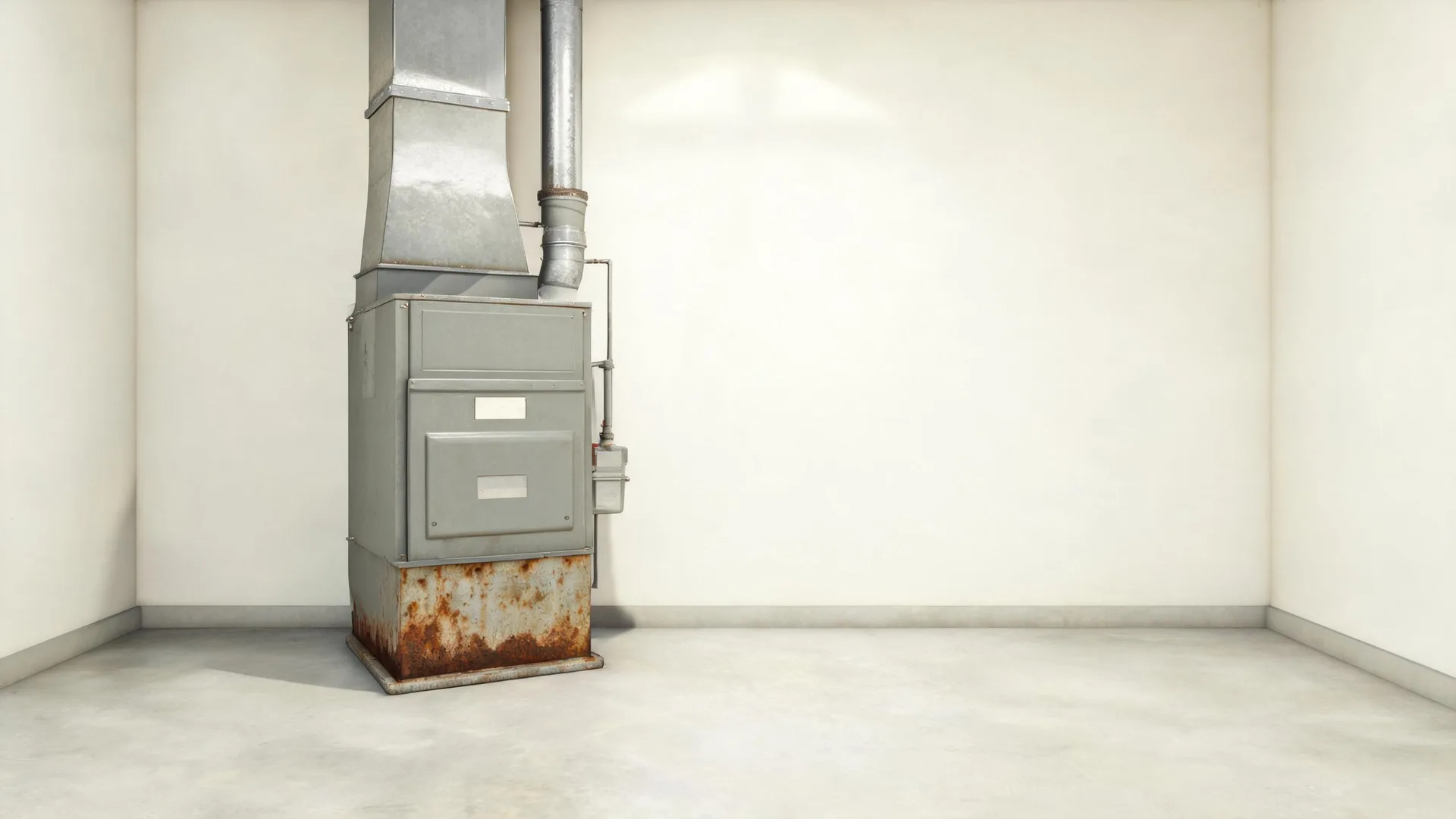
Half the homes here were built by 1970, and so was the furnace in some of them

Half the homes here were built by 1970
Heat runs October through May
Winter nights average 19°F
DuBois furnace repairFurnace season runs October through May here, eight months out of the year.

Furnaces here run from October through May, about eight months of the year. Overnight lows average 19°F in December, January and February, so for a good stretch of that stretch the furnace isn't just cycling on and off, it's running long to keep up. That kind of steady demand wears on an igniter or a pressure switch faster than a mild winter would. If yours is acting up now, it's worth having someone look at the actual part that's failing rather than guessing. A proper diagnosis tells you if this is a quick fix or the first sign of something bigger.

A furnace running badly on oil costs you every month it's ignored

If yours is short-cycling or running long, that fault is burning oil at $25.15 per million Btu the whole time it goes unfixed. Getting the actual part diagnosed now is what stops that.

Find a contractor
A man in a cap, dark jacket and tan pants walks up porch steps toward a navy blue front door, carrying a canvas tool bag filled with hand tools, with a potted plant in a blue planter to the right.
A gas furnace with attached ductwork, gas piping, and condensate lines installed in a concrete-block basement.

Every start wears something. Some furnaces start a lot more than others

A furnace that short cycles all winter is aging faster than one that runs long, steady calls and shuts off clean. Every ignition cycle lights the igniter, spins up the inducer motor, and opens the gas valve, and each of those parts has a limited number of starts in it before it wears out. A furnace cycling on and off every few minutes burns through that count a lot quicker than one that runs for a stretch and rests. That's why the same furnace model can last years in one house and fail early in another. It isn't the months on the calendar wearing it out. It's how many times it's had to start.

A small fault doesn't stay small

A cracked igniter or a failing flame sensor makes the furnace misfire or shut down early, so it starts calling for heat more often to make up the difference. Each short cycle puts another load on the hot surface igniter and the blower motor. What started as one weak part wears down the parts around it.

Heat run long hides a bigger problem

A furnace that runs long instead of cycling normally is often struggling to reach temperature, and that usually means something is restricting airflow or combustion. Left alone, that strain can crack a heat exchanger or foul a flue. The part that finally fails isn't always the part that started the problem.

Before anyone comes out, a few things are worth checking yourself. Start with the thermostat. Make sure it's set to heat, not fan, and that it's actually set above room temperature. Check the filter next. A filter clogged with dust chokes off airflow, and some furnaces will shut themselves down rather than run that way. Walk the house and check the vents and returns, nothing pushed in front of them, no door closed off to a room that needs heat. If the furnace won't start at all, look for a power switch near the unit, it looks like a regular light switch and gets bumped off more than people expect. Check the breaker too. If you smell gas anywhere near the furnace, stop. Leave the house and call the gas company from somewhere else.

A repair is worth it when the part that failed is one part, and everything around it still works the way it should. An igniter, a flame sensor, a pressure switch, these fail on their own and don't say anything bad about the rest of the furnace. Replace the one part and the furnace goes back to normal. It's a different question when the heat exchanger is cracked or the furnace is showing more than one problem at a time. A furnace that needs a second repair a year after the first one is telling you something about where it's headed. At that point the question isn't whether this repair is worth it, it's whether the next one will be too.