
Heat pump vs furnace in Clearfield County, Pennsylvania

Price a Replacement

Quotes from pros near you

Which costs less to run in Clearfield County?

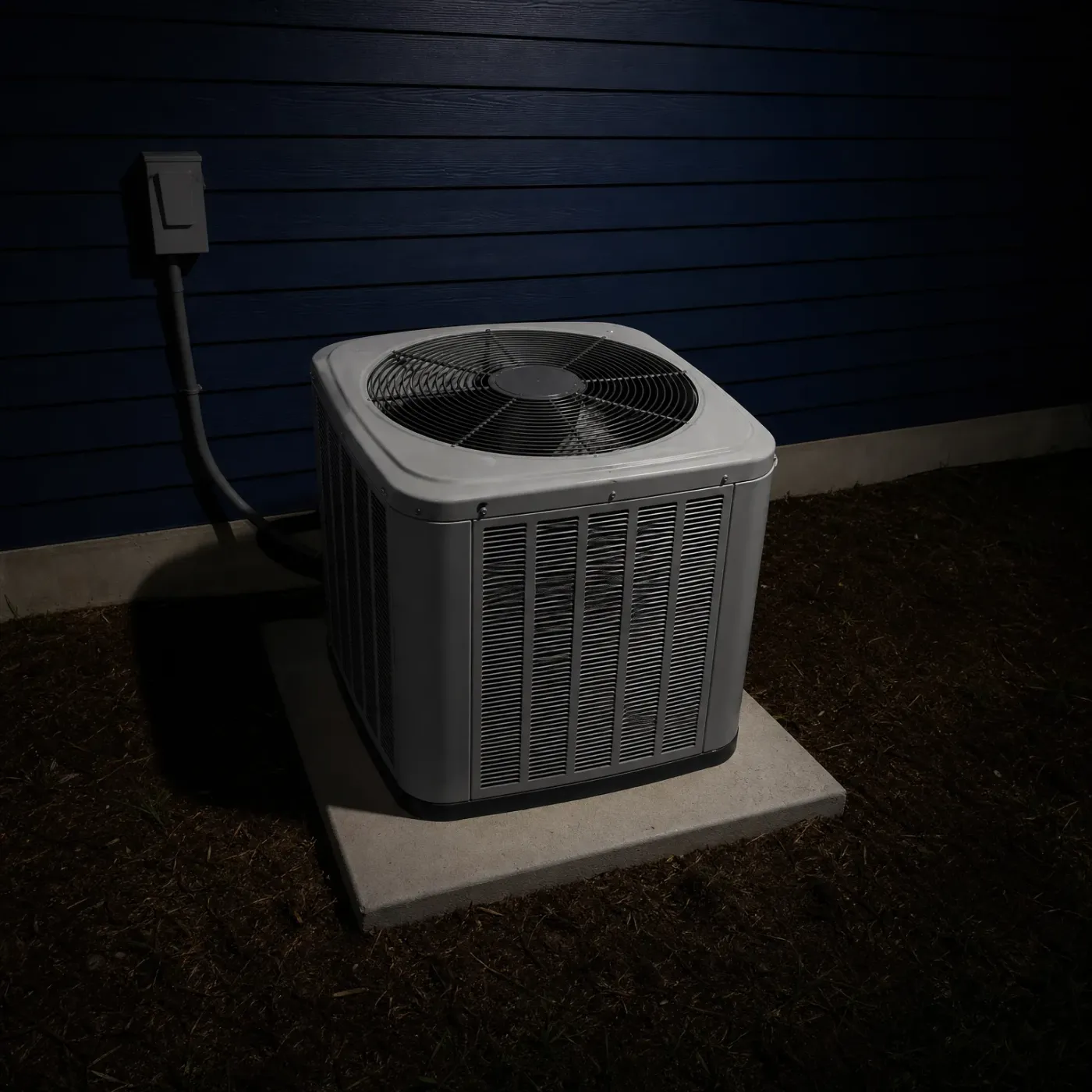
An outdoor air conditioner condenser unit on a concrete pad beside a dark blue horizontal-lap sided wall, with a disconnect box and conduit on the wall, surrounded by bare soil at night.

Heat pump

To heat your home here$2.37per 100,000 Btu

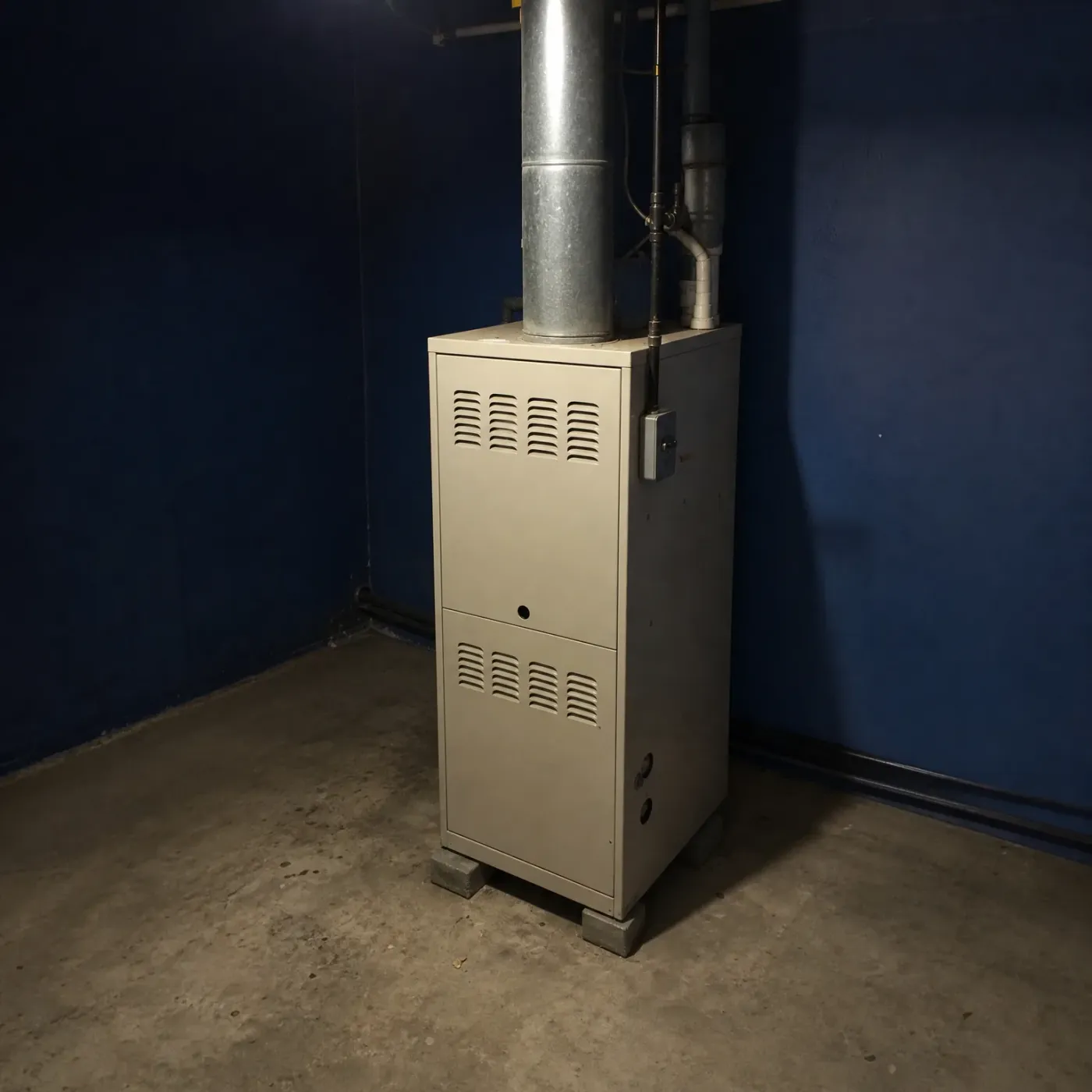
A beige upright furnace with louvered panels stands on concrete blocks in a basement corner with dark blue walls, connected to a metal flue pipe and gas piping.

Furnace

To heat your home here$1.64per 100,000 Btu

At Pennsylvania's gas and electricity prices, a gas furnace makes the same heat as a heat pump for at least 30% less.

Btu stands for British thermal unit, the standard measure of heat energy.

Where does a heat pump shine?

  • Steady, even comfort

    A heat pump runs long and low instead of blasting on and off. Rooms hold an even temperature all day.

    A dimly lit living room with a navy armchair holding an open book, a gray throw and light blue pillow, a lit table lamp, built-in bookshelves, a lit gas fireplace with stone surround, and a golden retriever sleeping on a patterned rug.
  • No gas line, nothing burning in the house

    It moves heat instead of making it from fire. That means no combustion, no flue and no gas bill for heat.

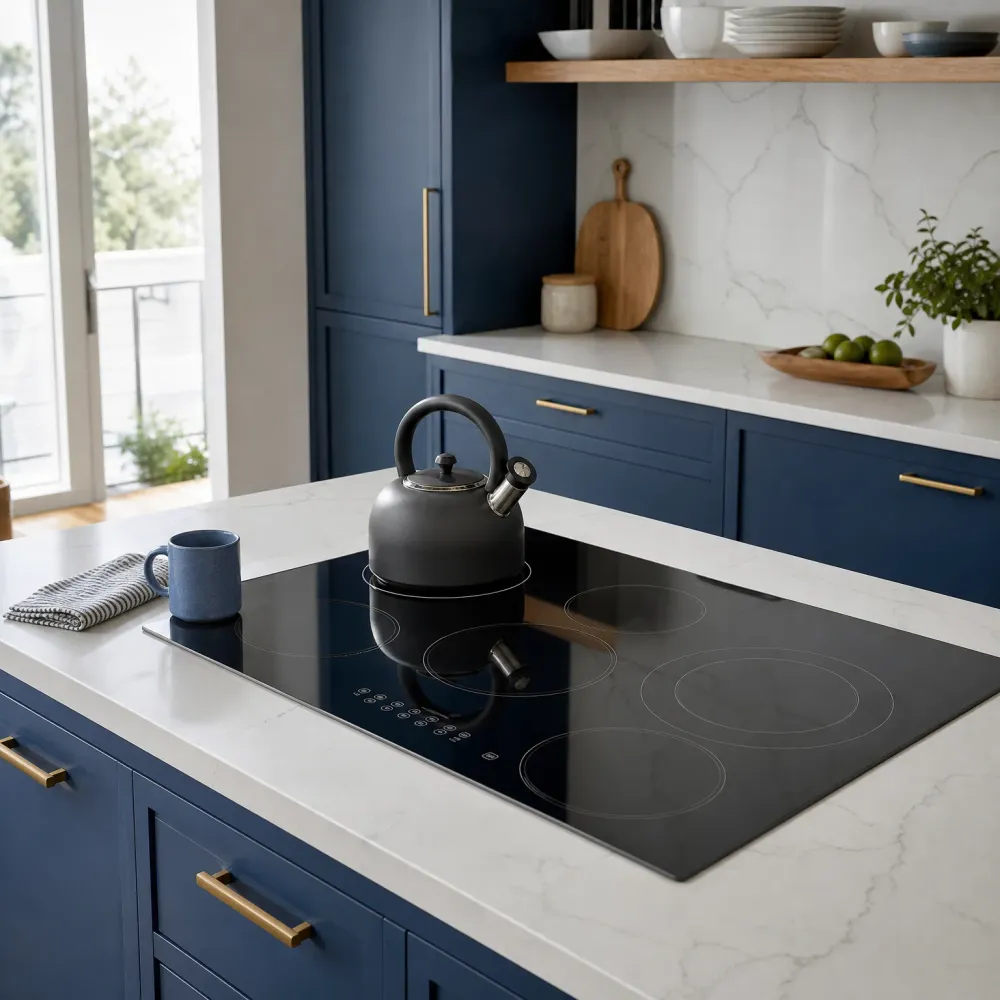
    A kitchen island with a white marble-look countertop holding a black glass cooktop, a dark kettle, a blue mug and a striped towel, with navy cabinets, a marble backsplash, a wood shelf of dishes, and a window showing evergreen trees.
  • Heats and cools in one system

    One machine handles the heat in winter and the cooling in summer. There's no second system to buy or keep up.

    A living room with a beige sectional sofa, navy throw and pillows, a wooden coffee table holding a woven tray and plant, dark built-in shelving, and a large window with navy curtains overlooking a green garden.

Where does a furnace shine?

  • Strong, steady heat in hard cold

    Nights here average 19°F through December, January and February. A furnace puts out heat straight from the burner, so it keeps up when the cold settles in and stays there.

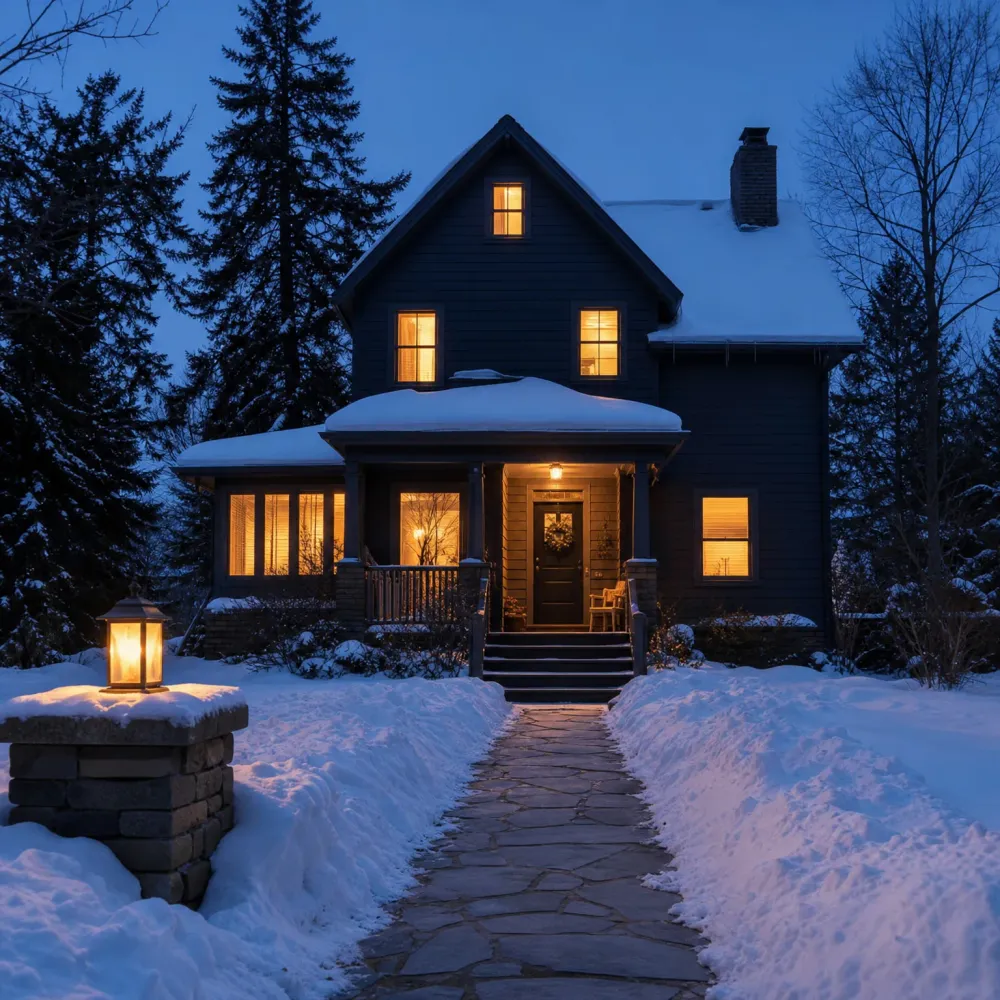
    A dark two-story house with lit windows and a covered porch at dusk, with snow on the roof and ground, a cleared stone walkway leading to the steps, a lantern on a stone pillar at left, and conifers behind.
  • Proven, simple, easy to get serviced

    The design is simple and well understood. That keeps service calls short.

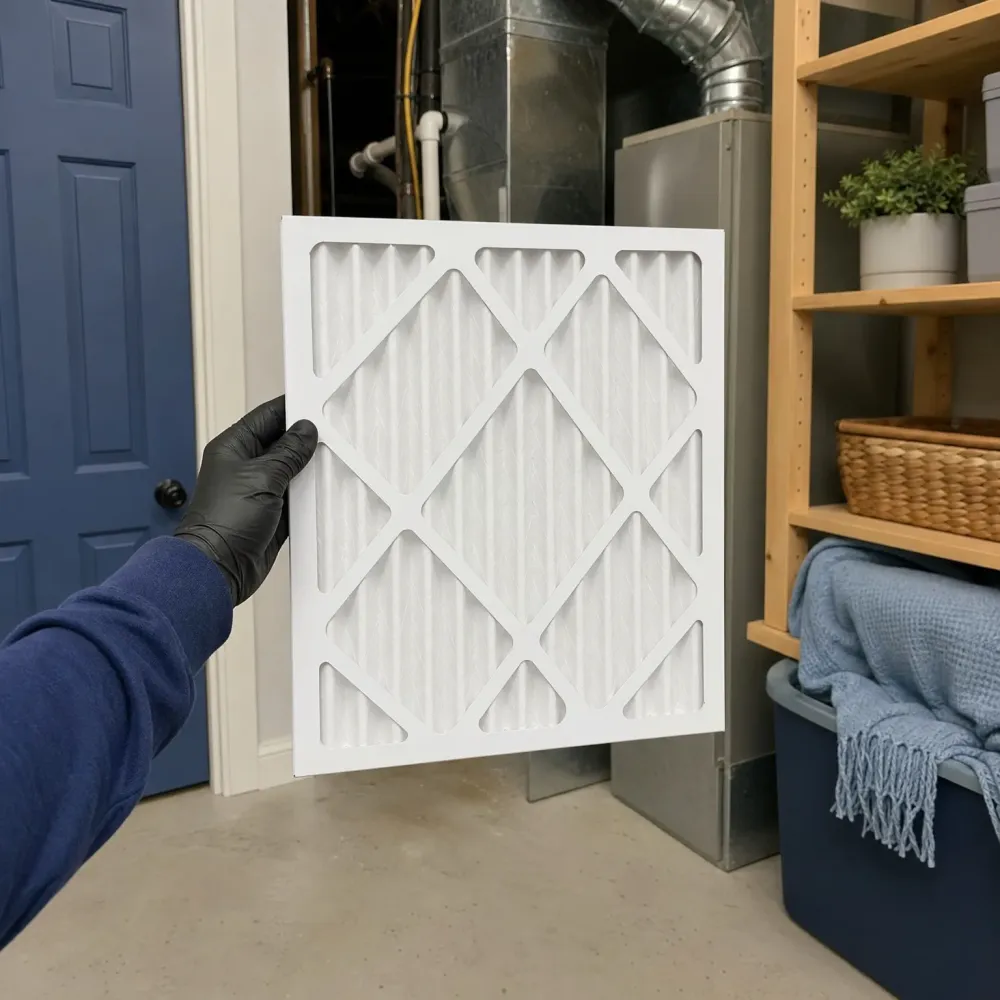
    A gloved hand holds a white pleated air filter in front of a furnace and ductwork in a utility area, with a blue door at left and wooden shelving holding a potted plant and basket at right.
  • Pairs with any central AC

    The ductwork that delivers heat in winter delivers cool air in summer once an AC coil is added.

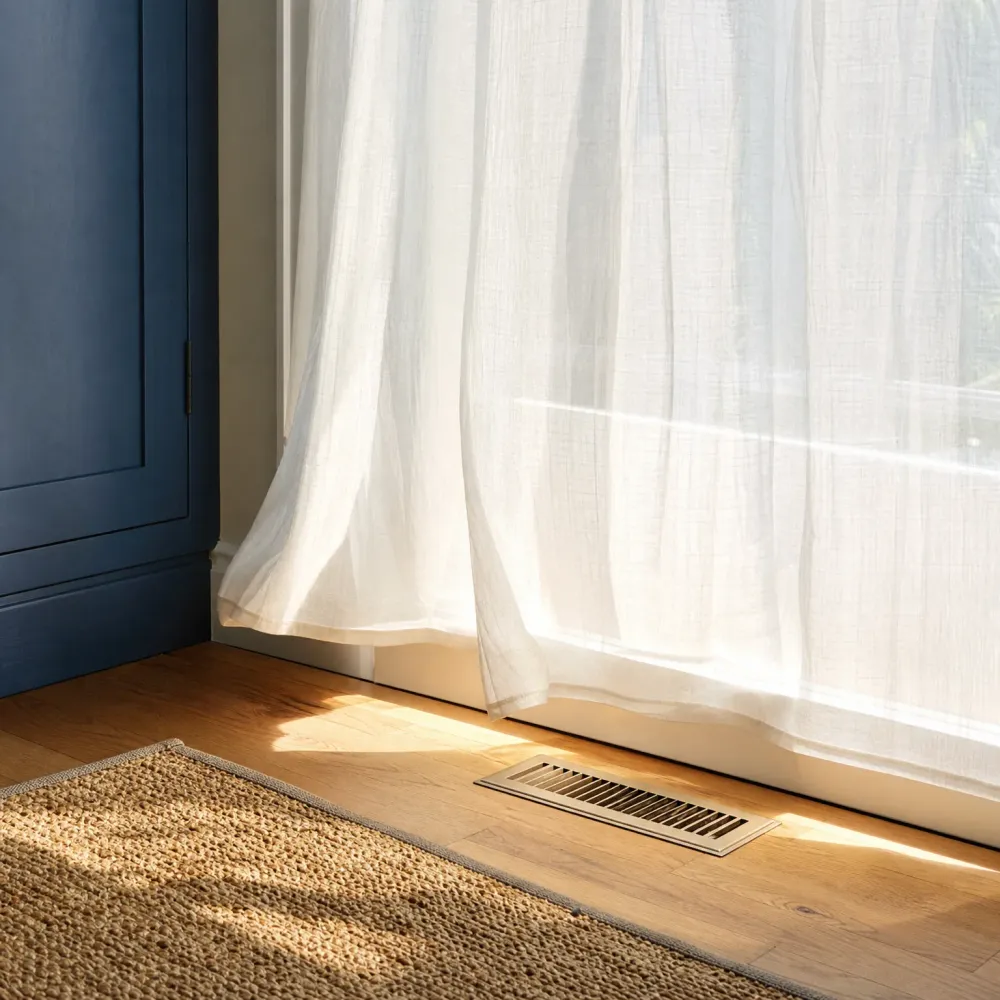
    A metal floor register vent set into a wood plank floor beside a sheer white curtain lit by sunlight, with a woven jute rug in the foreground and a dark blue cabinet at left.

What the cold here does to a heat pump

Your winter nights average 19°F, and a standard heat pump starts losing ground well above that. Below 40°F it puts out less heat than its rating says. Below about 35°F it usually needs backup heat to make up the difference. Here, both of those marks sit above your average low, not below it.

Of the roughly 245 nights a year your heat runs, about 145 drop to freezing or below. That is more than half the heating season spent under the point where a standard heat pump is already working at a disadvantage. Only about 6 nights a year reach 0°F, so the deep cold is rare, but the mild-to-moderate cold that wears on a heat pump is not rare here. It is most of the winter.

This does not rule out a heat pump. It means the unit has to be chosen for this, not a standard model. One built to the ENERGY STAR Cold Climate spec is tested to hold at least 70 percent of its 47°F capacity at 5°F, and to still turn out 1.75 units of heat per unit of electricity at that temperature. Field tests of cold-climate models in occupied homes back this up: backup heat covered only a small share of the load between 0°F and 35°F, and running on backup alone was rare even above 0°F. A standard heat pump was not built for a Clearfield County winter. A cold-climate one was tested for something close to it.
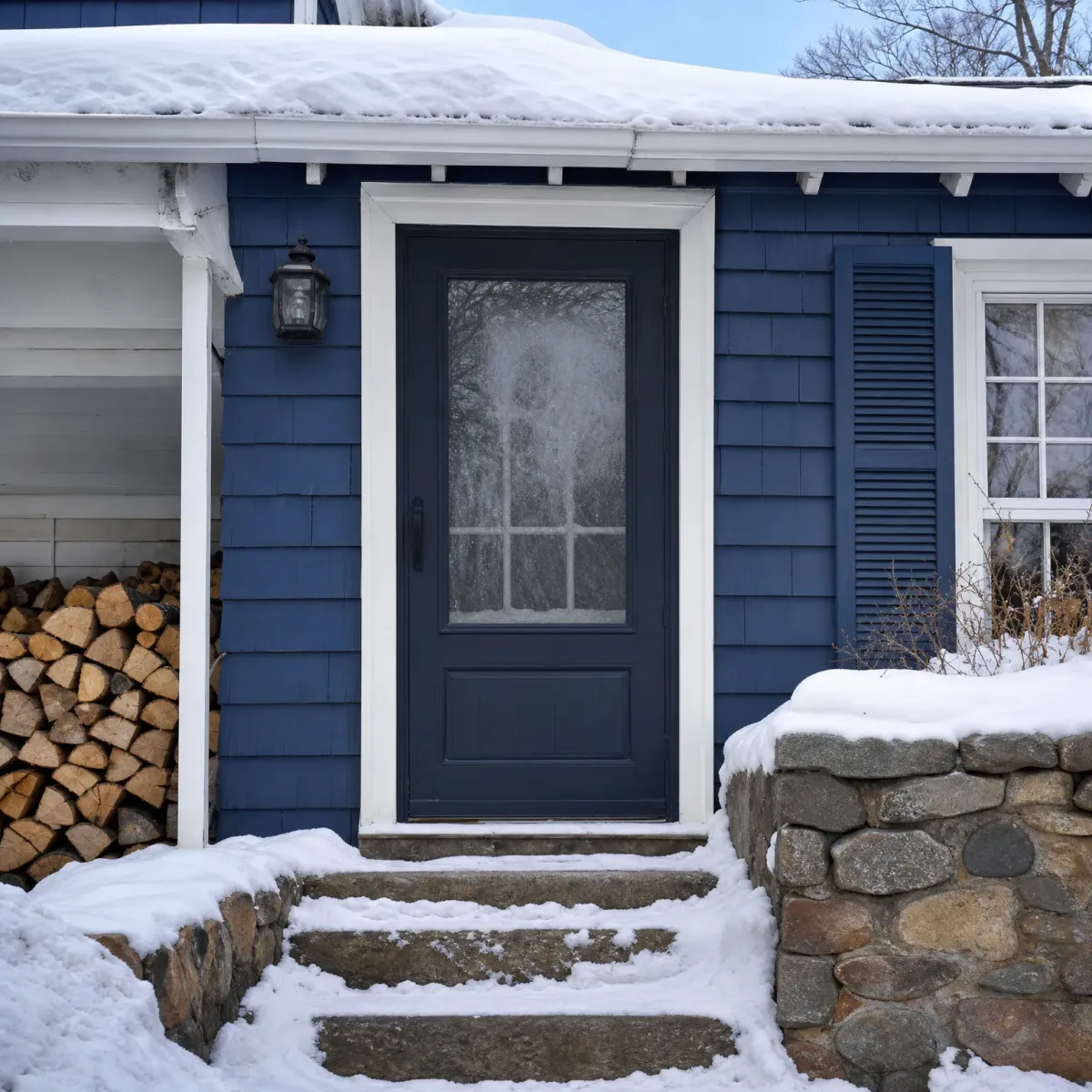
A dark blue entry door with a frosted glass panel in a blue shingled house with white trim, with snow on the roof and steps, a stacked woodpile at left, and a stone wall at right.

What each one costs to run, and what that means for your choice

A gas furnace is the cheapest of the three to run here, at $1.64 per 100,000 Btu against $2.37 for a heat pump and $3.03 for an oil furnace. If you already have a gas line, that gap is real money every winter, and nothing about the cold-climate question changes it, since the furnace does not care how cold it gets outside.

If oil is the alternative you are actually weighing, the comparison flips. A heat pump beats an oil furnace, $2.37 against $3.03, so if your house heats with oil now, a heat pump costs less to run even before you account for the air conditioning it gives you in summer that an oil furnace does not.

That last part matters more here than in most places, because your cooling season is short, July and August, two months against eight months of heat. A furnace only heats. It has nothing to do the other four months of the year, and you would still need a separate air conditioner. A heat pump handles both in one system, which counts for more in a county where heating dominates the year and cooling is a short add-on.

So the choice comes down to what you are replacing and what you already have. Gas on hand, and running cost is what matters most to you: the furnace wins on price, plainly. Oil on hand, or no gas line to tie into: a cold-climate heat pump costs less to run than oil and adds summer cooling you would otherwise have to buy separately. Either way, if a heat pump is the direction, the cold-climate rating is not optional in this county. The standard model is built for weather your winters do not give it.

Sources: NOAA nClimDiv · NOAA 1991–2020 seasonal normals · PNNL Building America guide · PNNL-37127 field study · ENERGY STAR product criteria · EIA SEDS 2024 · 10 CFR 430.32

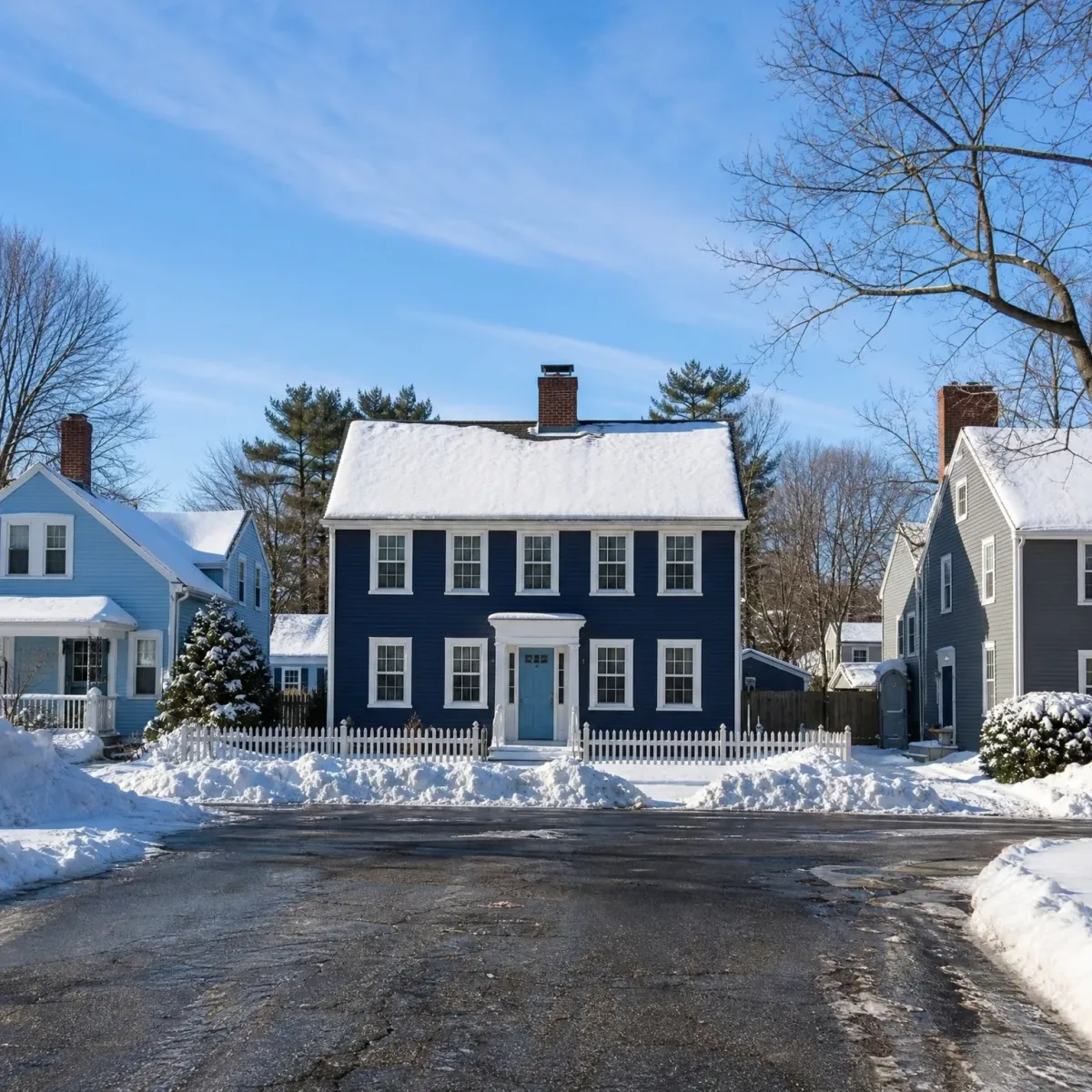
A two-story navy blue clapboard house with a snow-covered roof, brick chimney and white picket fence, flanked by light blue and gray houses, with plowed snowbanks along a wet asphalt street.

Common questions about heat pumps and furnaces

  • Can a heat pump heat a house through a Pennsylvania winter?

    Yes, but a standard heat pump loses capacity as it gets cold, putting out less than its rating below 40°F and often leaning on backup heat below about 35°F. The average overnight low here is 19°F, and about 145 nights a year sit at or below freezing, so a standard heat pump spends most of the heating season below both marks. A heat pump built to the ENERGY STAR Cold Climate spec is tested to hold most of its capacity down to 5°F, which is the spec worth asking for here.

  • Do I need backup heat with a heat pump here?

    With a standard heat pump, yes. Its heating efficiency drops once it's below about 35°F outside, and the overnight low here averages 19°F across December, January and February, well past that mark. A cold climate model tested to the ENERGY STAR spec keeps most of its capacity down to 5°F, and field tests of prototype cold climate heat pumps found backup heat covered only a small share of the heat needed between 0°F and 35°F, so the colder the equipment is rated for, the less that backup heat gets used.

  • What if my house doesn't have a gas line?

    Without a gas line, the choice is a heat pump or a furnace burning oil or propane. On running cost, the heat pump wins: $2.37 per 100,000 Btu of heat against $3.03 for an oil furnace, both at Pennsylvania's average fuel prices. Fuel oil heats about two in five homes in Clearfield County, so for a lot of houses here this is the real decision, not gas versus electric.

  • What if my house heats with oil or propane?

    A heat pump costs less to run than an oil furnace here, $2.37 against $3.03 per 100,000 Btu of heat. A propane furnace runs on the same kind of equipment as a gas furnace, just a different tank and fuel, so replacing either with a heat pump means giving up the delivery truck. About two in five homes in Clearfield County heat with fuel oil, so this is the comparison that matters most for most houses here.

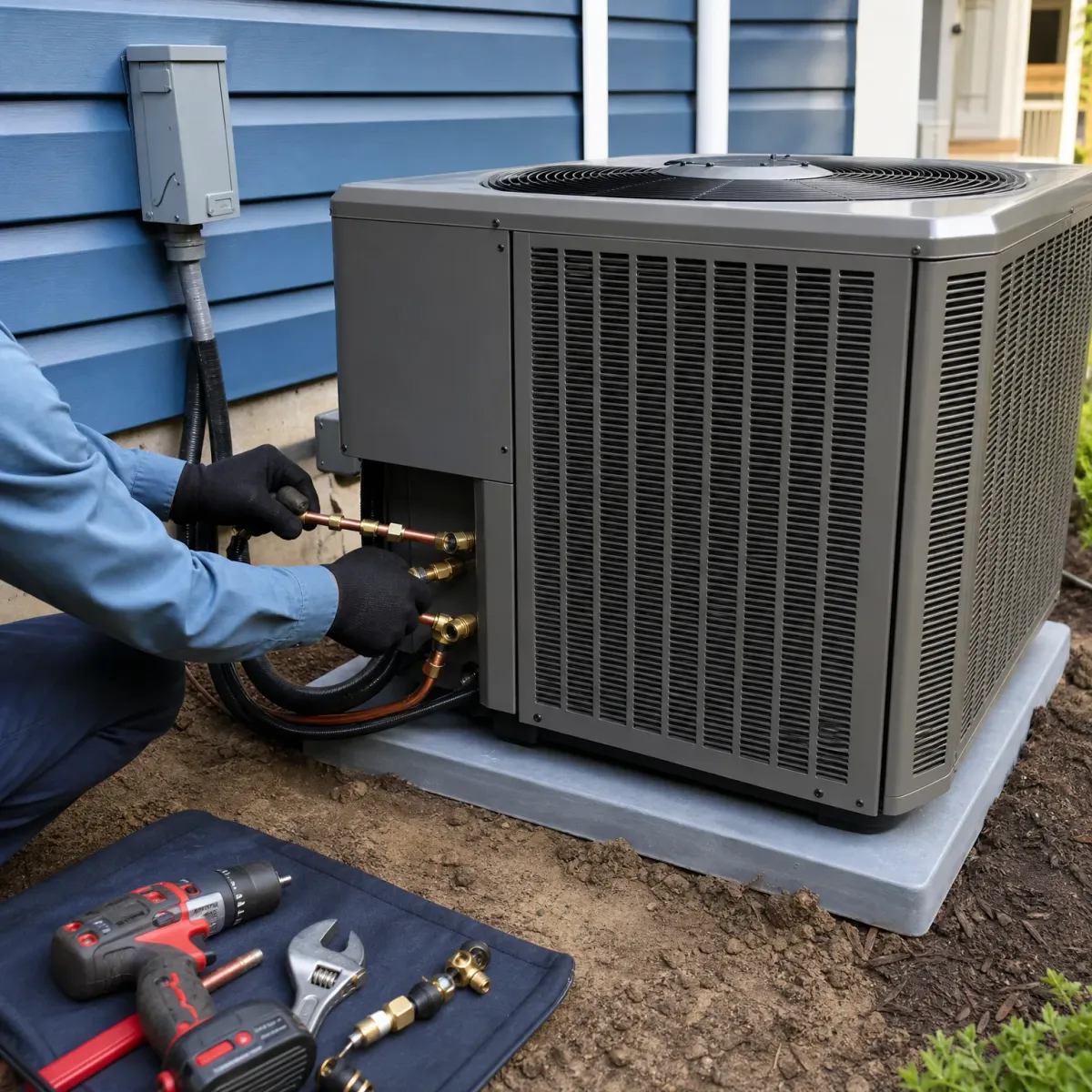
A person in a blue shirt and black gloves kneels beside an outdoor air conditioning condenser unit on a concrete pad next to blue lap siding, working on copper refrigerant lines, with a wrench, drill and brass fittings on a cloth in the foreground.

Tell us about the job

Takes about a minute. No obligation.

Step 1 of 3: Equipment