




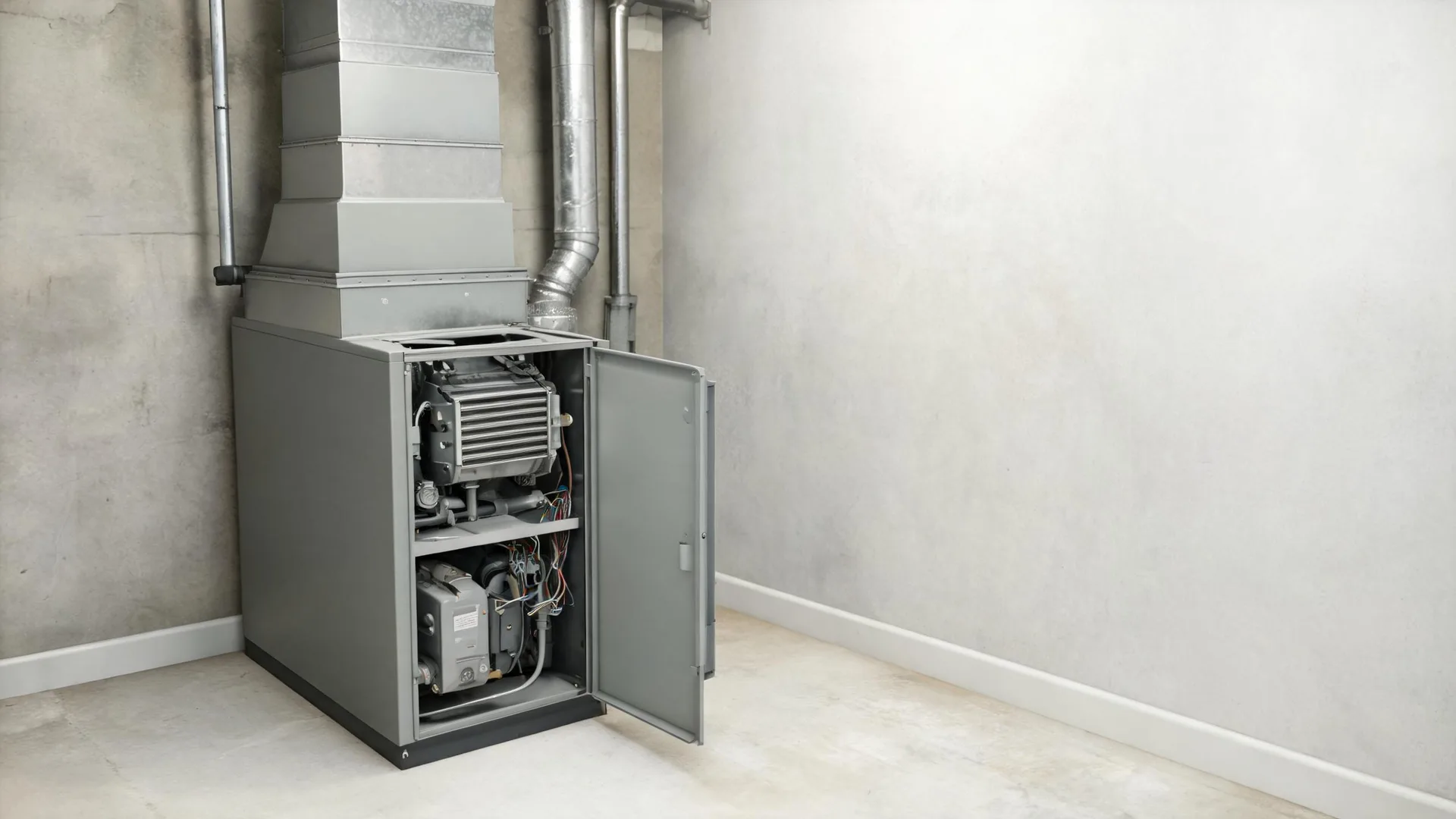
An unfinished basement containing a gray HVAC furnace with ductwork, exposed wooden joists, a concrete floor, and miscellaneous clutter in one corner.

Furnace Repair in State College, PA

Tell us about the job

Takes about a minute. No obligation.

Step 1 of 3: Equipment

A tech starts by asking what you've noticed. Short cycling, no heat at all, a burning smell, a noise that wasn't there before. That tells them where to look first. Next they'll check the thermostat call, the power to the unit, and the gas supply before opening anything up. Inside, they're looking at the igniter or pilot, the flame sensor, the pressure switch, and whether the inducer motor is pulling air through the way it should. A dirty flame sensor can shut the whole system down and look exactly like a failed igniter, so they test each part rather than guess. Once they find the actual fault, they can tell you what it takes to fix it and whether it's a sign the furnace has more trouble coming.

8 months
October through May, your furnace is on duty
20°F
the average winter night it heats against
27 winter storms
in ten years, the nights a failure hurts most
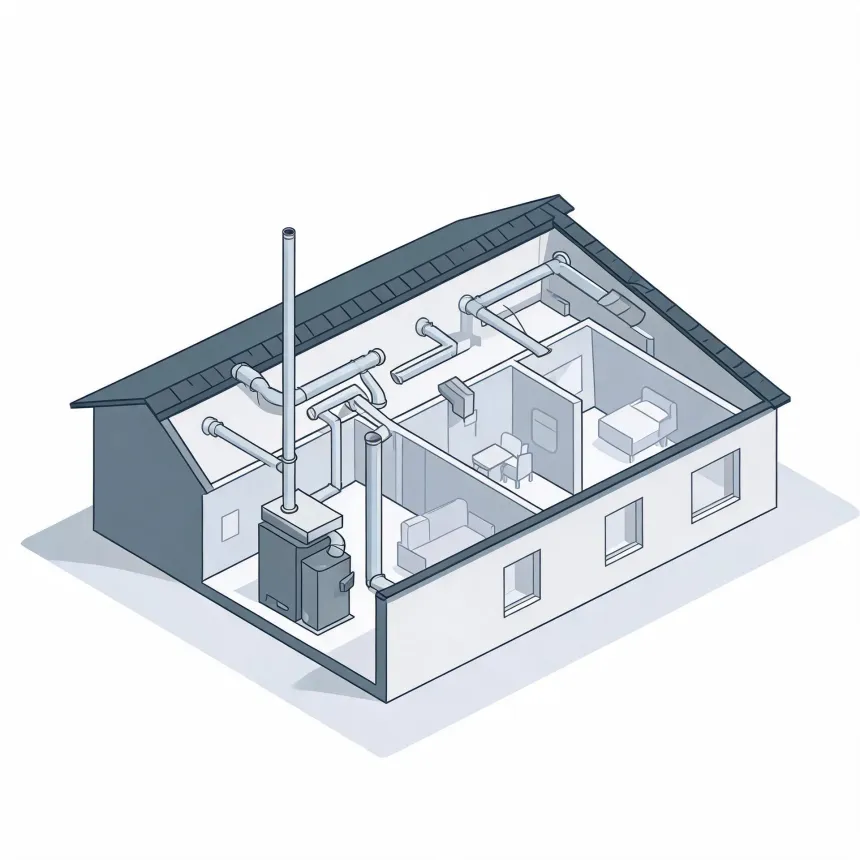
Isometric line illustration of a single-story house cutaway showing interior rooms with furniture, ductwork or piping running along the ceiling, and a boxy furnace unit with a tall vertical flue pipe.
Your furnace works hardest from November through March.

NOAA nClimDiv, 1991–2020 normals

Electricity in Pennsylvania ran $52.07 per million Btu in 2024.

A furnace that's cycling too much or struggling to fire is burning that rate every day it goes unfixed.

A furnace that's struggling costs more every day it runs that way. Get the fault found now, while it's still fixable before May.

Heat runs October through May
Winter nights average 20°F
27 winter storms from 2015 to 2024
Built to run eight months straightHeat goes on in October here and stays on into May.

Most furnace failures trace back to a handful of parts that wear out doing their job. The igniter cracks after years of heating up and cooling down hundreds of times. The flame sensor coats in a thin layer of oxidation and stops telling the control board that a flame is present, so the gas shuts off as a safety measure. A pressure switch can fail stuck, or read correctly and shut the furnace down because the inducer motor or the vent is actually blocked. Dirty filters cause a lot of this indirectly. Airflow drops, the heat exchanger runs hotter than it should, and the limit switch starts tripping to protect it. None of these parts fail because the furnace is old on paper. They fail because they've done their job a certain number of times, and that number comes faster in a system that's been neglected.

Stop paying for a struggling machine

Power costs more here, so a machine that's running badly costs you every month. Get it fixed soon.

Find a contractor
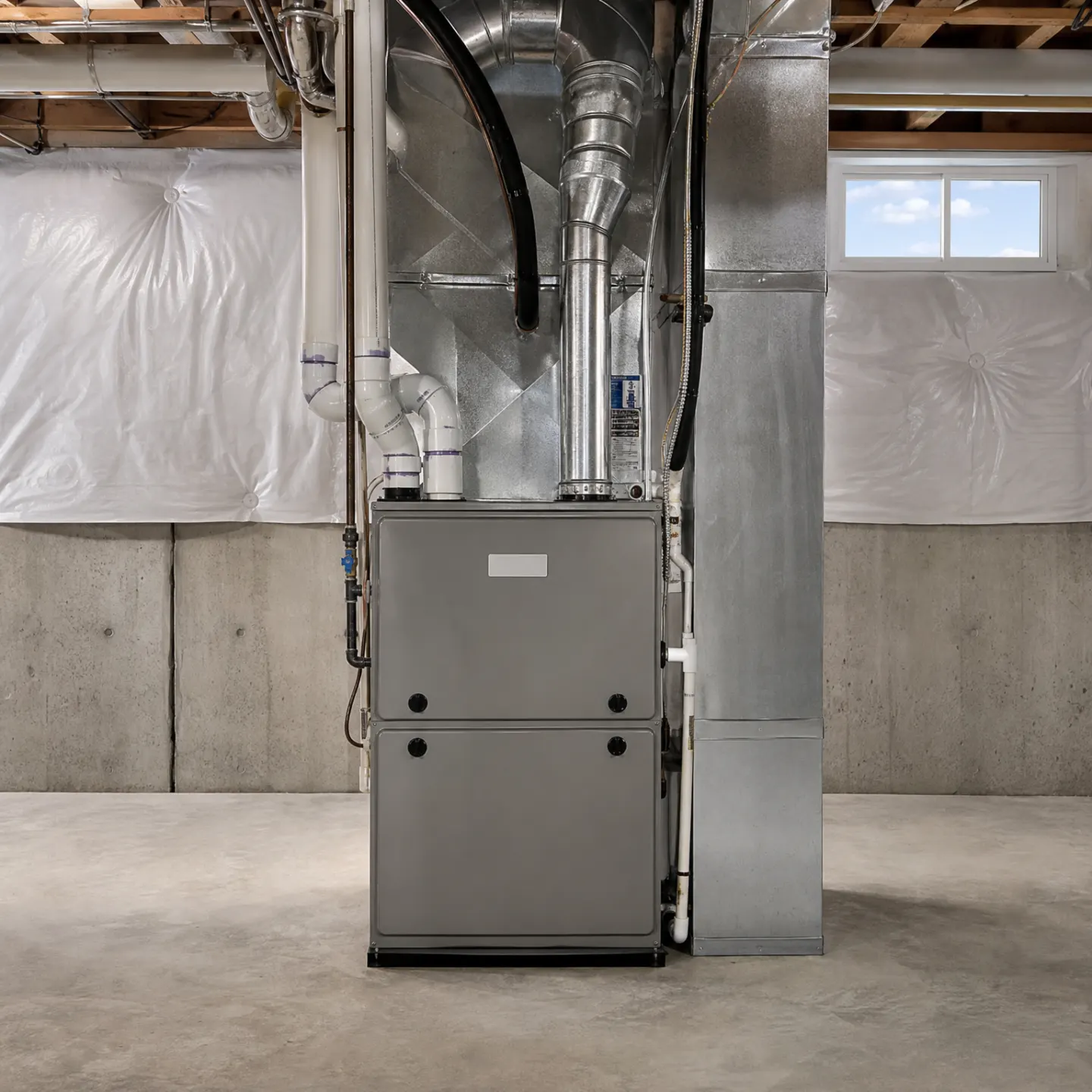
A gray residential gas furnace installed in an unfinished basement, connected to sheet-metal ductwork and PVC pipes.

It warns you before it quits

A furnace usually gives warning before it quits for good. Short cycling, where it fires up and shuts off again before the house warms, means something is cutting the cycle short, often a safety switch doing exactly what it's supposed to do. A burner that pops before it catches is lighting late, and delayed ignition puts a small shock of flame into the heat exchanger every time it happens. None of this fixes itself by running longer. Each cycle under strain wears the same parts a little more, the igniter, the flame sensor, the switches, until one of them finally gives out.

What you can check yourself

Check that the thermostat is set to heat and the set temperature is above room temperature. Make sure the furnace switch, the one that looks like a light switch near the unit, is on. Check the breaker. If you have a standing pilot, see if it's lit. Replace the filter if it's gray or clogged, since a blocked filter can starve the furnace of air and trip it off.
What to leave alone

Don't open the burner compartment or touch the gas valve. If you smell gas, leave the house and call the gas company before anyone calls for repair. Don't keep resetting a furnace that shuts off on its own. That reset button or breaker is tripping for a reason, and running it again without knowing why can turn a small fault into a bigger one.

A furnace that's struggling and still gets used keeps putting the same strain on whatever's already weak. A cracked heat exchanger flexes more each time it heats up and cools down, and that crack only grows. A limit switch that's tripping from poor airflow will keep tripping, and each trip is the furnace starting and stopping under stress instead of running clean. Delayed ignition doesn't get gentler with time, the small flame shock at startup hits the same spot in the heat exchanger every cycle. Letting it run doesn't give a part a chance to recover. It just spends down whatever life that part has left, and whichever one is closest to failing is the one that decides when you lose heat for good.

Once the actual fault is found, the next question is whether it's worth fixing. Most single repairs, an igniter, a flame sensor, a pressure switch, are worth doing on their own. Those parts fail on their own schedule and swapping one out doesn't say anything bad about the rest of the furnace. It's a different question when the heat exchanger is cracked, since that's the part that can't be patched and isn't sold on its own. It's also different when a furnace has needed a handful of separate repairs over a short stretch, because that pattern usually means more parts are near the end of their life, not that the furnace had a run of bad luck. A tech who's seen inside it can tell you which situation you're in.