A two-story red brick house with black shutters and a dark roof stands behind a lawn, a stacked stone retaining wall in the foreground, and large leafy trees framing the view.

Boiler Repair in State College, PA

Tell us about the job

Takes about a minute. No obligation.

Step 1 of 3: Equipment

A small leak finds the electronics

A boiler weeping water at a fitting or valve doesn't stay contained. That moisture finds its way to the circuit board or the gas valve wiring, and what started as a drip can turn into a control failure that shuts the whole unit down.


Noise now, breakdown later

Kettling or banging in a boiler means mineral buildup is baking onto the heat exchanger. Run it long enough in that state and the metal overheats unevenly, which is how a repair turns into a cracked exchanger and a full replacement.

Half the houses in Centre County were built in 1980 or later.

A boiler that age still has years in it, so most calls here end in a repair, not a replacement.

Eight months of heat and 20 degree nights keep a boiler working hard

Heat runs October through May
Winter nights average 20°F
27 winter storms from 2015 to 2024

Boilers here start running in October. September is the month to have one looked at, before it's carrying a full winter of load. A weak joint or a worn valve usually holds up fine sitting idle all summer. Put eight months of heat behind it and whatever was already marginal tends to give out in the first cold snap, not the last. A contractor is also easier to get out to the house in September, before the calls start stacking up.

A boiler running badly costs more here every month it goes unfixed

Electricity in Pennsylvania runs $52.07 per million Btu, and a boiler that isn't firing right wastes it every day it keeps running that way. The longer a bad valve or a fouled exchanger stays in the system, the more that costs you each month it's not fixed.

Find a contractor
A man in a cap, dark long-sleeve shirt, tan work pants and boots walks up wooden porch steps toward a teal front door, carrying a canvas tool bag with hand tools.

No heat, or heat that won't stop

A boiler stuck with no call for heat, or one that just keeps firing past where the thermostat is set, usually means the aquastat or the thermostat wiring has failed. Either way the house stops matching what the dial says, which is the clearest sign something electrical needs a look.

A pressure gauge that won't hold

Check the gauge when the system is cold. If it keeps dropping between fill-ups, water is leaving the system somewhere, through a fitting, a valve, or the relief valve itself. A boiler that keeps losing pressure is losing water faster than it's visible, and running low starves the heat exchanger of the water it needs to carry heat away safely.

Before calling anyone, look at the pressure gauge and the boiler's front panel. Most units show a code or a blinking light when something's actually wrong, and that code is worth writing down before you reset anything. Check that the thermostat has power and is set below room temperature, a dead battery looks exactly like a dead boiler from across the room. Look under the unit and around the fittings for water, even a few drops tell you there's a leak somewhere in the system. If you have a standing pilot, check that it's still lit. Don't keep resetting a boiler that shuts itself off, a unit that trips its own safety switch is doing that for a reason, and running it past that point is how a small problem turns into a damaged heat exchanger.

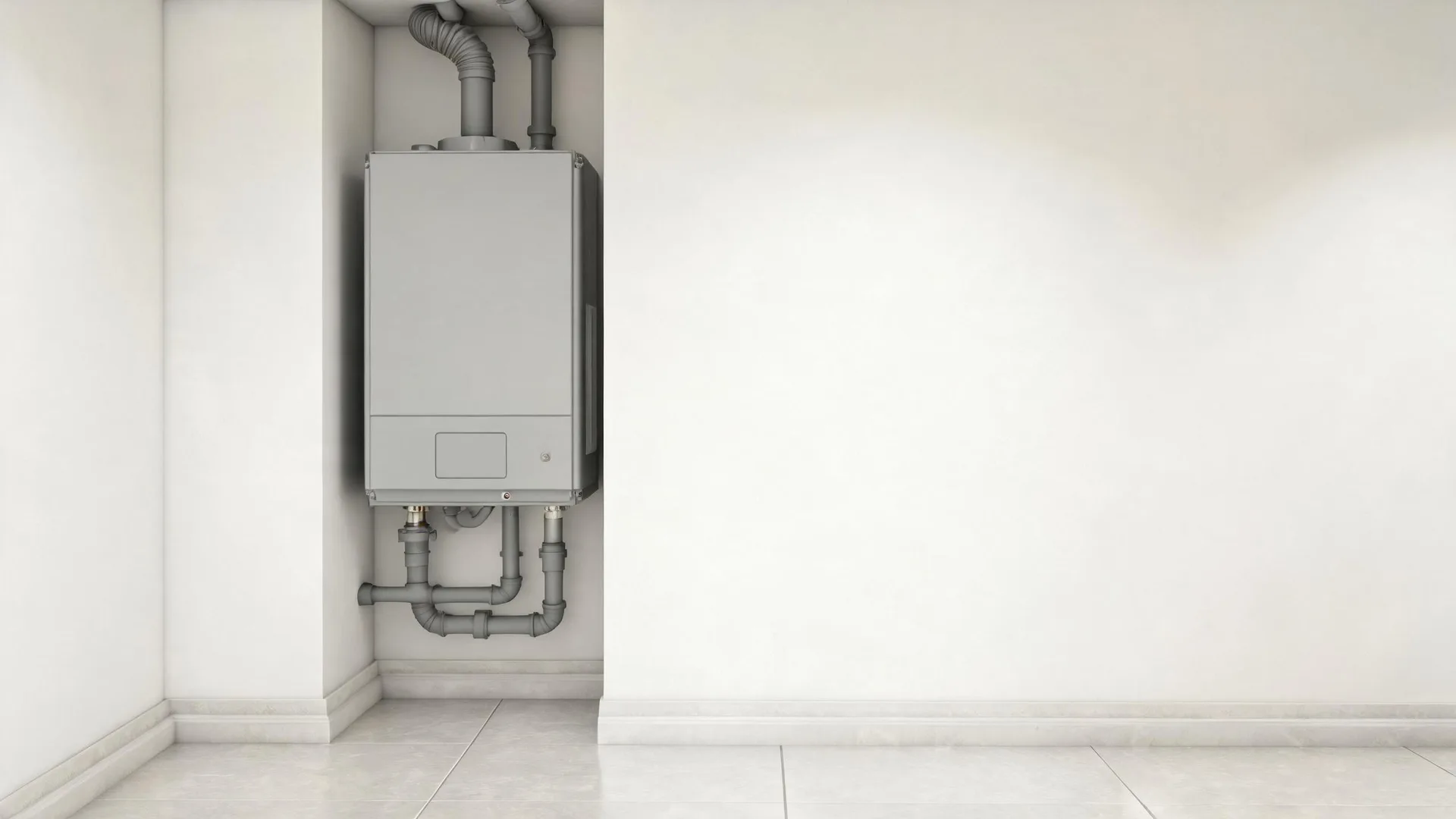
A boiler that needs a new circulator pump or a new zone valve is still worth fixing. Those are wear parts, and replacing one doesn't touch the rest of the system. The heat exchanger is a different question. Once it's cracked or corroded through, there's no patching it, and a cracked exchanger usually means the boiler is done. How old the unit is matters less than what actually failed. A boiler with a bad igniter or a failed aquastat gets fixed, no matter how long it's been running. A boiler with a cracked exchanger or a firebox rusting from the inside gets replaced, because that's the part the rest of the unit is built around.