Oil runs high here
Fuel oil cost Pennsylvania homes $25.15 per million Btu in 2024. That's the fuel most furnaces in Bedford County burn, and the price doesn't bend for anyone.
Takes about a minute. No obligation.
Fuel oil cost Pennsylvania homes $25.15 per million Btu in 2024. That's the fuel most furnaces in Bedford County burn, and the price doesn't bend for anyone.
Two furnaces burning the same oil can cost you differently all winter. How much heat a furnace gets out of each gallon is what separates a low bill from a high one, long after the furnace itself is paid for.
NOAA nClimDiv, 1991–2020 normals
Oil heats about half the homes in Bedford County, more than any other fuel.
Replacing an oil furnace with another one means the hookup is already there.




Bedford County falls under zone 5A in the 2021 energy code, a cool zone where heating carries more of the load than cooling does. Any gas furnace installed here has to meet the federal minimum for that: at least 80 percent of the fuel it burns turned into heat over the winter. That's the floor for units built before December 18, 2028. After that date, new furnaces have to hit 95 percent. Either way, the number on the unit's label is a legal minimum, not a selling point, and it's worth checking against what's actually being installed.
That $25.15 per million Btu doesn't change based on which furnace burns it. What changes is how much of it turns into heat in your house instead of going up the flue. Ask what efficiency rating comes with the unit before it's installed, and get that number in writing.
Find a contractorIf your home is one of the older ones here, whatever furnace goes in has to work with the ductwork and venting already built into it. That's not something to guess at from the size of the unit coming out. A contractor should run a load calculation on the house as it stands now. Too big and the furnace short cycles, turning on and off before it heats evenly, and that wears parts out early. Too small and it runs without stopping on the coldest days and still falls behind. Either way you feel it on the oil bill before you feel it in the house.
A load calculation looks at the walls, the windows, the ceiling height, how the rooms connect, and where the house faces, then works out how much heat escapes on the coldest day. That number, not the square footage and not the size of the old furnace, is what the new one gets built around. Two houses the same size can need different furnaces because one holds heat better than the other.
A furnace that's too big heats the house fast and shuts off before it pulls moisture out of the air or warms the place evenly, then kicks back on soon after. All that starting and stopping wears the igniter and blower motor faster than steady running would. A furnace that's too small just keeps going, straining to keep up on the coldest days and still losing ground. Both mistakes burn more fuel than a furnace sized to the house.
The rating on the label tells you how much of the fuel burned turns into heat that reaches the rooms, and how much just goes out the flue. A furnace running at the federal minimum loses a good chunk of every gallon before it ever warms the air. One running higher keeps more of that heat in the house, gallon for gallon, year after year. That number doesn't change with use and it doesn't drift downward the way a part can wear out. What can change it is poor installation: a duct system that leaks, a unit set up without the airflow it was built for, venting that fights the draft it needs. A furnace can carry a high rating on paper and still burn more fuel than it should if the install work undercuts it. The rating is what the unit is capable of. Getting that performance out of it in the house is a separate job, done by whoever sets it up.
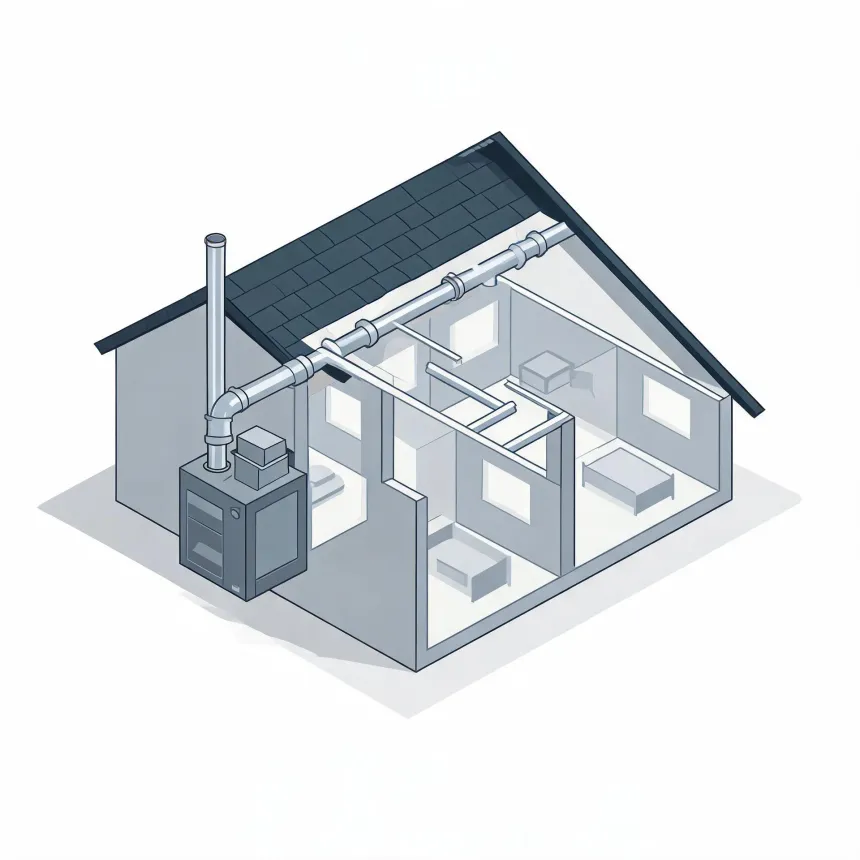
Installation day starts with the old furnace coming out, along with the flue pipe and any ductwork that won't work with the new unit. The contractor sets the new furnace, connects it to the supply and return ducts, and runs the gas or oil line to it along with the venting it needs to draft properly. Electrical and any control wiring get hooked up next, including the thermostat. Once it's in place, the system gets fired up and checked: airflow across the coil, the temperature rise through the furnace, and the draft pulling correctly through the flue. A combustion analyzer reads the exhaust to confirm the furnace is burning clean and getting the efficiency it's rated for. None of that shows up on the label. It shows up in how the unit was set into the house.