

Cold is the real question here
Winter is the long season in Bedford County. Heat runs about eight months, October through May, against three months of cooling. Whatever you buy will spend most of its working life heating this house, not cooling it.
The overnight low here averages 22°F across December, January and February. That is below the point where a standard heat pump starts to struggle. Below about 40°F a conventional heat pump already puts out less than its rated capacity, and below about 35°F it often needs backup heat to make up the difference. At 22°F average, you are past both marks most winter nights, not just on the cold snaps.
About 140 nights a year here fall to freezing or below, more than half the nights across the eight months the heat runs. On those nights a standard heat pump is working below its rated output and likely leaning on backup heat to keep the house warm. Only about 4 nights a year drop to 0°F or lower, so the bitter cold is rare, but the ordinary cold that gives a heat pump trouble is not rare at all here. It is most of the winter.
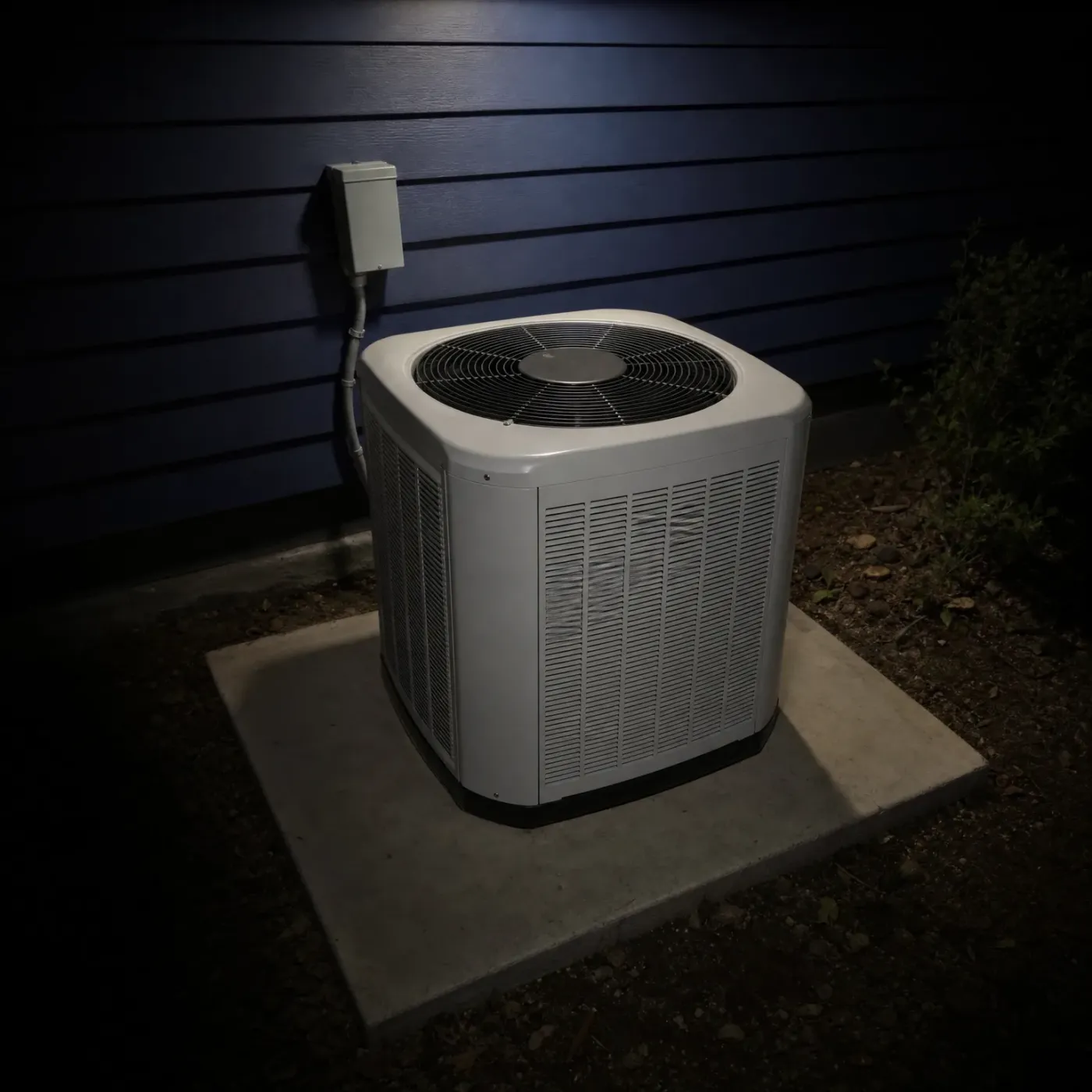
A cold-climate heat pump is built for this. To carry the ENERGY STAR Cold Climate label, it has to make at least 1.75 units of heat per unit of electricity at 5°F and hold onto at least 70 percent of its 47°F capacity at that temperature, tested by a third party rather than claimed by the maker. Field tests of prototype cold-climate models back this up: over two winters in occupied homes, backup heat covered only a small share of the heat needed between 0°F and 35°F, and the system running on backup heat alone was rare even above 0°F.
So the plain version is this. An ordinary heat pump will keep this house warm, but it will be running below its rating on more than half the nights of the heating season, and leaning on backup heat to cover the gap. A cold-climate heat pump is built to keep its output and its efficiency at the temperatures Bedford County actually sees. If you are buying a heat pump here, that is the one to buy.