White colonial-style houses with lit windows photographed at dusk along a tree-lined street.

Furnace Repair in Bedford, PA

Tell us about the job

Takes about a minute. No obligation.

Step 1 of 3: Equipment

Eight months of real work

A furnace in Bedford County runs from October through May. Overnight lows average 22°F in December, January and February. That is a long, steady load on the same igniter, blower motor and heat exchanger. It is not anything unusual for the machine.

So the usual parts fail first

Nothing about Bedford winters pushes a furnace past what it is built for. When one acts up, the cause is almost always a cracked igniter, a failing flame sensor, or a blower motor losing strength. Finding which one it is settles the repair.

8 months
October through May, your furnace is on duty
22°F
the average winter night it heats against
16 winter storms
in ten years, the nights a failure hurts most
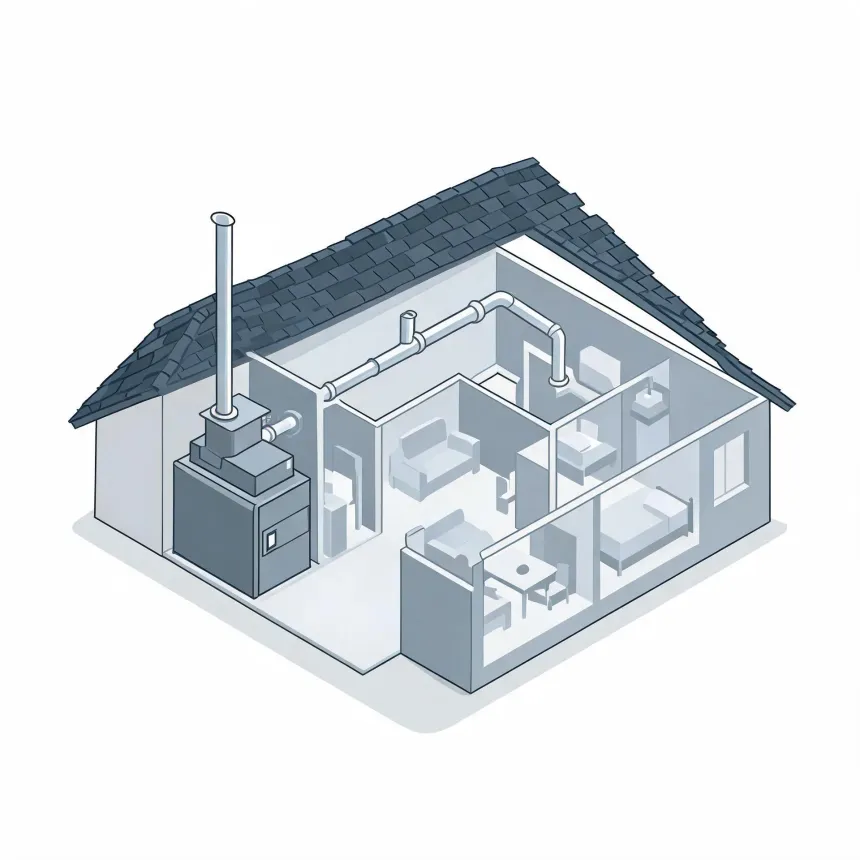
Isometric cutaway illustration of a single-story house showing interior rooms with furniture, ceiling ductwork, and a large furnace unit with a tall flue pipe in a corner room.
Your furnace works hardest from November through March.

NOAA nClimDiv, 1991–2020 normals

September is the quiet month before heat season starts in Bedford County.

The furnace that struggled in May will show the same weak spot again in October.

Fuel oil here runs $25.15 per million Btu, and a furnace that's struggling burns more of it every week you wait

Heat runs October through May
Winter nights average 22°F
Climate zone 5A

The igniter usually fails first. It's a thin strip that heats up to light the gas, and it goes through a full heat and cool cycle every time the furnace runs. That cycling is what eventually cracks it. A flame sensor fails a different way. It coats over with a film from normal combustion, and once that film builds up enough, the sensor can't tell the furnace a flame is lit. The furnace shuts itself down as a safety measure, not because anything dangerous is happening. The blower motor wears differently still. Its bearings take the load every time it pushes air through the house, and when they start to go, the motor runs weaker or louder before it quits. Different parts, different reasons they give out, but all of them show up to the homeowner the same way. A furnace that used to run fine and now doesn't.

Get the usual fix

Nothing about this area is especially hard on it. It's most likely the usual problem with the usual fix.

Find a contractor
A man in a cap, gray work shirt and tan pants climbs porch steps toward a blue front door, carrying a canvas tool bag, with a blue ceramic planter of white flowers beside him.
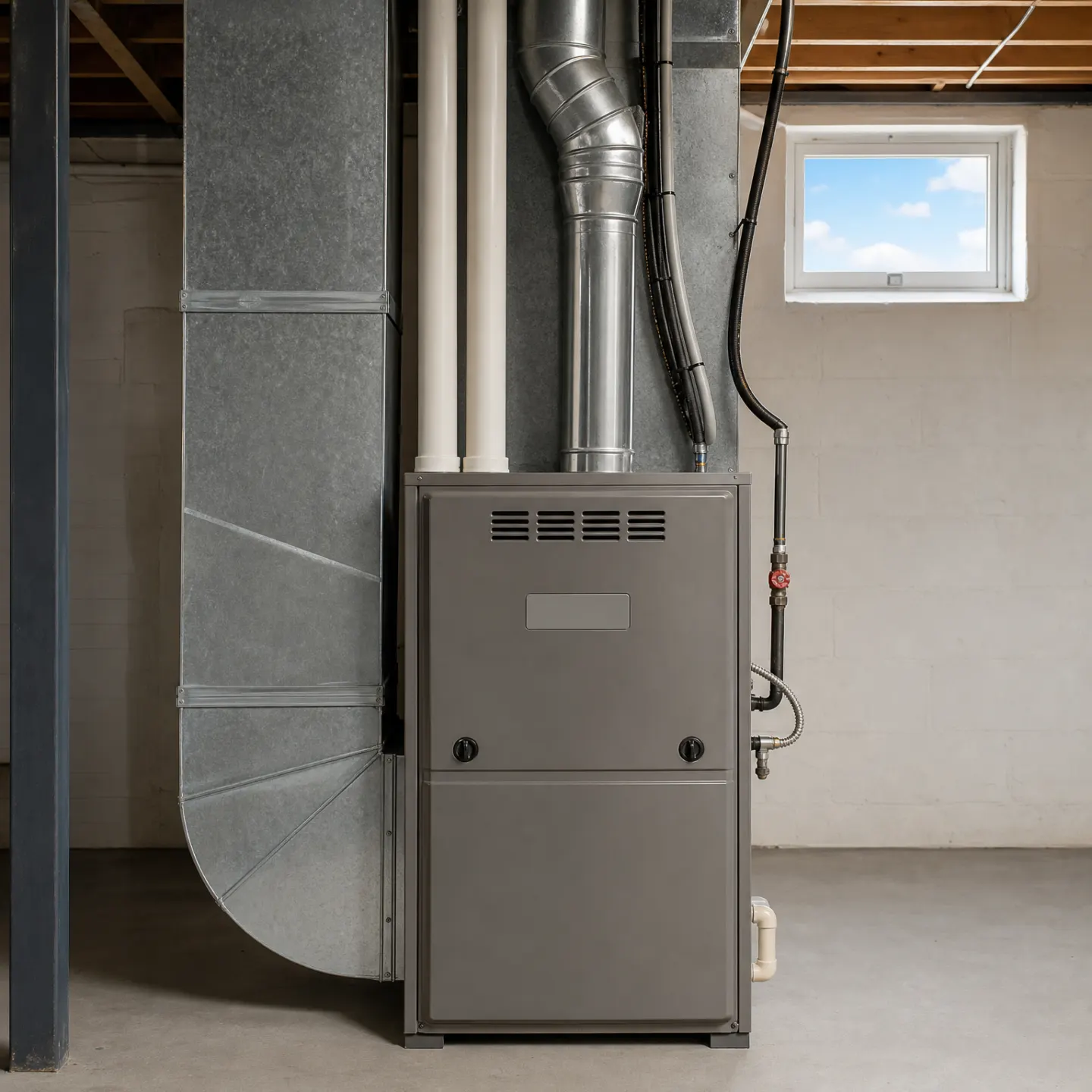
A gray residential gas furnace installed in an unfinished basement, surrounded by ductwork, a metal flue pipe, and a gas supply line.

The part does not get a break while it keeps running

A cracked igniter does not heal on its own. Every time the furnace calls for heat, it tries to light off that crack, and the crack opens a little more. Run it long enough and the igniter breaks clean through instead of just cracked. A dirty flame sensor works the same way in reverse. The film keeps building with every cycle, so a furnace that shut off once a day last week might be shutting off every few hours now. Letting it keep running does not give the sensor a chance to clean itself. It just adds more cycles on top of the ones that built the film in the first place. A weak blower motor is the one where waiting matters most. Strained bearings throw off heat they were never built to handle, and a motor that sounds a little louder today can seize outright tomorrow. Once it seizes, a technician is not repairing a motor anymore. They are replacing one.

Most furnace repairs make sense

An igniter, a flame sensor, a blower motor, a draft inducer. These are single parts with a single job, and swapping one out brings the furnace back to doing what it has always done. Fixing one worn part on a furnace that is otherwise sound is usually the straightforward answer.

The heat exchanger is the exception

A cracked heat exchanger is not a part swap. It is the chamber that separates burning gas from the air moving through the house, and when it goes, the furnace is not safe to run. At that point the furnace itself is at the end of its life, not just one part of it, and replacement is the honest answer instead of repair.

Before calling anyone, a few things are worth a look. Check that the thermostat is set to heat and the temperature is actually set above room temperature, not just displaying it. Check the air filter. A filter clogged with dust chokes off airflow, and some furnaces shut themselves down when they can't pull enough air through. Go to the breaker panel and make sure the breaker for the furnace hasn't tripped. If the furnace has a standing pilot, look for the flame itself. If it uses an igniter instead, you won't see a pilot light, and that's normal. Check that the switch on the furnace itself, the one that looks like a light switch on the side of the unit, hasn't been bumped off. None of this fixes a cracked igniter or a failing blower motor, but it rules out the simple stuff before anyone drives out.

A diagnostic visit starts with the furnace running, not apart on the floor. A technician wants to see the actual fault happen or find what's left behind from it. That means checking for a flame and watching whether it stays lit or drops out, listening to the blower for grinding or a bearing whine, and pulling the igniter to look for a visible crack. The flame sensor gets checked by sight and sometimes by a cleaning test, since a sensor that works again after cleaning just told you what was wrong with it. Wiring and connections get a look too, because a loose connection can mimic a failing part entirely. The point of the visit is narrowing a list of things that can go wrong down to the one thing that did.