





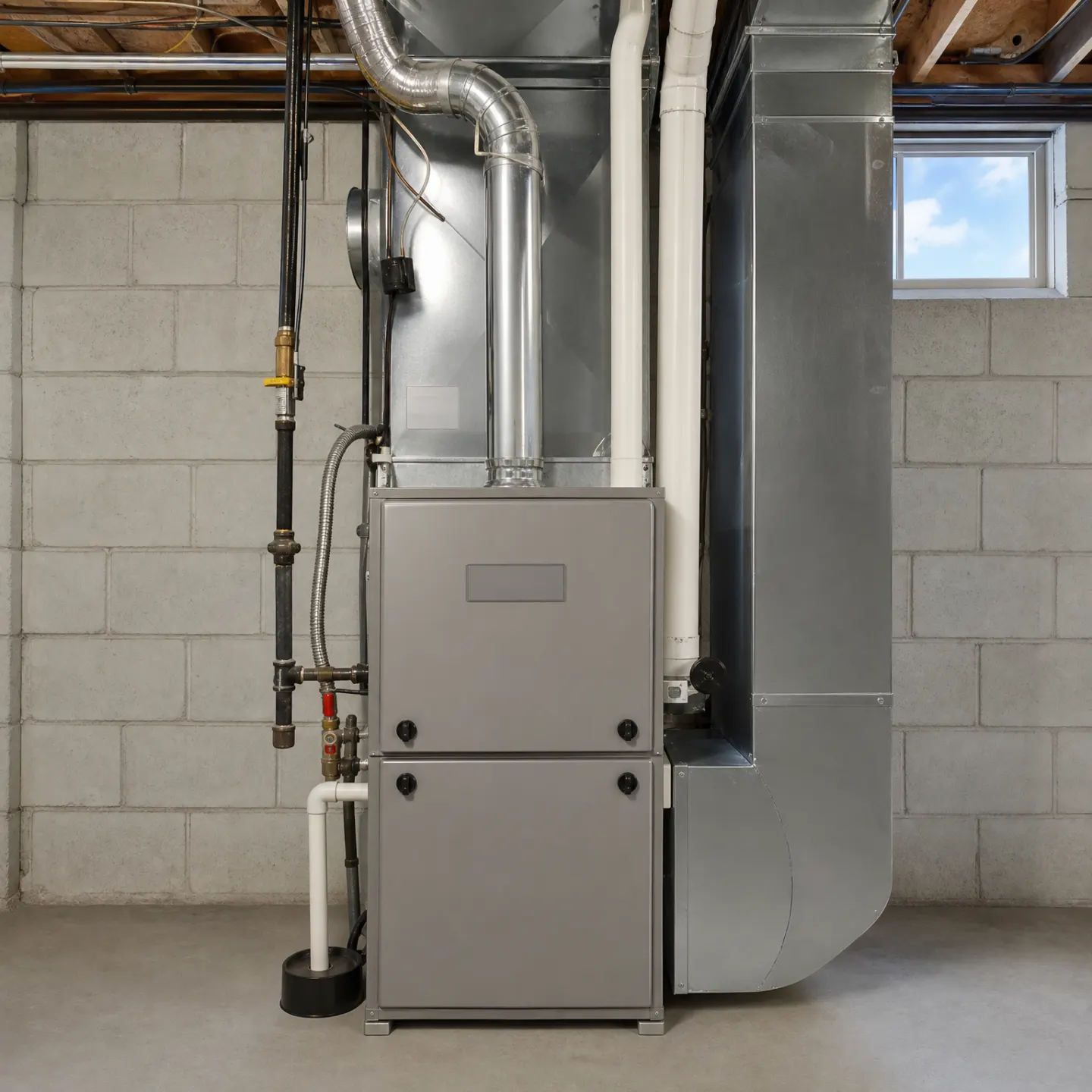
An unfinished basement featuring a forced-air furnace, exposed wooden ceiling joists, bare concrete walls, and miscellaneous items including cardboard boxes and coiled cables on the floor.

Furnace Installation in Somerset, PA

Tell us about the job

Takes about a minute. No obligation.

Step 1 of 3: Equipment

Oil ran $25.15 per million Btu across Pennsylvania in 2024. That price doesn't change whether the furnace is efficient or not, it only changes how much of it gets wasted. A furnace that burns fuel it doesn't need to burn turns that number into a bigger bill, month after month, all winter. In a place that heats with oil as long as Somerset does, the efficiency of the equipment decides how much of that cost is necessary and how much is just lost.

9 months
September through May, your furnace is on duty
20°F
the average winter night it heats against
80% AFUE
the federal minimum any new unit must meet
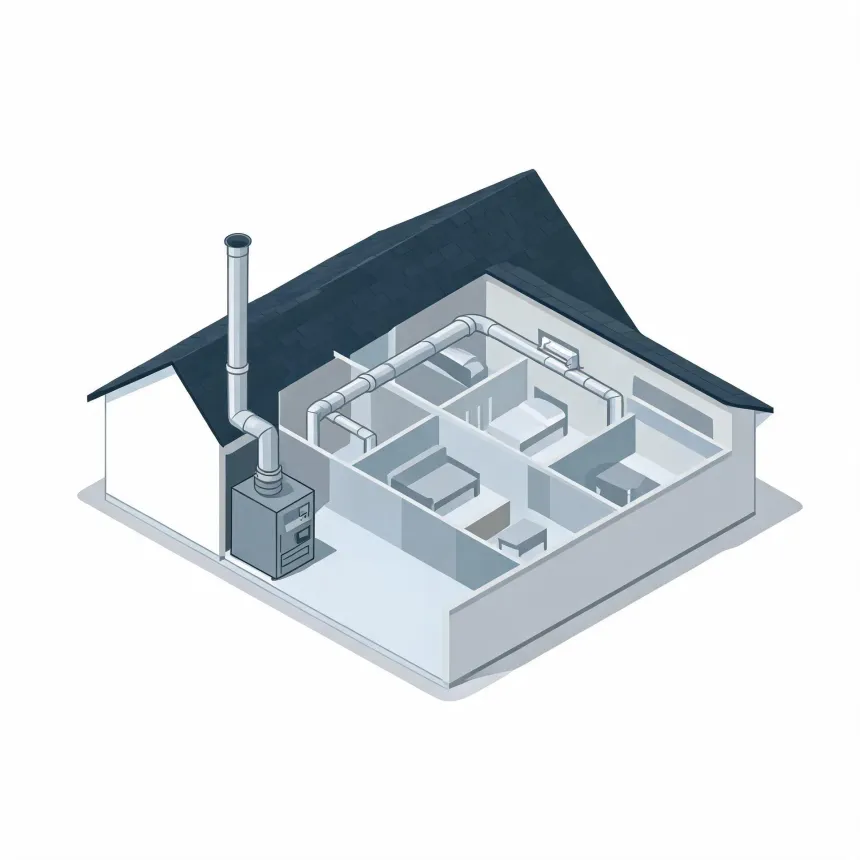
Isometric cutaway illustration of a single-story house with a dark shingled roof, showing interior rooms with beds and furniture, overhead ductwork, and a gray furnace with a tall flue pipe at the exterior wall.
Your furnace works hardest from November through March.

NOAA nClimDiv, 1991–2020 normals

Oil heats more homes in Somerset County than gas, electric, and propane combined.

Replacing an oil furnace with another oil furnace means the venting, the fuel line, and the tank are already set up for it.

Half the homes here were built before anyone thought about insulation standards

Half the homes here were built by 1964
Climate zone 5A
Heat runs September through May
Nine Months of WorkFurnaces here run September through May, and 27 winter storms hit the county between 2015 and 2024.

Somerset County falls under climate zone 5A, a cool zone where the heating load matters more than cooling. Any furnace installed here has to meet a federal minimum efficiency of 80 percent, turning at least that much of the fuel it burns into heat over the winter. That floor rises to 95 percent for furnaces built on or after December 18, 2028, which will narrow what's available to install once that date passes. Right now a contractor can still install a furnace rated anywhere from 80 percent up, and in a county that leans on oil heat through a hard winter, where that unit falls in that range decides how much fuel turns into heat and how much just goes up the flue.

The furnace you pick decides what oil heat costs you here

The efficiency rating on the new furnace is worth checking before it goes in, not after. Ask what it's rated at and how that compares to other units a contractor can install. At $25.15 per million Btu, the gap between a low rating and a high one stays on the bill every winter this furnace runs.

Find a contractor
A man in a navy T-shirt, tan work pants, boots and a green cap climbs porch steps toward a blue front door, carrying a canvas tool bag beside a blue planter with a small shrub.
A gray high-efficiency gas furnace installed in an unfinished basement, surrounded by gas lines, a condensate drain, and sheet-metal ductwork.

Nine Months Means Little Room to Wait

Heat here starts in September and runs through May. That's nine months of the year this furnace has to work, with August the last month before it has to be ready. A furnace put in during August goes in on a day with no pressure on it. One put in during a cold snap in January goes in because it has to, with whatever's available and whatever time a contractor can spare that week. Same equipment, same install, but one of those happens on your terms.

Sizing Is a Calculation, Not a Guess

A furnace gets sized by figuring the heat loss of the house it's going into, room by room, not by matching the number stamped on the old unit. That calculation looks at the walls, the windows, the ceiling height, how much of the house is exposed to outside air. Square footage alone doesn't answer it. Two houses the same size can need different furnaces depending on what's between the living room and the cold outside.
Oversized Costs You Twice

A furnace that's too big heats the house fast, shuts off, and starts again a few minutes later. That short cycle never gives the ductwork time to carry heat evenly past the rooms closest to the furnace. It also wears the ignition system and the blower harder, since both see more start up cycles over a winter than they're built for. Bigger isn't a safety margin, it's a furnace working against its own design.

A furnace's price tag covers more than the box that shows up on the truck. The heat exchanger inside is what decides how much of that unit's rated efficiency actually holds up over years of burning fuel, and better alloys cost more to make. The blower motor matters too. A variable speed motor that ramps up and down costs more than a single speed one that just runs full blast or not at all, but it puts less strain on the ductwork and runs quieter doing it. Venting adds to the job depending on what the new furnace needs, since a higher efficiency unit often vents differently than what's already there. Ductwork gets checked too, because a furnace sized correctly for the house still needs ducts that can carry what it produces. None of this is optional scope. It's what separates a furnace that hits its rated efficiency for years from one that falls short of it a winter or two in.

Half the homes here were built in 1964 or earlier. If yours is one of them, the furnace going in now may be heating a house that was never sealed up or insulated the way a house built today would be. That's worth telling the contractor before sizing starts, not after. Some older homes have had the attic, the windows, or the walls upgraded over the years, others haven't, and a furnace sized for one doesn't fit the other. The heat loss calculation is how that gets sorted out, but it only works if the contractor knows what they're actually looking at, not just the age on record.