



A two-story red brick house with black shutters and a dark roof sits on a mown lawn behind a dry-stacked stone retaining wall, framed by large deciduous trees under an overcast sky.

Boiler Repair in Somerset, PA

Tell us about the job

Takes about a minute. No obligation.

Step 1 of 3: Equipment

Most boiler trouble starts small and gets ignored until there's no heat at all. A circulator pump wears out and stops moving water through the system, so some rooms stay cold while others get warm. Mineral buildup collects inside the heat exchanger over the years and the boiler has to work harder to do the same job, which shows up as banging or kettling sounds. The pilot or ignition system fails, often from a dirty flame sensor or a draft problem, and the boiler won't light at all. Low water pressure trips the system as a safety measure, and it usually means a slow leak somewhere in the piping. A failing thermostat or control board can also make a perfectly good boiler act like it's broken, so the fix isn't always inside the unit itself.

Oil in Pennsylvania ran $25.15 per million Btu in 2024.

A boiler losing heat up the flue or kettling from scale burns through that oil for less warmth every week it runs unrepaired.

Half the boilers here are running in houses built by 1964

Half the homes here were built by 1964
Heat runs September through May
Winter nights average 20°F
Nine months of heat starts in SeptemberBoilers here run September through May, and trouble shows up fastest in those first cold weeks.

None of that gets cheaper by waiting. A circulator pump that's dragging or a heat exchanger coated in scale both make the boiler run longer to push out the same heat, and on oil at that price here, longer runtimes show up on the bill fast. Kettling especially is a sign the boiler's fighting itself, not just making noise. If yours is doing any of this, get it looked at before the cold months make it work even harder.

The cold here doesn't let up, and neither should the repair

Nine months of heat and overnight lows near 20 put real strain on a boiler here, and storms keep hitting this county through the winter. A boiler already losing heat up the flue or fighting scale has less room to handle that load. Getting it diagnosed now means the fix holds for the months ahead.

Find a contractor

Check the pressure gauge first

Most boilers want the needle somewhere between the low and high marks, often a colored band on the gauge. If it has dropped below that, the system may just need water added through the feed valve. If it drops again in a few days, there is a leak in the piping somewhere and that is not something to chase down yourself.
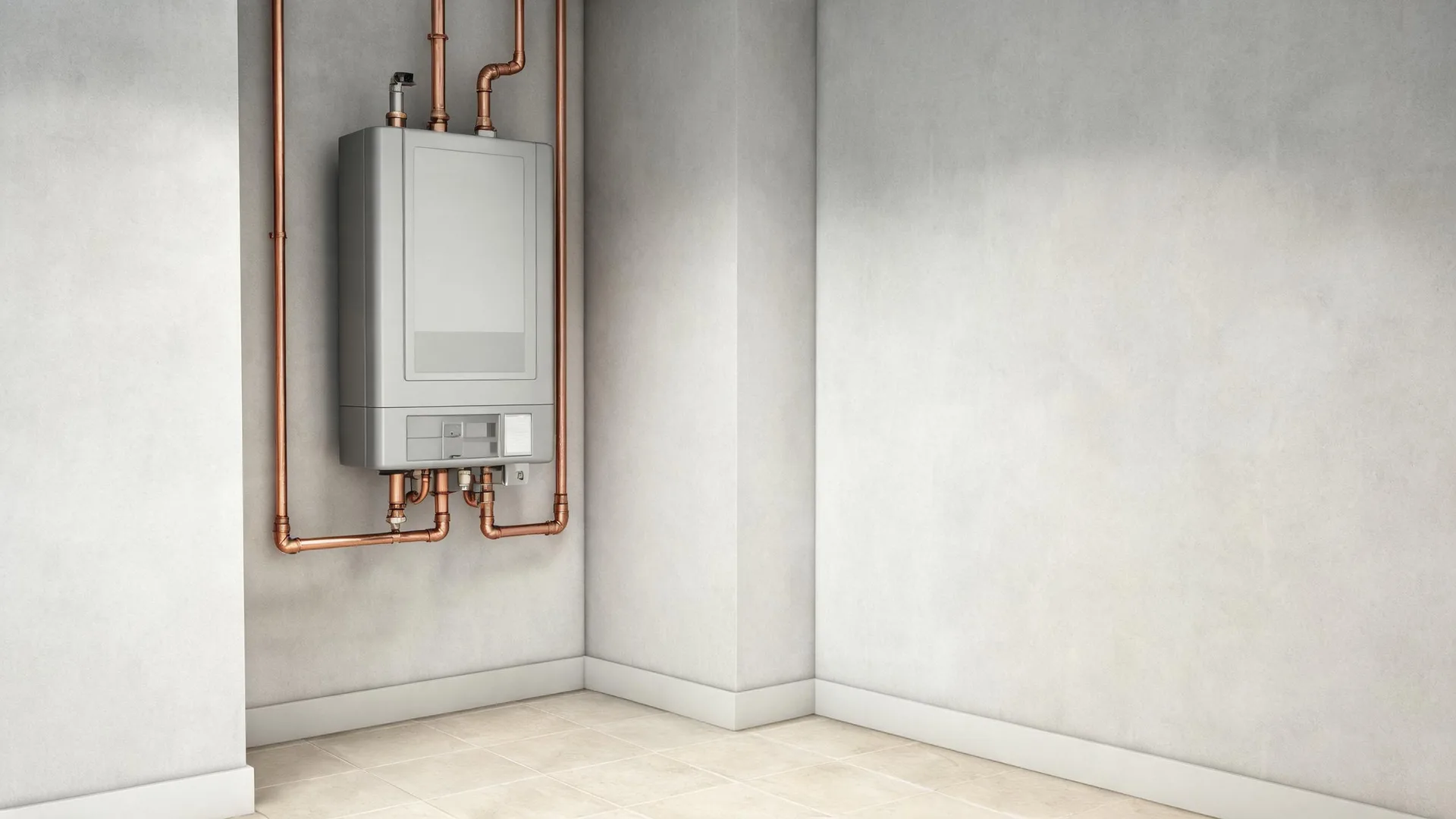
Look at the switch and the lights before you call

If the boiler will not fire at all, check that the power switch and any reset button have not tripped, and that the thermostat is actually calling for heat. Some boilers have a panel with status lights that blink in a pattern tied to a specific fault. Writing down that pattern before the contractor arrives tells them what they're walking into.

A boiler that keeps running with a fault doesn't just make noise, it lets the problem feed on itself. Scale on the heat exchanger traps heat against the metal instead of letting it pass into the water, and the metal runs hotter than it was built to. Keep firing it that way and the exchanger can crack. A circulator pump that's starting to fail still moves some water while it struggles, so the boiler keeps calling for heat it can't deliver evenly, and the parts doing the extra work wear down faster for it. Low pressure left unaddressed will keep tripping the system, and each drop means air is getting into piping that's supposed to stay full, which corrodes it from the inside. A control board sending bad signals can make the boiler short cycle, switching on and off fast, and that wears the ignition parts long before they'd otherwise quit.

A diagnostic call starts with the contractor asking what the boiler is doing, or not doing, before anything gets opened up. Then comes the pressure gauge, the sight glass if it has one, and a look at the flame through the viewing port if it fires at all. They'll pull the panel covering the burner and check the flame sensor and igniter for soot or corrosion, since those cause more no-heat calls than almost anything else. If the boiler is kettling, they're listening for where the sound is loudest, because that tells them where the scale has built up worst on the heat exchanger. A multimeter comes out for the circulator pump and control board, checking for correct voltage and continuity rather than guessing from the outside. None of this takes the boiler apart unless the gauges and readings point to something specific first.