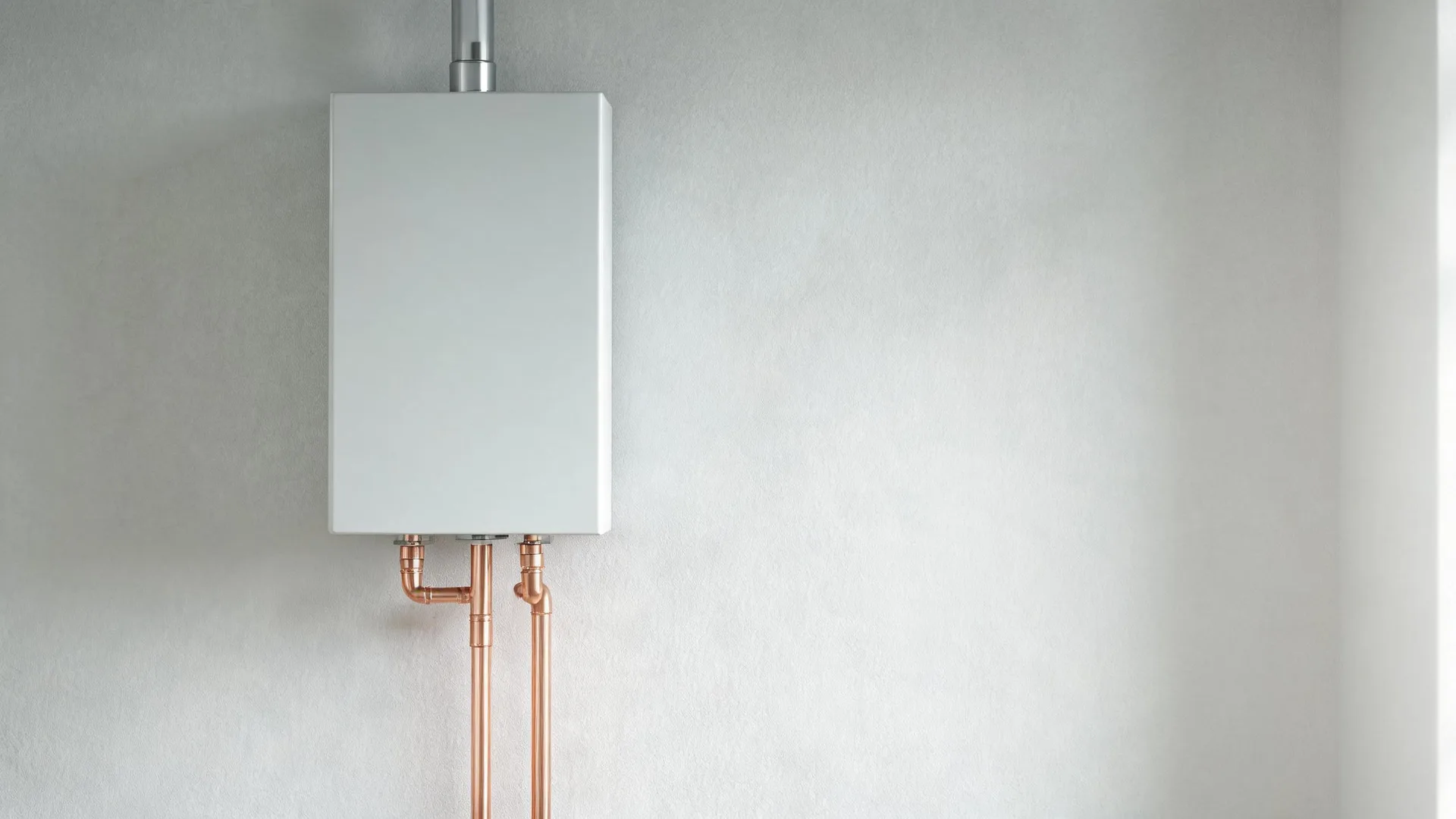
Eight Months a Year Adds Up
A boiler here fires from October through May. That is most of the year spent cycling the burner and the circulator pump, and parts that cycle that much wear down steadily, not all at once.
Takes about a minute. No obligation.
Your boiler runs about eight months a year here, October through May. That is a long stretch for a burner and a circulator pump to cycle on and off, longer than most of the country asks of a heating system. More runtime means more wear on the same parts, year after year. When something starts acting up on a boiler that works this hard, the hours on it are usually part of the story. A proper diagnosis finds what is actually wearing out instead of just quieting the noise or the short cycling, so the fix holds up next winter instead of showing up again.
A boiler losing pressure fast enough to trip the low water cutoff usually has a leak somewhere in the system.
Check the pressure gauge before calling, that one number tells a tech a lot before they even walk in.




A small leak at a circulator pump or a fitting does not stay small if the boiler keeps firing. Low water pressure makes the burner work harder to heat the same radiators, and a boiler that cycles against a leak wears its ignition system and heat exchanger faster than one running at the right pressure. A cracked heat exchanger is worse. Once it is leaking water or flue gas, every cycle pushes more combustion byproducts somewhere they should not go, and the crack does not heal itself or stay the same size. Sediment in the bottom of the tank behaves the same way. It insulates the water from the burner, so the burner runs longer to do the same job, and the extra heat it throws at the tank wall stresses metal that is already carrying scale. None of these get better with more runtime. They get worse, and they get worse faster the longer the boiler is left to run through them.
Find out how old the boiler is before you pay for the repair. If the house came with it, and the house is one of the many here built in 1956 or earlier, the boiler has likely put in more years than most. A tech can tell you how much life is left in it in the same visit that finds what's wrong. Get that answer before you get the bill.
Find a contractorA boiler here fires from October through May. That is most of the year spent cycling the burner and the circulator pump, and parts that cycle that much wear down steadily, not all at once.
A tech who checks pressure, looks at the heat exchanger, and checks for sediment before touching anything can tell you what's actually wearing out. That is what keeps the repair from being the same call again next winter.
A few parts account for most boiler failures. The igniter or pilot assembly sits right in the path of every ignition cycle, and that heat breaks it down over time until it stops lighting the burner reliably. A circulator pump fails at the bearings or the seal, and once it seizes or starts leaking, the water never makes it to the radiators even though the burner is firing fine. Low water cutoffs and pressure switches collect scale and corrosion, and when they stick, the boiler shuts down on a fault that isn't real, or misses one that is. A flame sensor coated with combustion byproducts will tell the control board the flame is out when it isn't, and the boiler won't fire at all. A weak part like this usually gives out as soon as the boiler starts working again for the season, not partway through a cold stretch. The heat exchanger is the one to watch for. Once it's cracked, it stays cracked and gets worse with every cycle, it never seals itself back up.
A diagnostic visit starts with a look at the pressure gauge and the boiler's error history before any panel comes off. From there a tech checks for leaks at the circulator pump, the fittings, and the heat exchanger, since a leak anywhere in the system is usually the first thing to rule in or out. Combustion is checked next: the flame should burn steady, and the flue should draw properly, because a bad burn points to a dirty burner or a venting problem rather than a failed part. The igniter or pilot assembly gets tested under an actual call for heat, not just looked at, since some of them light fine cold and fail only once they've cycled a few times. If the boiler short cycles or won't hold a flame, the thermocouple or flame sensor usually gets checked before anything gets replaced, because a coated sensor can mimic a dead burner. A tech who does this in order finds the actual failure instead of swapping the first part that looks worn.