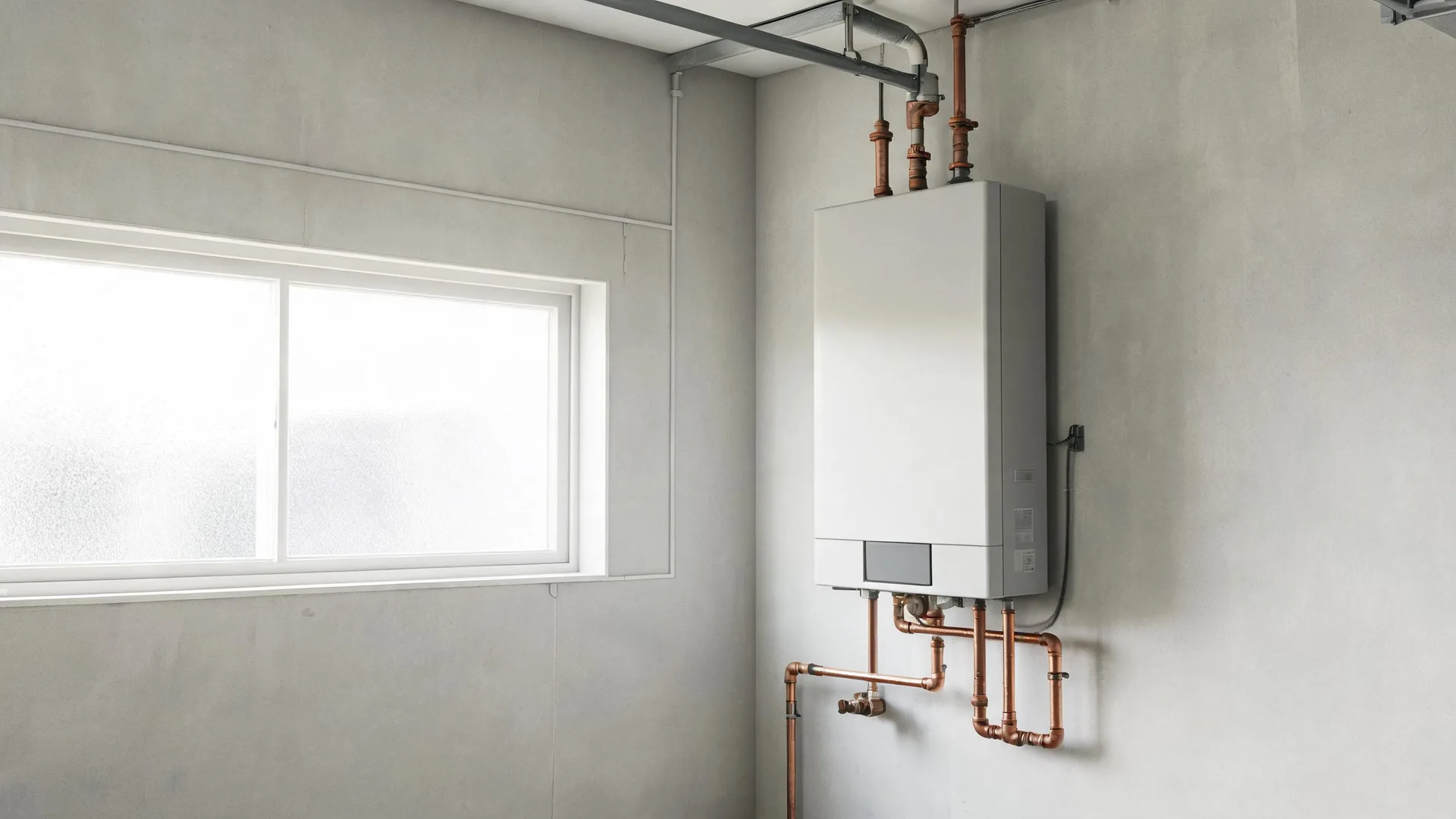
Eight months of runtime
Boilers in Indiana County run heat from October through May, about eight months of the year. That's most of the year spent cycling on and off, heating water, pushing it through the system.

Takes about a minute. No obligation.
Boilers in Indiana County run heat from October through May, about eight months of the year. That's most of the year spent cycling on and off, heating water, pushing it through the system.
A boiler running eight months a year puts more hours on its burner and pump than one running four or five. Whatever is acting up in yours, age has probably had less to do with it than the workload.
A boiler that's quiet one minute and banging or kettling the next has sediment or scale building up on the heat exchanger.
That buildup makes the water overheat in spots before it can circulate, and it only gets worse left alone.




Deciding whether to fix a boiler or replace it comes down to what's actually failing. A thermocouple, a igniter, a circulator pump, a zone valve: these wear out on their own schedule and swapping one out is routine. The heat exchanger is different. It's the one part that isn't really meant to be replaced, and if it's cracked or badly corroded, the rest of the boiler being fine doesn't matter much. The age of the unit matters less than what's actually broken and whether that part can be reached and swapped without taking the whole thing apart. A contractor who's found the actual cause can tell you which kind of problem you've got. Until then, a repair estimate on its own doesn't tell you much.
Eight months of heat a year puts more hours on a burner and pump than most boilers see in a milder climate. That workload is why parts give out before you'd expect. Get a contractor to look at what's actually going on before you decide whether it's worth fixing.
Find a contractor
A cold boiler should read in the low range on the pressure gauge, usually marked off in color. If the needle sits below that, the system is low on water and won't circulate right. There's a feed valve that lets you add water yourself, though if the pressure keeps dropping you've got a leak somewhere that needs finding, not just topping off.
Banging or knocking from the boiler usually means sediment on the heat exchanger, not a loose part. Gurgling or a hissing sound can mean air trapped in the lines, which a bleed valve on the radiator or baseboard will clear. If bleeding the air out doesn't quiet it down, the problem is past what a homeowner can safely chase.
A boiler that's struggling doesn't fix itself by staying on. If the burner is short cycling, every extra run adds another thermal stress cycle to a heat exchanger that might already have a hairline crack starting. Low water pressure left alone can let a circulator pump run dry, and a pump that's lost its water will burn out its bearings in a lot less time than one that's properly fed. Sediment at the bottom of the heat exchanger acts like insulation, so the burner has to run longer to get the same heat into the water, and the metal under that layer runs hotter than it should the whole time. None of these get better with more runtime. They get worse, and usually faster than the one before it.
A diagnostic visit starts with the contractor asking what you've noticed. Noises, a pilot that won't stay lit, radiators that stay cold at one end, a pressure gauge that keeps dropping. That tells them where to look first. They'll check the pressure and the temperature, open the panel and look at the burner and the flame, and check the heat exchanger for soot or scale buildup. If the system has a circulator pump, they'll check that it's turning freely and not running dry. On a gas boiler they'll check the venting and the gas pressure to the burner, since both affect how clean and how hot it burns. Most of this gets done before anything is taken apart, because the symptoms usually point to one or two likely causes before a wrench ever comes out.