



White colonial houses with lit windows photographed at dusk along a tree-lined residential street.

Boiler Installation in Indiana, PA

Tell us about the job

Takes about a minute. No obligation.

Step 1 of 3: Equipment

A boiler installed here runs from October through May, eight months of the year. That is longer than most of the country asks of a heating system. More run time means more hours on the circulator pump, more cycles on the burner, more chances for a small issue to turn into a bigger one before spring. A new boiler should be sized for that load, not just for the price tag on the quote. Get the sizing wrong and you either pay for capacity you don't need or you put the same strain back on the new unit that wore out the old one.

Half the homes in Indiana County were built in 1970 or earlier.

A boiler going into a house that old has to be sized for that house, not swapped in to match the one that's coming out.

Most of this county already heats with gas, and a new boiler should match it

54.9% of homes heat with gas
Heat runs October through May
Winter nights average 21°F

September is the last easy month to get this done. Once October comes the system has to run, and a boiler installed under pressure is harder to size right and harder to schedule around a working crew. Waiting until the overnight lows are averaging 21 degrees means living with whatever gets installed fastest, not what fits the house. A September install gets tested and adjusted before it has to carry any real load. By the time heat is needed every day, it's already proven out.

Size it right before the heat has to run

Eight months of run time a year puts more hours on a boiler here than in most of the country. Get the new one sized to the house before that load starts, not after.

Find a contractor

The old boiler has to come out whole

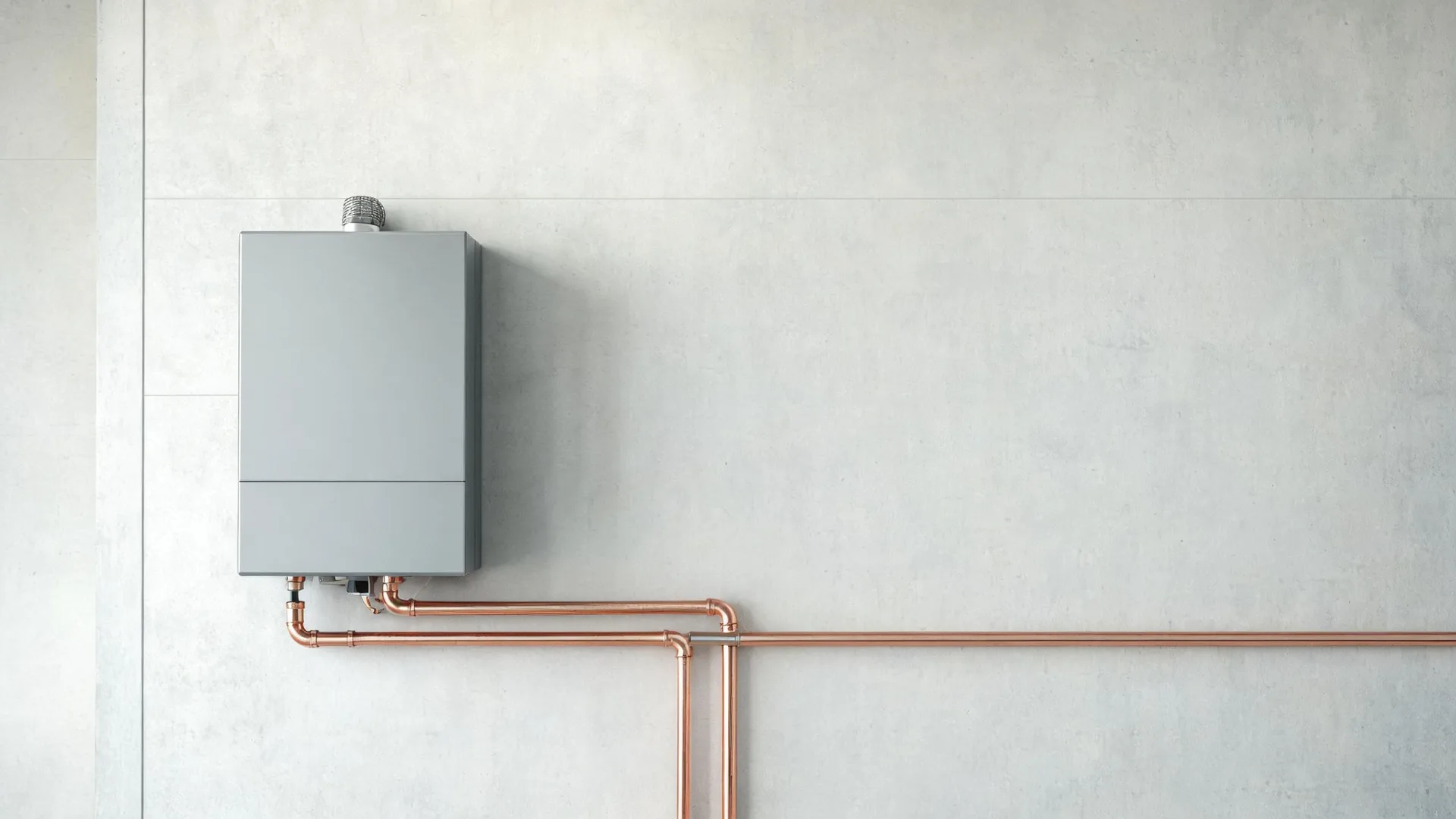
A boiler doesn't unhook like a water heater. The piping, the flue connection, the gas line and often the near-boiler circulator all tie into it directly. Draining the system, disconnecting the venting, and cutting it free from the supply and return lines is most of the job before a new unit ever goes in. None of that can happen while the old one is still trying to heat the house, which is part of why this work doesn't get rushed through in a single afternoon when it's cold out.
What's left behind matters too

Old boilers leave sediment and scale sitting in the near-boiler piping and sometimes in the radiators or baseboard loops they fed. A contractor worth hiring flushes that out before connecting the new unit, because debris from the old system is one of the most common reasons a new boiler short-cycles or develops a noisy loop within the first year. Reusing old piping without checking it is a shortcut that shows up later as a callback.

The efficiency rating on a boiler tells you how much of the fuel it burns actually turns into heat for the house, versus how much goes out the flue. A higher rating means less waste, every cycle, for as long as the unit runs. That matters more on a boiler than on a lot of other equipment because a boiler fires constantly through the cold months rather than cycling on and off the way an air conditioner does. The rating on the label is measured under set conditions, not your house, so the number is a way to compare one unit against another rather than a promise about what you'll see. A boiler with a modest rating that's sized right and maintained will often outperform a high-rated one that's oversized or neglected. What the rating doesn't tell you is how long the unit lasts or how it handles the piping and venting it's paired with, and those depend on the installation as much as the machine itself.

Indiana County falls under zone 5A, a cool, humid climate where heating carries most of the load through the year. The 2021 energy code sets what a new boiler has to meet here, and for gas-fired hot water boilers built since January 2021, that means turning at least 84 percent of the fuel it burns into heat over the season. That floor rules out the lowest-efficiency units on the market, so part of the choice is already made before you start comparing models. A federal tax credit is available on qualifying high-efficiency equipment, which is worth factoring in alongside the install cost. The unit still has to be sized to the house and the piping it's tied into, the rating only sets the minimum it has to clear.