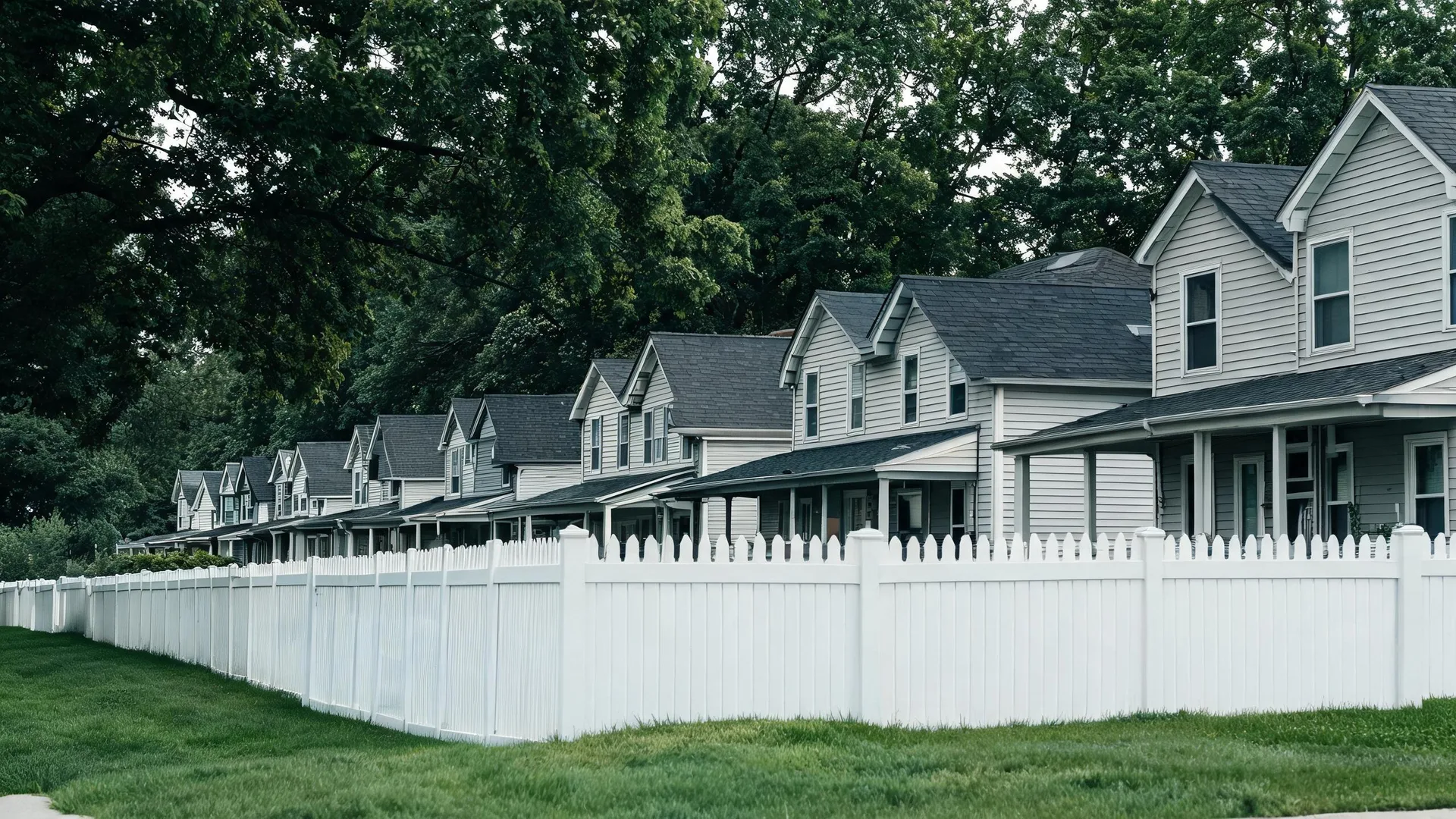




A row of similar two-story houses with gray siding and dark shingled roofs stands behind a long white vinyl fence, with mown grass in the foreground and large trees behind.

Mini Split Installation in Indiana, PA

Tell us about the job

Takes about a minute. No obligation.

Step 1 of 3: Equipment

Utility gas heats 54.9% of homes in Indiana County, more than any other fuel, with fuel oil and electricity making up most of the rest. A mini split doesn't replace that setup, it adds to it. Homeowners here bring one in for a room the furnace and ductwork don't reach well, or to get cooling into a house that was never built with central air. It runs on its own circuit, separate from the furnace, so it works the same way in a gas-heated home as it would in any other. That also means you can heat or cool one room without running the whole system for it.

8 months
October through May, your system heats
2 months
July through August, it cools
21°F
the average winter night it heats against
80°F
the average summer afternoon it cools against
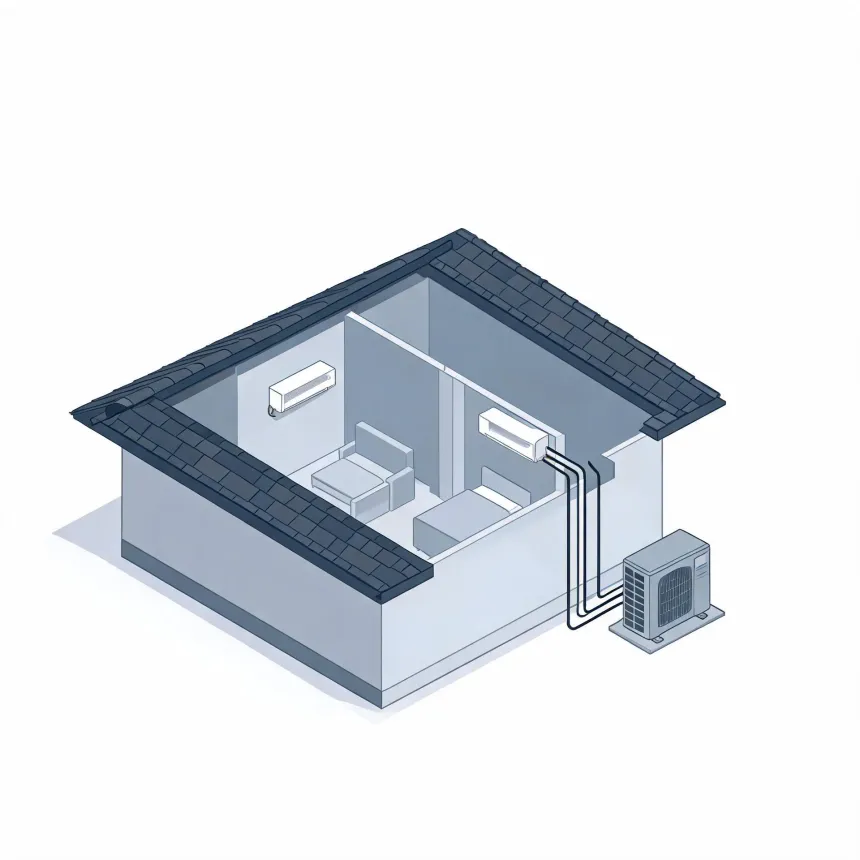
Isometric illustration of a cutaway house with tiled roof showing two wall-mounted indoor mini-split units connected by line sets to an outdoor condenser beside the building.
Your system heats October through May and cools July through August.

NOAA nClimDiv, 1991–2020 normals

Half the homes in Indiana County were built in 1970 or earlier.

An install here has to work with the walls and wiring already there, not the ones a newer house would have.

Cooling here only runs two months, but June is when to get it installed

Cooling runs July through August
Summer afternoons average 80°F
142 damaging wind events from 2015 to 2024

Indiana County sits in climate zone 5A, a cool zone where heating matters more than cooling. A ductless heat pump installed here still has to meet the federal minimum for its type. That's 14.3 SEER2 for cooling and 7.5 HSPF2 for heating, the same split-system standard used everywhere, since the rule doesn't set a separate class for ductless units. In a zone like this one, the heating number matters more than the cooling number. A unit built to the minimum will cool this house without trouble. Whether it keeps up on the coldest days of the winter here is worth asking a contractor directly, since that depends on how a given model performs at low outdoor temperatures, not just what its rating says.

The standard size and rating is the right call for Indiana County

A standard mini split, sized and rated to the federal minimum, is built for a house like this. Pennsylvania electricity ran 17.77 cents per kilowatt-hour in 2024, and that cost applies the same whether the unit is oversized or not. Bigger or pricier doesn't buy you anything extra here.

Find a contractor
A man in a cap, gray long-sleeve shirt and tan work pants carries a canvas tool bag up gray porch steps toward a dark blue front door, with a blue ceramic planter and shrub beside it.
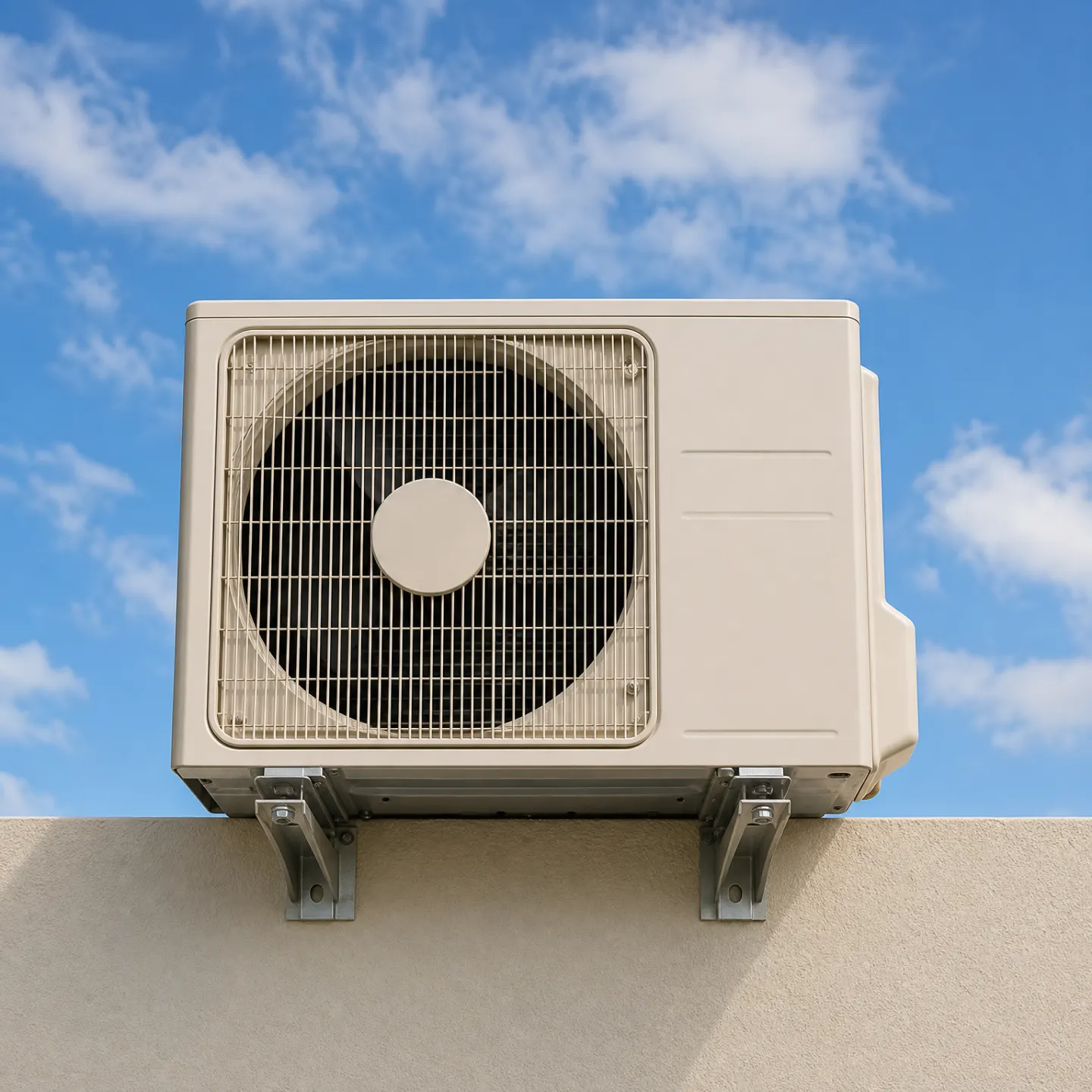
A beige split-system air conditioner outdoor condenser unit mounted on metal wall brackets atop a stucco wall.

Two months of cooling, a lot more months of standing by

Two months of real cooling load, July and August, with afternoon highs averaging 80. That's not much time for a compressor to put in work. The bigger job for a heat pump here is winter, running in reverse to heat, and that's a longer stretch. Either way, this isn't a unit that gets driven hard. A mini split sized to the room and rated at the federal minimum will handle what Indiana County asks of it. What shortens its life here is more likely a clogged filter or a neglected coil than the weather.

How many rooms it has to reach

A single zone, one indoor head tied to one outdoor unit, is the simplest install and the easiest to price. Add a second or third room and you're into a multi-zone system, with another indoor head, more line set, and more labor to run it. The outdoor unit gets bigger too, since it has to serve all the zones at once.
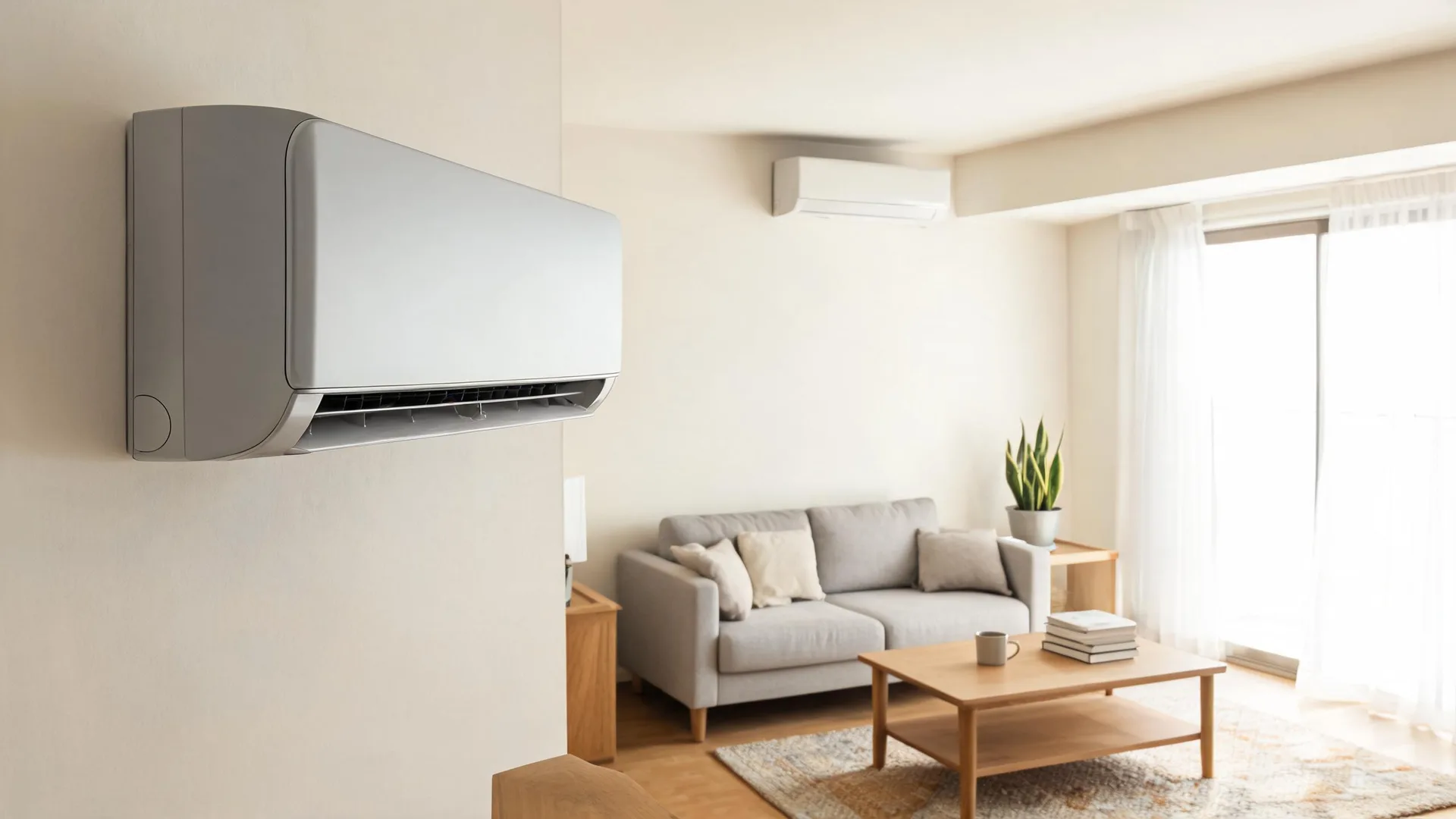
What the line set has to get through

The indoor and outdoor units connect through a wall, with refrigerant line, wiring and a drain line all running through that one penetration. A straight shot through a wood-frame wall is quick work. Masonry or stone takes longer to core, and if the units end up far apart, the extra line length and any additional refrigerant add to the job.

The SEER2 and HSPF2 numbers on the label aren't a promise about your power bill, they're a measure of how much heat the unit moves for the energy it uses. A higher number means less energy for the same comfort, but only if the unit is matched to the room and installed right. An oversized head cycles on and off instead of running steady, and short cycling wastes more than a lower rating ever costs you. The rating also gets tested under set conditions, so it tells you how the unit performs in general, not exactly what it will do on your coldest or hottest day. What keeps it performing anywhere near that number over time comes down to upkeep, mainly a clean filter and a coil that isn't caked with dust, since both make the unit work harder to move the same air.

Installation day starts outside, before anyone touches a wall. The contractor picks a spot for the outdoor unit with room around it for air to move, and a spot inside for the head that gives it a clear shot across the room, away from where furniture or curtains will block the airflow. Once those are set, the line set runs between them through a single hole in the wall, carrying refrigerant line, wiring and a drain line together. That line gets brazed, then pressure tested before anything is charged, to catch a leak before it's sealed behind a wall plate. Once the system holds pressure, it gets charged with refrigerant, the indoor head gets mounted and leveled, and the whole thing runs through a cycle in both heating and cooling before the job is called done. A system that's never checked in both modes on day one can hide a problem that only shows up months later, when the season changes.